In the quest for greater online privacy or the need to manage multiple digital identities, many of us begin by searching for the right browser. The landscape is crowded with options, from familiar privacy-focused tools to more specialized open-source projects. However, the most obvious choices aren't always the best ones. The line between a tool for personal privacy and one for professional operations is often blurred, leading to critical mistakes.
After a deep dive into the world of specialized "anti-detect" browsers, it's clear that some of the most common assumptions about these tools are wrong. This article shares three surprising and impactful lessons learned that challenge conventional wisdom and provide a clearer path for anyone needing reliable, professional-grade browsing solutions.
Takeaway 1: Why "Free" Tools Like Camoufox Can End Up Being the Most Expensive Option
The appeal of free, open-source software is undeniable, but for professionals or business users, it can come with significant hidden costs. Camoufox, an anti-detect browser built on Firefox, serves as a perfect example. As a free, open-source tool, it naturally attracts users and developers looking to avoid subscription fees. However, a closer examination reveals critical drawbacks for any business-critical operation.

The project is labeled as being in "active development," with developers warning that releases "may not be production-ready." This risk became evident when the lead developer encountered a medical emergency in early 2025, halting updates until late in the year. This situation highlights a crucial vulnerability: relying on small, unsupported projects can leave businesses stranded without important bug fixes, updates, or support. For professionals in fields like dropshipping or affiliate marketing, where a single suspended account can freeze revenue, this lack of reliability turns a 'free' tool like Camoufox into an unacceptable financial risk.
Takeaway 2: Privacy and Multi-Account Management Are Not the Same Thing
A frequent point of confusion is the difference between browsers designed for personal privacy and those built for professional multi-account management. The two serve fundamentally different purposes, and using one for the other's job is a recipe for failure.
Mainstream privacy browsers like Brave, Tor Browser, LibreWolf, and Waterfox are designed to enhance anonymity for a single user. Their primary function is to block trackers, strip telemetry, or route traffic through anonymizing networks like Tor. Their goal is to make one person's digital footprint harder to trace.
In contrast, anti-detect browsers like DICloak are engineered for a completely different task: creating and managing multiple, unique, and authentic-looking online identities from a single device. These tools are essential for professionals in e-commerce, social media marketing, and web scraping who need to operate numerous accounts without being detected and banned by platforms. Attempting these tasks with a simple privacy browser doesn't just fail to prevent detection—it actively invites platform suspicion and account termination, as it's fundamentally the wrong tool for the job.
Takeaway 3: The Best Tools Mimic Reality, They Don't Just Hide It
The most sophisticated anti-detect browsers work by generating realistic digital identities, not just by blocking tracking scripts. Instead of simply hiding or standardizing your fingerprint, advanced tools like DICloak focus on simulation. They create isolated browser profiles with unique, natural-looking hardware and software environments that are virtually indistinguishable from those of real, separate devices.
This is achieved by managing a comprehensive set of browser fingerprints for each profile, including:
- User agents
- Screen resolutions
- WebGL and WebRTC configurations
- Time zones and fonts
Crucially, these profiles are tested daily across more than 50 websites to guarantee they remain indistinguishable from real devices, ensuring professional-grade reliability. This approach is critical for any serious professional who cannot afford to have their operations compromised.
After all, when managing multiple accounts or running critical business operations, you need proven technology you can trust.
Points to Consider When Choosing an Alternative to Camoufox
Intended Purpose: For managing multiple e-commerce or affiliate marketing accounts, opt for a dedicated anti-detect browser like DICloak. For personal privacy, consider Brave, Tor, LibreWolf, or Waterfox. Sellers on marketplaces or airdrop participants require professional-grade tools.
Financial Aspect: Free options like Camoufox, Brave, and Tor offer basic functionality with limited support and features. Paid platforms like DICloak, on the other hand, provide excellent value for money, offering advanced features, robust reliability, and 24/7 expert support in five languages—ensuring a seamless experience for users without compromising on quality.
Technical Proficiency: Open-source tools demand familiarity with command lines and manual upkeep. Commercial platforms offer user-friendly dashboards and customer assistance. DICloak’s AI-driven Quick Actions simplify complex tasks.
Automation Requirements: If you require RPA or API connectivity, choose DICloak. Camoufox lacks native automation assistance. DICloak allows for automating browser actions.
Why Choose DICloak Antidetect Browsers for Your Business?
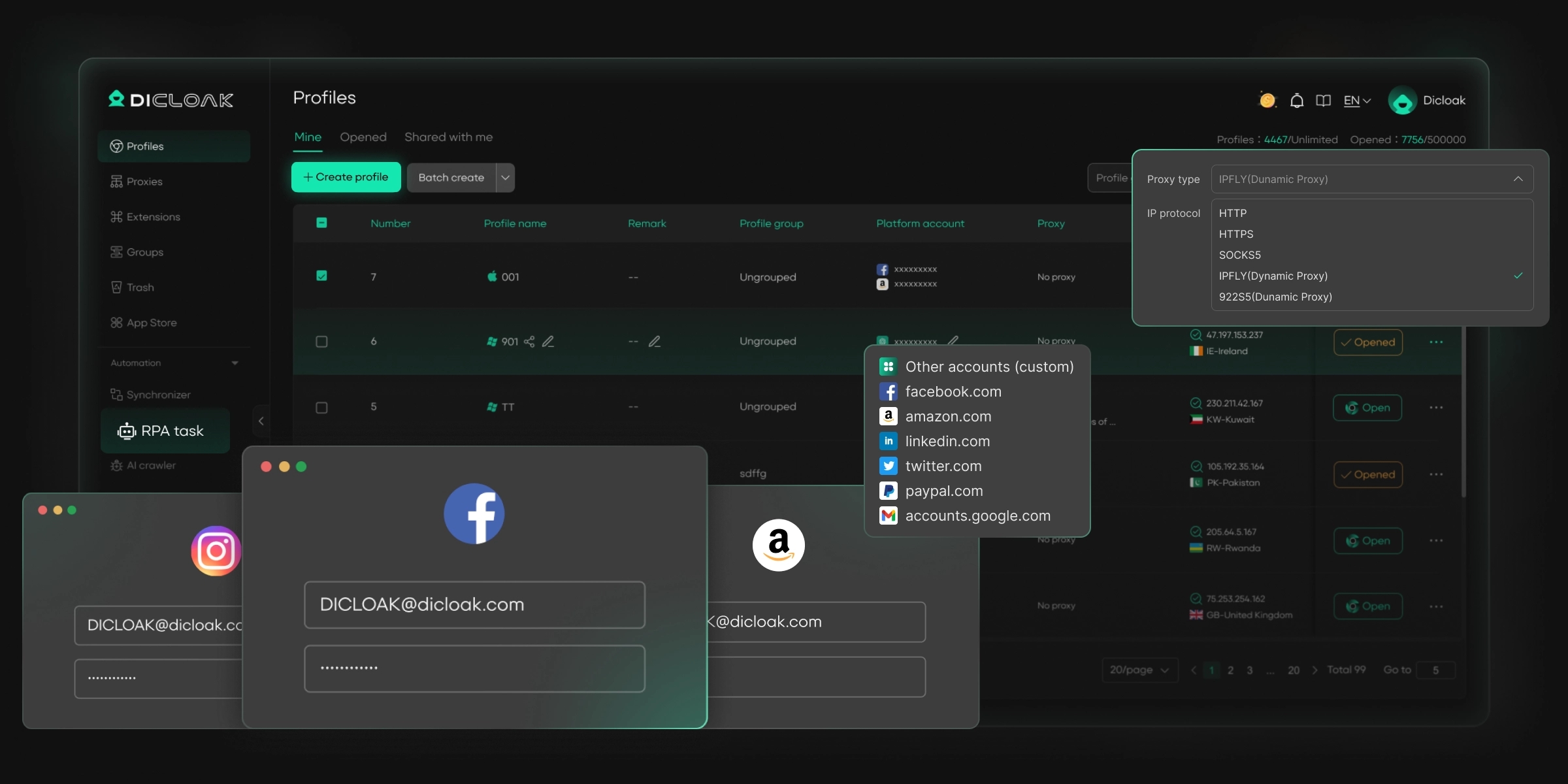
⚡The DICloak Antidetect Browser has become a global favorite for its unparalleled ability to efficiently and securely manage multiple accounts. Designed for professionals in social media management, affiliate marketing, traffic arbitrage, e-commerce, account farming, airdrops, and more, DICloak offers powerful features like RPA automation, bulk operations, and a window synchronizer. Additionally, it allows you to customize fingerprints and integrate proxies for each profile, ensuring top-level security and operational efficiency. It’s the ultimate tool for seamless, secure, and scalable operations.
What Makes DICloak Stand Out?
✅ Manage 1,000+ Accounts on One Device: Stop wasting money on extra hardware! DICloak allows you to manage multiple accounts on a single device, cutting costs and boosting efficiency.
✅ Guaranteed Account Safety, No Ban Risks: Every account gets its own isolated browser profile with custom fingerprints and IPs, drastically reducing the risk of bans. Your accounts, your control!
✅ Flexible Proxy Configuration for Maximum Performance: Seamlessly integrate with all major proxy protocols (HTTP/HTTPS, SOCKS5) and manage your proxy pool with bulk operations. No more struggling with IP management—DICloak has you covered.
✅ Streamlined Team Collaboration for Better Results: Easily manage your team with advanced tools like profile sharing, permission settings, data isolation, and operation logs. Your team works smarter, not harder.
✅ Automate the Grind with RPA: DICloak's built-in RPA saves you hours of manual work. Automate repetitive tasks, streamline workflows, and focus on what really matters—growing your business.
✅ Powerful Bulk Tools to Scale Your Operations: Create, import, and launch multiple browser profiles in one click. DICloak makes scaling your business as easy as it gets.
✅ Compatible with All Major Operating Systems: Based on the Chrome core, DICloak supports simulating Windows, Mac, iOS, Android, and Linux operating systems. No matter what platform you need, DICloak has you covered.
🔗 Ready to Get Started?
Visit the DICloak website to explore more details and choose the plan that’s right for you. Start for free today and experience the power of secure, efficient, and scalable multi-account management!
Conclusion
When choosing a specialized browser, it's essential to look beyond surface-level appeals like a zero-dollar price tag or an open-source label. For casual privacy needs, mainstream tools might do the job. However, for serious professional tasks—whether managing e-commerce stores or scaling marketing campaigns—the key factors should be reliability, dedicated support, and whether the tool is designed specifically for the job at hand.
Camoufox, while free and open-source, offers a good example of the trade-offs involved. Although it may appear appealing for those looking to avoid subscription fees, its lack of consistent updates and limited support makes it a risky choice for business-critical operations.
Ultimately, the goal is to find a solution that functions as a reliable asset to your operations, not a potential point of failure. So, ask yourself: are your current digital tools genuinely benefiting your business, or are they a hidden liability?
 Web Proxy Tools
 Free Tools
 Cookie Plugin
 UA Generator
 MAC Address Generator
 IP Generator
 IP Address List
 2FA Code Generator
 World Clock
 Anonymous Check
 WebRTC Leak Test
 UUID Generator
 Free Web Proxy Site
 Proxy Checker
 FB Ad Checker
 AI Web Scraping
 Free SMM Tools
 Twitter Shadowban Checker
 Instagram Name Checker
 UTM Generator
 Username Generator
 AI Hashtag Generator
 LinkedIn Headline Generator
 Social Media Image Resizer