Tracking keyword rankings is a crucial part of SEO. Whether you're running an SEO agency, a digital marketing team, or an affiliate website, knowing where your pages rank on search engines like Google, Bing, or Yahoo is essential for refining your strategies and staying ahead of competitors. However, search engines don't like automated tracking. If you repeatedly check rankings for multiple keywords, Google or Bing may detect this as bot-like behavior. This can lead to IP bans, preventing further searches, CAPTCHAs that slow down tracking, and personalized results instead of neutral ranking data.
To avoid these restrictions and ensure accurate data collection, SEO professionals use rank tracking proxies. These proxies act as intermediaries, anonymizing and distributing search queries. By doing so, they make it appear as if the searches are coming from real users in various locations. This helps bypass blocks and CAPTCHAs while providing unbiased ranking data.
For even more anonymity and effective multi-account management, many SEO experts turn to DICloak, an antidetect browser. DICloak helps prevent tracking, manage multiple accounts, and automate rank tracking without detection. This combination of rank tracking proxies and DICloak ensures seamless, efficient SEO tracking without the risk of interruptions or inaccurate results.
What Are Rank Tracking Proxies?
Rank tracking proxies are special tools that help you check how your website ranks on search engines like Google. They act as hidden paths for your search queries. Instead of going straight from your computer to Google, your searches go through another server first. This makes your rank tracking tool look like many different users from many places.
Here is a simple way to think about it. Imagine you want to see how your site shows up in New York and Tokyo. If you search for your own IP, Google may show results just for you. But with rank tracking proxies, you can use an IP in New York and another in Tokyo. Your SEO tool then gets real ranking data as local users would see it.
Rank tracking proxies help solve two big problems. First, search engines might block or slow down requests if they come too fast from one IP. Proxies send your requests from many IPs, so you avoid blocks and CAPTCHAs. Second, search results change by location and history. Using proxies lets you test results from the right place, so your data is true and useful.
For example, an online store in London wants to know how its product page ranks in Paris. Without proxies, the SEO report could show only UK search results. Using rank tracking proxies, the store can see real Paris search results. This better guides their SEO work and helps them grow traffic in France.
In short, rank tracking proxies make SEO rank monitoring accurate, safe, and global. They give clear views of rankings from different places and prevent errors that happen when all checks come from one location or IP.
Benefits of Using Rank Tracking Proxies
Rank tracking proxies are crucial for SEO professionals who want to monitor website performance and search engine rankings without facing common obstacles like IP blocks, CAPTCHAs, and inaccurate results. By using proxies, you can access real, unbiased SEO data that helps inform your strategy. Below, we highlight the key benefits of using rank tracking proxies to ensure better, more efficient SEO practices.
Achieving Accurate and Unbiased Results
A primary advantage of rank tracking proxies is their ability to provide accurate, unbiased search results. Search engines like Google often personalize results based on location, search history, and other factors. If you track rankings from your own IP address, your results may be skewed by personalized data. Rank tracking proxies solve this problem by routing your queries through a variety of real IPs across different locations, providing you with unbiased data that reflects how local users see search results.
For instance, a travel blog based in the U.S. wants to track how it ranks for "best travel deals" in Japan. If the blog owner checks rankings from their own IP, Google will likely show U.S. results. But using geo-targeted proxies with Japanese IPs will show the true rankings that users in Japan would see, offering valuable insights that help optimize content for that specific market.
Avoiding IP Blocks and CAPTCHAs
SEO professionals often face IP blocks and CAPTCHAs when conducting automated rank tracking, especially when running large-scale checks. Search engines limit the number of queries that can come from a single IP to prevent automated scraping. Without proxies, running too many searches can trigger IP blocks or CAPTCHA challenges, slowing down the tracking process and making it inefficient.
Rotating rank tracking proxies solve this issue by distributing queries across multiple IP addresses, making your rank tracking activity appear more like natural user behavior. This prevents search engines from detecting and blocking your IP. For instance, a digital marketing agency that tracks thousands of keywords each day can use rotating proxies to ensure its rank tracking tool runs smoothly without interruptions. Proxies also help avoid CAPTCHAs by routing queries through clean, unblocked IPs, making the entire process faster and more efficient.
To further enhance privacy and prevent detection, tools like DICloak create separate browser profiles for each rank tracking session, preventing search engines from linking searches to the same user and ensuring undetectable rank tracking.
Scalability for Large-Scale Tracking
As SEO strategies grow, so does the need for large-scale rank tracking. Monitoring hundreds or even thousands of keywords in multiple countries requires scalability. Rank tracking proxies allow you to easily scale your efforts by enabling you to run multiple checks simultaneously without the risk of IP blocks or slowdowns.
For example, a global e-commerce company may need to track rankings for hundreds of products across 20 different countries. Using a large pool of rank tracking proxies, the company can conduct rank checks in real-time across multiple regions, ensuring the data is accurate and collected efficiently. With proxies, businesses can scale their SEO tasks without worrying about search engines blocking them or slowing down their operations.
In conclusion, rank tracking proxies offer SEO professionals several key benefits. They help achieve accurate, unbiased results, avoid IP blocks and CAPTCHAs, and scale tracking efforts to meet growing SEO demands. By using proxies, businesses can ensure a more reliable, efficient, and precise SEO strategy, making them a must-have tool for any SEO expert or agency looking to improve their website’s performance in search rankings.
Types of Rank Tracking Proxies
After you learn the benefits of using rank tracking proxies, it’s important to know the main types you can use. Each type works a little differently. They help you check search engine rankings in many ways. Some are better for certain tasks than others. Below we explain four key kinds of rank tracking proxies and give real examples to help you understand them easily.
Residential Proxies
Residential proxies use real IP addresses from people’s home internet providers. Search engines like Google trust these IPs more because they look like normal users. This makes them great for tracking local ranking data.
For example, a coffee shop in Seattle may want to know how it ranks for “best latte near me” in different parts of the city. Using residential proxies with IPs from Seattle ZIP codes gives results that look real and accurate. This means the owner sees the true local rank, not just rankings from their own IP. Rank tracking proxies that use residential IPs help avoid blocks and give cleaner data.
Residential proxies are more costly and slower than other types. But they are harder for Google and Bing to detect as bots. This makes them ideal when accurate local rankings matter most for SEO work.
Datacenter Proxies
Datacenter proxies come from big servers in data centers. They are not tied to real home users. These proxies are often cheaper and faster than residential ones. Many SEO tools use them when speed is more important than stealth.
For example, a small blog owner might use datacenter proxies for general rank tracking. They need to check rankings for hundreds of keywords each day. Fast speed helps get data quickly. But Google may detect datacenter IPs more easily, so these proxies are best when you rotate them and keep a large pool of different IPs. Rank tracking proxies in datacenters work well for fast checks, but they may need careful setup to avoid blocks.
Mobile Proxies
Mobile proxies use IP addresses from real mobile devices on 3G, 4G, or 5G networks. Websites tend to trust these IPs a lot because they come from phones or tablets. They are harder to block than datacenter IPs.
Think of a company that wants to know how its brand ranks on mobile search results in Tokyo during lunchtime. Using mobile proxies with Tokyo mobile IPs gives rankings that look like real phone users see them. This gives a unique view of mobile rankings that desktop checks cannot offer. Because mobile browsing behavior is different, using mobile rank tracking proxies gives more complete SEO insight for businesses focused on mobile users.
Mobile proxies usually cost more and are slower than datacenter proxies. But for mobile-specific ranking checks, they are worth the investment.
Rotating Proxies
Rotating proxies automatically change the IP address after every request or after a short time. This type is useful when you run many rank checks in one session. Instead of using one IP many times, rotating proxies use many different IPs. This makes the requests look like coming from many real users.
A real example is a large e‑commerce SEO team that tracks rankings across 30 countries every morning. If they used one IP or a small group of IPs, search engines might block them for too many requests. But with rotating rank tracking proxies, their tool rotates thousands of IPs. This avoids blocks and CAPTCHAs and ensures the data comes back quickly and safely.
Rotating proxies often mix residential, datacenter, and mobile IPs. This blend gives both speed and trustworthiness. It is a powerful choice for wide‑scale tracking and for agencies handling many client sites at once.
In short, rank tracking proxies come in many forms. Residential proxies give trusted local results. Datacenter proxies are fast and cost‑effective. Mobile proxies show real mobile search behavior. Rotating proxies keep your SEO checks smooth and safe by switching IPs. Knowing these types helps you choose the right proxy for your SEO needs and avoid blocks while getting accurate ranking data.
Key Features to Look for in Rank Tracking Proxies
Now that you understand the types and benefits of rank tracking proxies, the next step is to know what makes a good proxy provider. Not all proxies are equal. Choosing the right features can make your SEO rank tracking more accurate and easier to run. Below are the key features SEO professionals look for, with clear examples so you understand why they matter.
Geo‑Targeting Capabilities
One of the most important features of rank tracking proxies is geo‑targeting. This means choosing IP addresses from specific cities or countries. Search results change based on location. Without geo‑targeting, your SEO tool may show rankings that are not relevant to your market.
For example, a small online shop in Paris may want to know its rank in Berlin and Lisbon. If they use proxies with IPs from those cities, their rank tracking tool will show real local rankings. This helps the SEO team adjust keywords and content for each market. SEO proxy providers like SOAX offer city‑level IP filters, which make this possible.
Good geo‑targeting helps businesses track local SEO performance and compare results across regions.
IP Pool Size and Quality
The size and quality of the IP pool are key for rank tracking proxies. A larger pool means you can rotate through many IPs during rank checks. This lowers the chance that search engines detect repeated requests.
High‑quality IPs are also important. If IPs are poor or blacklisted, your rank checks may fail or trigger blocks. For example, Nodemaven advertises a large pool of clean residential IPs with good reputation. This helps SEO tools collect data reliably without interruptions.
In simple terms:
- Large IP pool = more rotation and less risk
- High‑quality IPs = fewer failed rank checks
Speed and Latency
Speed and latency are big factors for SEO tools that run many checks. Rank tracking proxies need to respond quickly so your tool can collect rankings fast. Slow proxies can delay your scheduling and make reports late.
Imagine an SEO agency tracking 10,000 keywords every morning. If the proxies are slow, the job could take hours longer. Fast proxies help the tool finish rank checks quickly and deliver data on time. Some providers guarantee high speeds, which is especially valuable when you run large‑scale SEO monitoring.
Good speed also means fewer timeouts and more reliable rank tracking sessions.
Support and Reliability
Reliable service and strong support matter a lot in SEO. If a proxy provider goes offline or has poor connections, your rank tracking will suffer. Rank tracking proxies should have high uptime so your SEO tools can run around the clock without gaps.
Also, good customer support helps when you run into technical problems. For example, if your proxy stops working during a big campaign, fast support can fix it and avoid data loss. Some premium providers even offer 24/7 technical help, which is useful for agencies and global teams.
In real SEO work, reliability means:
- High uptime = constant access for rank checks
- Responsive support = fast help when issues arise
In summary, choosing the right rank tracking proxies means looking beyond just price or IP type. Geo‑targeting helps you get real local rankings. A large, high‑quality IP pool keeps your checks safe. Fast speed ensures your tools run smoothly. And strong support keeps your SEO work on track. These key features make rank tracking more accurate, efficient, and reliable for any SEO professional—whether you run a small blog or manage global campaigns.
Choosing the Right Proxy Provider for Rank Tracking Proxies
After learning what features make great rank tracking proxies, the next big step is choosing the right provider. Not all proxy services work the same. Some are cheap but slow or limited. Others are more costly but offer many benefits like global IPs, fast speed, and strong support. Below we explain how to pick a good provider and compare the top choices in 2026, with clear examples to guide you.
Criteria for Selecting a Proxy Provider
When selecting a provider of rank tracking proxies, there are several key things to check:
1. Wide Location Coverage and Geo Targets
Good providers offer many countries and cities. This means you can track rankings where your audience is. For example, SOAX offers city‑level and ISP targeting for precise ranking checks. This lets you see exactly how your site ranks in a given city or network.
2. Large and Clean IP Pool
A large IP pool means you get many different addresses to rotate. This lowers the chance search engines flag your proxy. Bright Data and Decodo (formerly Smartproxy) provide millions of clean IPs. This helps your SEO tools collect data without blocks or errors.
3. Speed and Reliability
Fast proxies make your rank tracking tools run smoothly. Cheap or slow proxies can delay data collection or cause timeouts. Services like Bright Data and Webshare are reported to have high speeds and stable networks, which is helpful for large SEO projects.
4. Quality Support and Uptime
Good customer support matters if you run into setup issues or errors during a campaign. A provider with high uptime and help channels means your SEO work won’t stop unexpectedly. Enterprise‑level services often include professional support and documentation.
5. Clear Pricing and Plans
Some providers charge high fees for premium features, while others offer flexible plans that fit small or large budgets. For example, Decodo has affordable pricing with different plans, making it easier for beginners and teams alike.
These criteria help you choose rank tracking proxies that match your needs, whether you are a small business, SEO agency, or enterprise team.
Comparison of Top Rank Tracking Proxy Providers
Below are some of the most trusted rank tracking proxy providers in 2026, with real strengths that match different SEO needs:
1. Bright Data
Bright Data is known for its huge network of IPs, with many residential, mobile, and ISP proxies available worldwide. Their large geo coverage makes it easy to track rankings in many countries. This provider is strong for enterprise SEO teams that need reliable, accurate global data.
A global e‑commerce company uses Bright Data to track keyword rankings in all 50 U.S. states and multiple markets in Europe. The large IP pool ensures fewer blocks and more precise local SERP insights.

2. Decodo (formerly Smartproxy)
Decodo offers a large proxy pool and strong performance at a more affordable price. They are often recommended for small to medium SEO projects. Their dashboards and flexible plans help beginners and teams manage proxies easily.
A small SEO agency needs to monitor 500 keywords across three countries. Decodo gives clean proxies and solid geo‑targeting at a price that fits their budget.
3. SOAX
SOAX stands out with precise geo‑targeting and ethical IP sourcing. Their service lets you filter proxies by city and ISP level, which can improve local rank tracking accuracy.
A local business in Australia wants to check rankings in five different Australian cities. SOAX’s city‑level filtering gives them clearer insights on how local users see their rankings.
4. ProxyEmpire
ProxyEmpire provides a large and varied proxy pool with residential, mobile, and datacenter IPs. Their service works well for rank tracking as well as other SEO tasks like competitor monitoring.
A competitive SEO team uses ProxyEmpire to track position changes for multiple clients in many markets, leveraging rotating proxies that cover 180+ countries.
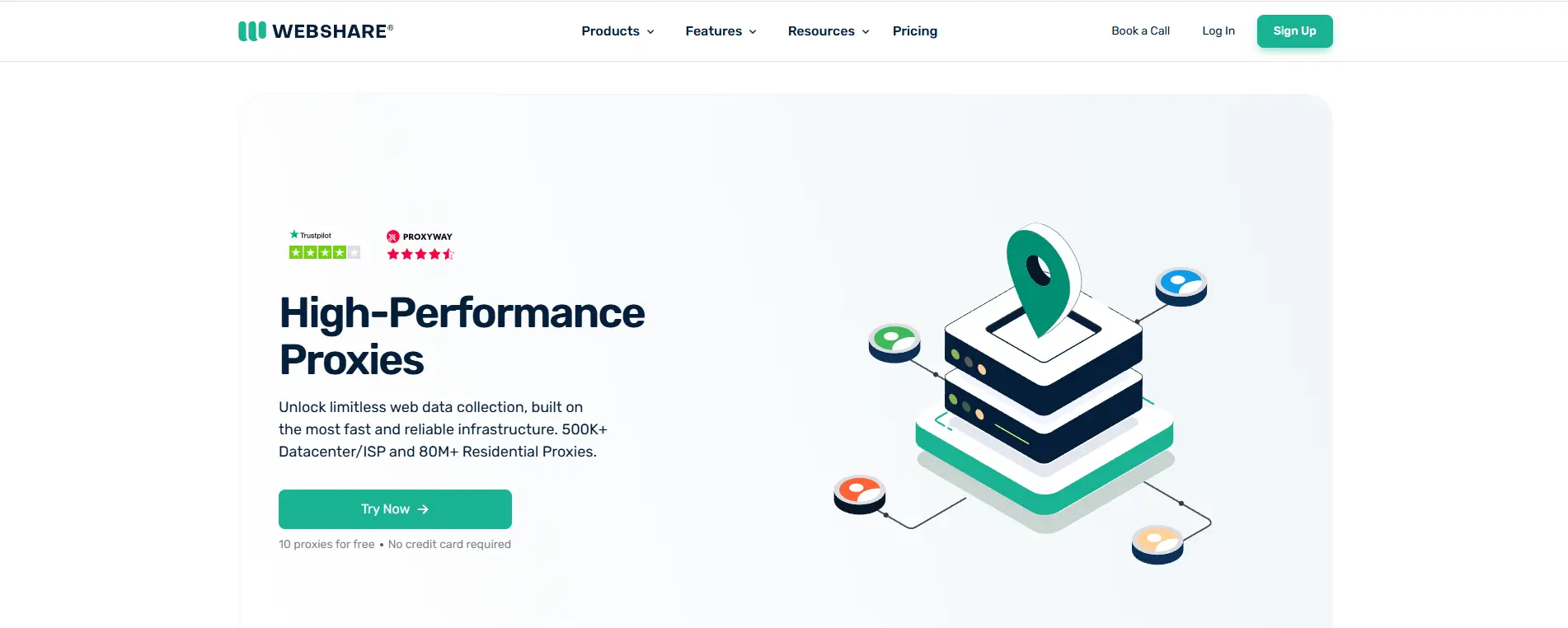
5. Webshare
Webshare offers many proxies with strong speed and uptime, making it a simple choice for many users. While its support tools may not be as advanced as others, it gives reliable performance for rank tracking at a good value.
For example, a startup SEO group picks Webshare for affordable rotating proxies that handle daily checks without frequent slowdowns or failures.
In summary, choosing the right provider of rank tracking proxies means balancing needs like geographic coverage, IP pool size, speed, and support. Bright Data shines for enterprise needs, Decodo works well for small teams, SOAX gives fine‑tuned geo options, and ProxyEmpire and Webshare provide broad, reliable networks. By comparing these providers based on your project goals and budget, you can ensure accurate, scalable, and trustworthy rank tracking data for your SEO strategy.
Best Practices for Using Rank Tracking Proxies
Now that you know how to choose a good provider of rank tracking proxies, it’s time to learn how to use them well. Even the best proxies won’t help if you don’t use them correctly. The right methods help you get accurate data, stay safe from blocks, and make your SEO work smoother. Below are key best practices with real examples so you can apply them easily.
Use Residential or Mobile Proxies for High Accuracy
When you want reliable ranking data, choose residential or mobile proxies instead of just datacenter ones. These proxies use IPs from real people or mobile networks, so search engines like Google see them as normal users. This means your rank tracking tool gets data that is closer to real local results because it looks like real people are searching.
For example, a local coffee shop in Chicago used residential rank tracking proxies to check how it ranked for “best espresso near me” in several neighborhoods. The results looked like real local searches, which helped the owner adjust marketing and content based on real user behavior.
Rotate Proxies to Avoid Detection
Search engines and websites monitor repeated requests from the same IP. If they see many requests from one address, they may block it. That’s why you should rotate your IPs often. Rotating proxies change your IP address either per request or at set intervals.
For example, a marketing agency tracked 10,000 keywords every day. Without rotation, their tool was blocked by Google and had to solve CAPTCHAs, which slowed down their work. After switching to rotating rank tracking proxies, the tool kept switching IPs. The search engine saw the traffic as ordinary users, so it stopped blocking them and their rank tracking ran smoothly.
Set Query Limits to Mimic Human Behavior
Search engines look for patterns that seem automated. Lots of fast queries from the same user in a short time can trigger blocks or CAPTCHAs. To avoid this, set limits on how many queries you send per minute or hour. This makes the traffic look more like a human user browsing the web.
A small SEO team learned this the hard way. They sent 500 rank checks in one minute and Google blocked their proxy pool. They changed their settings to send about 30 checks per minute instead. This mimicked human behavior better, and their tools did not get blocked again.
Use Geo‑Specific Proxies for Local SEO
If you want to track local rankings, use proxies that have IP addresses in the exact city or region you care about. Search engines show different ranking results based on location. With geo‑specific proxies, you see the same results as users in that region.
For example, an online pet store in Miami wanted to see how it ranked in New York and Dallas. Using rank tracking proxies with IPs from those cities helped them understand real rankings in each market. This allowed them to tailor content and ads to local audiences.
Monitor Proxy Performance
Good proxy usage means more than choosing the right type and provider. You also need to check how well they work over time. Regularly test your proxies for speed, uptime, and block rate. If you see many errors or slow connections, it may be time to change providers or adjust settings.
For example, a large e‑commerce SEO team kept logs of proxy performance. They found that some IPs from one provider were slow during peak hours. They switched to proxies with better speed for those times, which helped their rank tracking tools finish jobs faster and with fewer errors.
Using these best practices helps you get the most out of your rank tracking proxies. Choosing the right type, rotating IPs, limiting queries, targeting local searches, and monitoring performance all make your SEO data more accurate and your tracking tools more reliable. These steps give you clearer insights and help you make smarter SEO decisions.
Why choose DICloak Antidetect Browsers for your business?
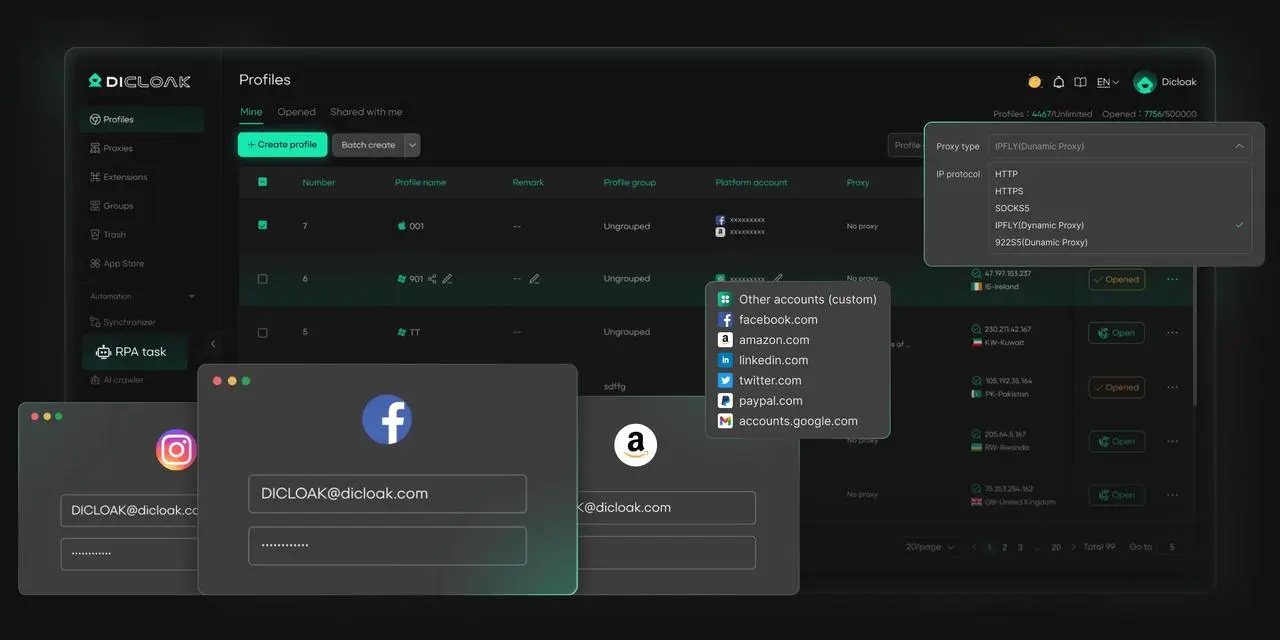
⚡The DICloak Antidetect Browser has become a global favorite for its unparalleled ability to efficiently and securely manage multiple accounts. Designed for professionals in social media management, affiliate marketing, traffic arbitrage, e-commerce, account farming, airdrops, and more, DICloak offers powerful features like RPA automation, bulk operations, and a synchronizer. Additionally, it allows you to customize fingerprints and integrate proxies for each profile, ensuring top-level security and operational efficiency. It’s the ultimate tool for seamless, secure, and scalable operations.
What Makes DICloak Stand Out?
✅ Manage 1,000+ Accounts on One Device:
Stop wasting money on extra hardware! DICloak allows you to manage multiple accounts on a single device, cutting costs and boosting efficiency.
✅ Guaranteed Account Safety, No Ban Risks:
Every account gets its own isolated browser profile with custom fingerprints and IPs, drastically reducing the risk of bans. Your accounts, your control!
✅ Flexible Proxy Configuration for Maximum Performance:
Seamlessly integrate with all major proxy protocols (HTTP/HTTPS, SOCKS5) and manage your proxy pool with bulk operations. No more struggling with IP management—DICloak has you covered.
✅ Streamlined Team Collaboration for Better Results:
Easily manage your team with advanced tools like profile sharing, permission settings, data isolation, and operation logs. Your team works smarter, not harder.
✅ Automate the Grind with RPA:
DICloak's built-in RPA saves you hours of manual work. Automate repetitive tasks, streamline workflows, and focus on what really matters—growing your business.
✅ Powerful Bulk Tools to Scale Your Operations:
Create, import, and launch multiple browser profiles in one click. DICloak makes scaling your business as easy as it gets.
✅ Compatible with All Major Operating Systems:
Based on the Chrome core, DICloak supports simulating Windows, Mac, iOS, Android, and Linux operating systems. No matter what platform you need, DICloak has you covered.
🔗 Ready to Get Started?
Visit the DICloak website to explore more details and choose the plan that’s right for you. Start for free today and experience the power of secure, efficient, and scalable multi-account management!
Conclusion
Rank tracking proxies are essential tools for SEO professionals who need accurate and efficient ranking data. These proxies help bypass common issues like IP blocks, CAPTCHAs, and biased results by routing search queries through multiple IPs, often from different locations. By using residential, mobile, and rotating proxies, SEO teams can ensure they receive unbiased data that mirrors the true experience of local users. Geo-targeting, the ability to track rankings from specific locations, is particularly important for businesses with regional marketing strategies. When selecting a proxy provider, it’s important to consider factors such as IP pool size, speed, and reliability. Large, high-quality IP pools reduce the risk of detection and improve the consistency of data collection.
Best practices for using rank tracking proxies include rotating IPs to avoid detection, setting query limits to mimic human behavior, and monitoring proxy performance to ensure smooth operation. By following these practices, SEO professionals can achieve accurate, real-time data, track rankings at scale, and refine strategies to improve search engine visibility. Choosing the right provider and employing the correct proxy usage strategies ultimately enhances the effectiveness and reliability of SEO campaigns.
FAQ
What are rank tracking proxies and why are they important for SEO?
Rank tracking proxies are specialized tools that allow SEO professionals to monitor search engine rankings without getting blocked or receiving biased results. They provide multiple IP addresses from different locations, helping to gather accurate, real-time ranking data from search engines like Google. These proxies are essential for overcoming IP blocks, CAPTCHAs, and localized search variations.
How do rank tracking proxies help avoid IP blocks and CAPTCHAs?
Rank tracking proxies distribute search queries across multiple IP addresses, making the traffic appear as though it comes from different users. This prevents search engines from detecting automated activity, reducing the risk of IP blocks or CAPTCHAs that could slow down or halt your SEO efforts.
What are the different types of rank tracking proxies and which one should I use?
The main types of rank tracking proxies are residential, datacenter, mobile, and rotating proxies. Residential proxies provide real IPs from home internet providers, offering high trust and accuracy for local SEO. Mobile proxies are great for tracking mobile-specific rankings. Datacenter proxies are fast and cost-effective but may be detected more easily. Rotating proxies automatically change IPs, making them ideal for large-scale tracking to avoid detection.
How can geo-targeting in rank tracking proxies improve my SEO strategy?
Geo-targeting allows SEO professionals to track rankings from specific cities or regions. This is crucial for businesses with a local or regional focus, as search engine results vary by location. Using geo-targeted proxies ensures you get accurate rankings based on how users in those regions see your site.
What key features should I look for when choosing a rank tracking proxy provider?
When selecting a proxy provider for rank tracking, look for features like a large and clean IP pool, strong geo-targeting capabilities, fast speeds, and high reliability. A good provider should also offer excellent customer support and ensure that the proxies are consistently available for uninterrupted SEO monitoring.
 Web Proxy Tools
 Free Tools
 Cookie Plugin
 UA Generator
 MAC Address Generator
 IP Generator
 IP Address List
 2FA Code Generator
 World Clock
 Anonymous Check
 WebRTC Leak Test
 UUID Generator
 Free Web Proxy Site
 Proxy Checker
 FB Ad Checker
 AI Web Scraping
 Free SMM Tools
 Twitter Shadowban Checker
 Instagram Name Checker
 UTM Generator
 Username Generator
 AI Hashtag Generator
 LinkedIn Headline Generator
 Social Media Image Resizer