Finding winning products is the hardest part of dropshipping. Many sellers fail not because ads are bad or stores look poor, but because they choose the wrong products. Trends move fast, competition is high, and guessing no longer works. This is where Niche Scraper comes in.
In this guide, you will learn what Niche Scraper is, how it works, and how real dropshippers use it to find products with proven demand. We will walk through its key features, show you how to use it step by step in 2026, compare it with popular alternatives, and explain its real pros and cons. Whether you are just starting or trying to scale, this article will help you make smarter product decisions with data instead of luck.
What is Niche Scraper?
Niche Scraper is a product research tool made for dropshipping. It helps you find products that are already selling online, so you do not have to guess. In simple terms, it is like a “search engine” for winning product ideas. It scans big sources like Shopify stores and AliExpress listings, then shows you product data and trends in one place.
Key Features of Niche Scraper
After learning what Niche Scraper is, it helps to understand how its main features work together. Niche Scraper is not only a product finder. It is a research toolkit built for dropshipping sellers who want to move faster and make fewer mistakes. Each feature supports one clear goal. Help you discover products, check demand, and launch with more confidence.
Product Research Capabilities
At the center of Niche Scraper is the Product Scraper. This tool scans large platforms such as AliExpress, Shopify, and Amazon to find products with real sales activity. Instead of browsing endless product pages, you search using data. You can narrow results by order volume, growth speed, competition level, price range, and shipping region. Each product comes with sales trend data and an Aliscore, which combines demand, reviews, and competition into one simple signal.
For example, a seller researching home products might find a compact storage item showing steady weekly growth and low competition. That kind of signal suggests real demand without heavy saturation. This approach is safer than relying on generic bestseller lists, which often reflect what sold well months ago, not what is selling now.
Store Analysis Tools
Product data alone is not enough. You also need to understand how successful stores operate. The Store Analysis feature in Niche Scraper allows you to study any Shopify store in detail. By entering a store URL, you can see its top-selling products, estimated traffic, and general product structure. You can also check when products were added, which helps identify new launches instead of old listings.
This is useful when you spot a fast-growing niche store on social media. Instead of guessing what makes it profitable, you can analyze its product mix and focus areas. Many sellers use this feature to learn what works in a niche before building their own offer.
Ad Spy Features
A product is only proven when people respond to its ads. Niche Scraper includes an Ad Spy tool that shows live Facebook and TikTok ads. You can explore ads by engagement level, keywords, or landing pages. When an ad runs for a long time and gets strong interaction, it often means the product converts well.
For example, seeing a grooming tool ad with thousands of comments over several weeks is a clear signal of demand. Studying the ad format, opening hook, and offer helps sellers avoid trial-and-error when creating their own campaigns. This makes product validation faster and cheaper.
Hand-Picked Product Suggestions
For users who prefer guidance, Niche Scraper also offers a Hand-Picked section. These products are reviewed and selected daily by the Niche Scraper team. Each entry includes pricing ideas, profit estimates, supplier links, and example ads. This section is helpful for learning what a strong product looks like.
However, experienced sellers treat these products as inspiration, not templates. Because many users see the same picks, copying them directly can lead to saturation. A better approach is to adjust the angle, improve branding, or bundle the product in a new way.
Video Ad Creator
To help sellers launch quickly, Niche Scraper provides a simple Video Ad Creator. This tool turns product images into short video ads with text and music. It is designed for speed, not perfection. Many beginners use it to test products on Facebook or TikTok without hiring editors or buying expensive software.
While advanced sellers often move to external tools later, this feature removes a common early barrier. It allows new users to test ideas fast and learn what works before investing more time or money.
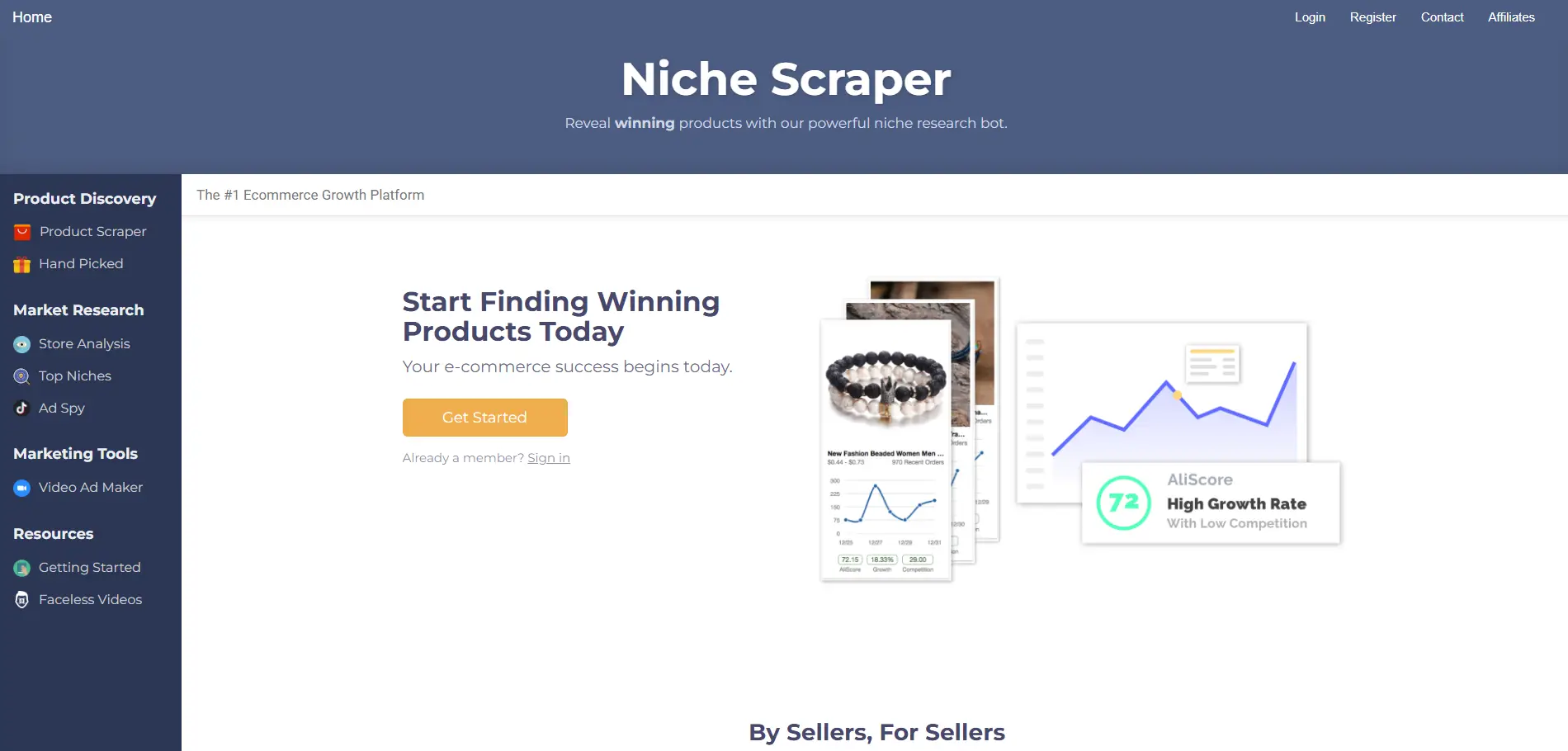
How to Use Niche Scraper Effectively in 2026
Now that you understand the key features of Niche Scraper, it is time to put them into action. Many people fail at dropshipping not because the tools are bad, but because they do not follow a clear process. In 2026, success comes from breaking the work into simple steps and using data at each stage. Niche Scraper fits perfectly into this workflow.
Step-by-Step Guide to Getting Started
Step 1: Choose a profitable niche
Every dropshipping business starts with a niche. A good niche has demand, but it is not overcrowded. Start by asking yourself what topics interest you, because working in a niche you like helps you stay consistent. Then use Niche Scraper, Google Trends, and social media to see if people actively search for products in that niche. Inside Niche Scraper, the Store Analysis feature helps you see how competitive a niche is by showing how many stores already sell similar products. A strong niche usually includes products that solve a real problem, show steady demand, and leave room for profit after ads and shipping.
Step 2: Find your suppliers
Once you pick a niche, suppliers become critical. Your supplier affects shipping speed, product quality, and customer satisfaction. Many sellers use AliExpress or platforms like SaleHoo, but searching manually can take hours. With Niche Scraper’s Product Scraper, you can quickly see which suppliers already handle high order volumes and consistent sales. Look for suppliers with stable inventory and reasonable shipping times, ideally with local or regional warehouses when possible.
Step 3: Build your store
Next, you need a store to sell your product. Shopify is the most common choice for beginners because it is easy to use and works well with dropshipping tools. When building your store, keep it simple. Use a clean design, write clear product descriptions, and focus on benefits instead of long technical details. Many successful dropshipping stores in 2026 are mobile-first, because most traffic comes from phones.
Step 4: Set up payment and logistics
Before running ads, make sure customers can pay easily. Set up trusted payment gateways such as PayPal or Stripe and confirm they support your target countries. On the logistics side, plan how orders will be fulfilled, tracked, and returned. Tools like DSers or Oberlo-style integrations help automate order processing, which reduces mistakes when sales increase.
Step 5: Create ads and start marketing
Traffic is what turns a store into a business. Paid ads are still the fastest way to test products. Use Niche Scraper’s Ad Spy to study Facebook and TikTok ads that have strong engagement and long run times. These ads show what already works. Create simple video ads that clearly show the problem and the solution. Short, clear videos often perform better than polished but complex ads. Start with small budgets and test before scaling.
Step 6: Manage multiple store accounts with DICloak
As you grow, you may run more than one store or ad account. Platforms like Shopify, Amazon, or Etsy often restrict multiple accounts from the same device or IP. DICloak helps solve this problem by creating isolated browser profiles. Each profile acts like a separate device with its own fingerprint and proxy setup. This allows you to manage multiple stores or ad accounts safely and switch between them without risking bans or account links.
Step 7: Track performance and optimize
After launching, tracking becomes your daily job. Use tools like Google Analytics and ad platform dashboards to monitor traffic, conversions, and ad spend. If ads get clicks but no sales, improve your product page or pricing. If there are no clicks, adjust your ad hook. Dropshipping in 2026 is about testing, learning, and improving week by week, not finding one perfect product overnight.
Practical Tips for Maximizing Niche Scraper
Validating Product Demand
Never rely on a single signal. A strong product usually appears in more than one place. For example, a product might show rising sales trends in Niche Scraper and also have active ads with real comments on Facebook or TikTok. When product data and ad performance support each other, the risk of failure is lower.
Avoiding Common Mistakes
One common mistake is copying hand-picked products without any changes. Since many sellers see the same ideas, this leads to fast saturation. Another mistake is chasing short viral trends that disappear in days. Niche Scraper works best when you focus on stable growth, clear demand, and realistic profit margins. Use it as a decision tool, not a shortcut.
Pros and Cons of Using Niche Scraper
After walking through how to use Niche Scraper in a real dropshipping workflow, it is worth taking a clear look at its pros and cons. This helps you understand where the tool shines and where you need to be careful. Seeing both sides makes your decisions more realistic and professional.
Advantages of Niche Scraper
Identifying Trending Products
One major advantage of Niche Scraper is its ability to spot trends early. The platform updates AliExpress product data often, which helps sellers see what is gaining traction right now. For example, a product showing steady daily orders over several weeks is usually more reliable than a sudden viral spike. This real-time trend tracking helps reduce guesswork and emotional decisions.
Streamlining Market Research
Niche Scraper makes research faster and easier, especially for beginners. The interface is simple and does not require technical skills. Instead of jumping between AliExpress, Shopify stores, and ad libraries, sellers can view product data, competitor insights, and ads in one place. This saves time and helps new users focus on learning the market instead of fighting complex tools.
Enhancing Dropshipping Efficiency
Efficiency is another strong point. With features like Shopify store analysis, curated product lists, and built-in AdSpy for Facebook and TikTok, Niche Scraper supports the entire research phase. Many sellers use the hand-picked products section to understand pricing, profit margins, and ad angles. When combined with proper account management tools like DICloak, it becomes easier to test multiple stores and products without losing control.
Free Plan for Testing
For cautious beginners, the free plan is a helpful entry point. It allows users to explore core features and understand how the tool works before committing to a paid plan. This lowers the barrier to entry and helps sellers decide if Niche Scraper fits their workflow.
Disadvantages of Niche Scraper
Product Saturation Risk
One common downside of Niche Scraper is product saturation. Because many users see the same data and hand-picked products, popular items can become overcrowded quickly. Sellers who copy products without adding a unique angle often struggle. The tool works best when used for inspiration and validation, not direct copying.
Limitations in Video Creation
The built-in video ad creator is useful for quick tests, but it is basic. It works well for simple slideshows, yet serious marketers often need more control over visuals and storytelling. As sellers scale, many move to external tools or professional editors to improve ad quality.
Reliance on AliExpress
Niche Scraper relies heavily on AliExpress data. While this is helpful for finding products, it can lead to longer shipping times and less control over fulfillment. In 2026, customers expect faster delivery. Sellers often need to switch to local warehouses or private suppliers once a product proves successful.
Support and Team Limitations
Some users report that support responses and feature updates can be slower compared to larger platforms. For solo sellers this may not be a major issue, but teams that rely on fast support should plan ahead and build backup processes.
In summary, Niche Scraper is a strong research tool when used with the right mindset. It is beginner-friendly, data-focused, and efficient. At the same time, it requires smart execution, product differentiation, and realistic expectations. Sellers who understand both the advantages and limits are far more likely to succeed long term.
Alternatives to Niche Scraper
After understanding the strengths and limits of Niche Scraper, it is natural to look at other tools on the market. While Niche Scraper is a balanced solution for product research and ad validation, different sellers have different workflows. Some focus on ads first. Others prefer raw data or all-in-one systems. Below is how the most popular alternatives compare to Niche Scraper and when they make sense.
Comparing Niche Scraper with Competitors
Minea vs. Niche Scraper
Minea is best known for multi-platform ad spying. It tracks ads across TikTok, Facebook, Pinterest, and other networks. Unlike Niche Scraper, which centers on product research and AliExpress-based validation, Minea is built for ad-first strategies. Brands that start with creative testing and audience targeting often prefer Minea. For example, a marketer launching TikTok-heavy campaigns may use Minea to spot creative trends before choosing products.
Dropispy vs. Niche Scraper
Dropispy focuses mainly on Facebook ads and Shopify store intelligence. It does fewer things than Niche Scraper, but it does them fast. Sellers who rely heavily on Facebook ads often like Dropispy for its speed and simplicity. Compared to this, Niche Scraper offers a wider workflow, combining product trends, store analysis, and ad research in one place.
Sell The Trend vs. Niche Scraper
Sell The Trend aims to be more than a research tool. It includes AI trend detection, automated store setup, product importing, and even video generation. This makes it suitable for users who want a full business system. However, this also adds complexity. Niche Scraper is often preferred by sellers who want to focus on research and validation without managing many extra features.
EcomHunt vs. Niche Scraper
EcomHunt is designed for beginners who want hand-picked products and guidance. Like Niche Scraper, it offers daily product ideas, ad examples, and profit estimates. The difference is control. EcomHunt is more plug-and-play, while Niche Scraper gives users deeper access to data, store insights, and filters. Sellers who want to learn how to research often move from EcomHunt to Niche Scraper as they gain experience.
AliShark vs. Niche Scraper
AliShark is built for data-focused users. It provides detailed AliExpress analytics, including order history, price changes, shipping times, and seller performance. While Niche Scraper offers curated suggestions and easier validation, AliShark gives raw data and full control. Experienced dropshippers who enjoy manual analysis often prefer AliShark.
Top Alternatives to Niche Scraper
In practice, each alternative serves a different purpose. Tools like Minea and Dropispy are ideal for ad-driven strategies. EcomHunt works well for beginners who want clear guidance. Sell The Trend fits users who want an all-in-one system. AliShark suits sellers who want deep AliExpress data without curation.
Niche Scraper remains one of the most balanced tools in this group. It combines product research, competitor insights, and ad discovery without becoming too complex. Many sellers do not replace it. Instead, they pair it with another tool as their strategy evolves.
Which Tool Is Right for You?
There is no single best choice. The right tool depends on how you work. If you want structured research with clear signals, Niche Scraper is a strong starting point. If your focus shifts to ad creatives, automation, or raw data control, one of these alternatives may give you an edge. The key is to match the tool to your current stage, not chase features you do not yet need.
Why choose DICloak Antidetect Browsers for your business?
⚡The DICloak Antidetect Browser has become a global favorite for its unparalleled ability to efficiently and securely manage multiple accounts. Designed for professionals in social media management, affiliate marketing, traffic arbitrage, e-commerce, account farming, airdrops, and more, DICloak offers powerful features like RPA automation, bulk operations, and a synchronizer. Additionally, it allows you to customize fingerprints and integrate proxies for each profile, ensuring top-level security and operational efficiency. It’s the ultimate tool for seamless, secure, and scalable operations.
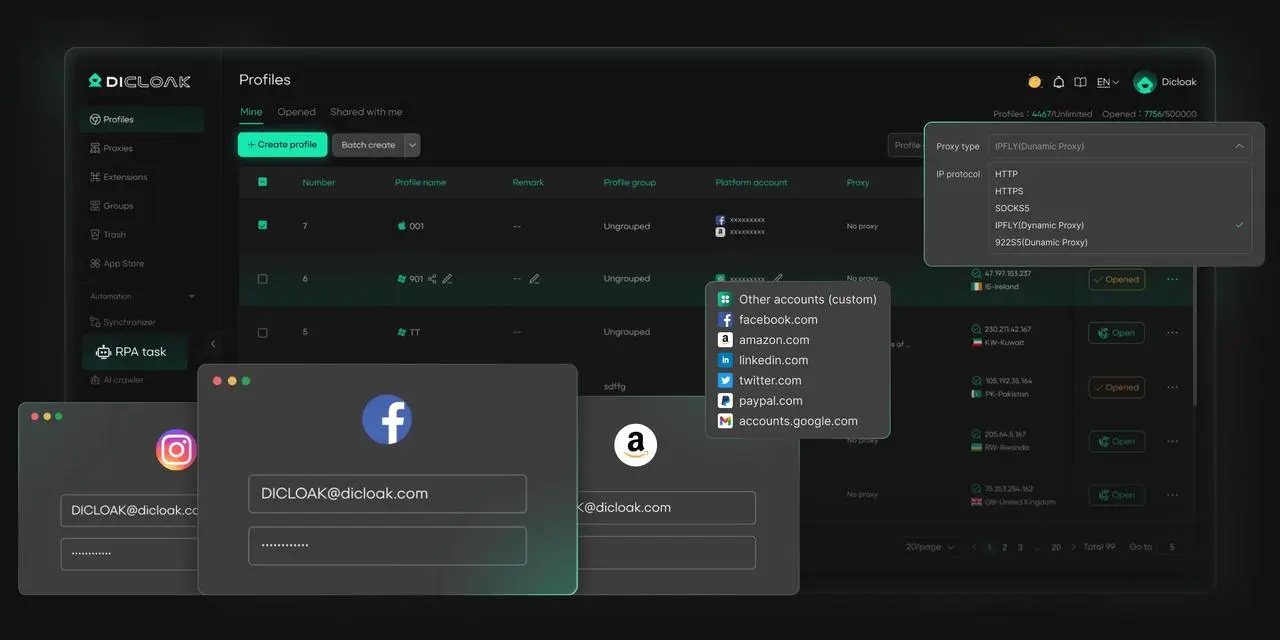
What Makes DICloak Stand Out?
✅ Manage 1,000+ Accounts on One Device:
Stop wasting money on extra hardware! DICloak allows you to manage multiple accounts on a single device, cutting costs and boosting efficiency.
✅ Guaranteed Account Safety, No Ban Risks:
Every account gets its own isolated browser profile with custom fingerprints and IPs, drastically reducing the risk of bans. Your accounts, your control!
✅ Flexible Proxy Configuration for Maximum Performance:
Seamlessly integrate with all major proxy protocols (HTTP/HTTPS, SOCKS5) and manage your proxy pool with bulk operations. No more struggling with IP management—DICloak has you covered.
✅ Streamlined Team Collaboration for Better Results:
Easily manage your team with advanced tools like profile sharing, permission settings, data isolation, and operation logs. Your team works smarter, not harder.
✅ Automate the Grind with RPA:
DICloak's built-in RPA saves you hours of manual work. Automate repetitive tasks, streamline workflows, and focus on what really matters—growing your business.
✅ Powerful Bulk Tools to Scale Your Operations:
Create, import, and launch multiple browser profiles in one click. DICloak makes scaling your business as easy as it gets.
✅ Compatible with All Major Operating Systems:
Based on the Chrome core, DICloak supports simulating Windows, Mac, iOS, Android, and Linux operating systems. No matter what platform you need, DICloak has you covered.
🔗 Ready to Get Started?
Visit the DICloak website to explore more details and choose the plan that’s right for you. Start for free today and experience the power of secure, efficient, and scalable multi-account management!
Conclusion
After exploring different tools and workflows, one thing becomes clear. Niche Scraper stands out because it balances simplicity with real data. It helps sellers find products, check demand, study competitors, and review ads in one place. From product research to ad validation, it supports the full early stage of a dropshipping business. This makes it especially useful for sellers who want structure without complexity.
Throughout this guide, we saw how Niche Scraper fits into a real process. You start by choosing a niche with demand. You use product trends and store analysis to reduce risk. You validate ideas with real ads instead of guessing. Compared to alternatives like ad-focused tools or all-in-one systems, Niche Scraper stays focused on what matters most at the start. Clear signals. Faster decisions. Fewer mistakes.
That does not mean Niche Scraper is the only tool you will ever need. As your business grows, your needs may change. Some sellers later add ad-focused platforms or deeper supplier tools. Still, many keep Niche Scraper as their core research engine because it remains reliable and easy to use. It teaches you how to think, not just what to copy.
If you are serious about starting dropshipping in 2026, the best step is to take action. Do not wait for the perfect product or tool. Start small. Test ideas. Learn from real data. Niche Scraper gives you a strong place to begin that journey. Open the dashboard, explore one niche, and take your first step toward building a profitable online store today.
FAQ
Is Niche Scraper worth it for beginners in dropshipping?
Yes, Niche Scraper is worth it for beginners. It is easy to use and does not require advanced skills. New sellers can find product ideas, check demand, and study ads in one place. The free plan also lets beginners test the tool before paying, which lowers the risk when starting out.
How accurate is Niche Scraper product data?
Niche Scraper uses estimated data based on AliExpress orders, store analysis, and ad activity. While the numbers are not exact, they are accurate enough to spot trends and compare products. Smart sellers use Niche Scraper data together with ad engagement and store quality to make better decisions.
Can Niche Scraper help avoid losing money on bad products?
Yes. Niche Scraper helps reduce risk by showing sales trends, competition levels, and real ads before you launch. For example, if a product shows steady growth and active ads, it is usually safer than a random viral item. This helps sellers avoid testing products with no real demand.
Is Niche Scraper better than other dropshipping research tools?
It depends on your workflow. Niche Scraper is one of the most balanced tools. It combines product research, store analysis, and ad spying without being too complex. Other tools may focus more on ads, automation, or raw data. Many sellers start with Niche Scraper and add other tools later as they scale.
Can I use Niche Scraper for multiple stores at the same time?
Yes, many sellers use Niche Scraper to research products for multiple stores. If you manage more than one store or ad account, it is important to keep accounts separated. Using tools like DICloak helps manage multiple store profiles safely while using Niche Scraper for research and validation.
 Web Proxy Tools
 Free Tools
 Cookie Plugin
 UA Generator
 MAC Address Generator
 IP Generator
 IP Address List
 2FA Code Generator
 World Clock
 Anonymous Check
 WebRTC Leak Test
 UUID Generator
 Free Web Proxy Site
 Proxy Checker
 FB Ad Checker
 AI Web Scraping
 Free SMM Tools
 Twitter Shadowban Checker
 Instagram Name Checker
 UTM Generator
 Username Generator
 AI Hashtag Generator
 LinkedIn Headline Generator
 Social Media Image Resizer