Introduction: Understanding How Opinion Edge Works
In today’s data-driven economy, companies rely on consumer opinions to guide product decisions, marketing strategies, and market research. Platforms like Opinion Edge connect these research needs with everyday internet users who are willing to share feedback through surveys.
Many people view Opinion Edge as a simple way to earn small amounts of extra money online. In many cases, that’s true. Users can complete surveys and receive rewards such as PayPal payments or gift cards. However, survey platforms also rely on systems that monitor activity patterns to protect the quality of their research data.
As we explained in our previous article about Opinion Edge Review showed that it is a legitimate and straightforward platform for anyone looking to earn small amounts of extra cash in their spare time. But for users who want to stay active over time—or manage multiple accounts—understanding how the system works becomes important. In this guide, we’ll explain how Opinion Edge rewards work, why accounts sometimes get flagged, and how profile management tools like DICloak can help organize multiple accounts more safely and efficiently.

Decoding the opinion edge Reward Logic and Payout Structures
The platform utilizes a proprietary "UniPoints" system as its internal currency. To optimize the return on investment for your operational time, it is critical to understand the conversion logic and the categorization of available offers.
| Metric |
Technical Detail |
| Point-to-Dollar Conversion |
1 point ≈ $0.01 |
| Prime Offer (High-Yield) |
100–200 points ($1.00–$2.00) |
| My Offer (Standard) |
25–100 points ($0.25–$1.00) |
| Quick/Mini Offer (Low-Latency) |
10–50 points ($0.10–$0.50) |
| Estimated Hourly Yield |
$1–$4 (Dependent on demographic demand) |
Redemptions are primarily facilitated through PayPal and digital gift cards. Professional users must account for the platform's liquidity constraints; initial redemptions typically undergo a 25–30 day verification hold. However, as an account's reputation matures through consistent activity, the threshold for withdrawal can drop to as low as 100 points ($1.00).
Why Opinion Edge Flags Certain Accounts
Like many survey platforms, Opinion Edge uses risk-detection systems to protect the quality of its research data. These systems analyze account activity, session patterns, and technical signals to identify behavior that may appear inconsistent or suspicious. When unusual patterns are detected, the platform may reduce the number of available surveys, delay payouts, or place the account under review.
Browser Signals and Device Identification
Survey platforms often evaluate browser signals to understand whether different sessions come from the same device. This may include technical indicators such as Canvas rendering behavior, WebGL information, AudioContext signals, screen resolution, installed fonts, and other browser characteristics. When many accounts appear to share very similar device signals, platforms may treat them as coming from the same browsing setup. In those cases, accounts can be reviewed or limited to protect survey data integrity.
Network origin is another important signal. Survey platforms often compare an account’s claimed location with the geolocation of the IP address used during login. If there are frequent changes in region or if the network appears unusual, the account may trigger additional verification or manual review. For this reason, maintaining consistent login locations and stable network patterns is generally considered best practice when managing survey accounts.
Profile Isolation: A Stronger Base for Account Stability
For Opinion Edge, your network pattern matters because sudden IP or location changes can look unusual. A practical best practice is to assign one stable proxy to one profile and keep that pairing consistent over time. In DICloak, you can configure your purchased proxy to a profile using common formats, so each profile keeps its own login route and session behavior. This consistency helps your profile look steady—same region, similar login pattern—so you reduce verification prompts and lower the chance of account reviews. It doesn’t guarantee “premium surveys,” but it can make your profile history look more normal compared with frequently changing IPs.
Scaling Opinion Edge Operations with DICloak Technology
When you move from casual participation to a more professional scaling workflow, you need a way to run many accounts without turning your setup into a high-risk footprint. With DICloak, you can organize large volumes of accounts by putting each one into its own isolated profile so your workflow stays structured and consistent as you scale.
Isolated Profiles and Separate Browser Fingerprints
With DICloak, you can create multiple isolated profiles, and each profile has its own browser fingerprint. This helps your accounts look like they are coming from separate browsing profiles, instead of repeatedly from the same browser identity. Since you operate on desktop, you use these isolated profiles to keep logins, cookies, local storage, and session data separated per account, which lowers the chance of accidental cross-account overlap in day-to-day work.
Automated Workflow Assistance for Profile Activity
When you manage many accounts, the main bottleneck is repetitive work—opening pages, navigating the same steps, and running routine actions across profiles. With DICloak, you can use built-in automation tools to help you execute repeated browsing actions more consistently, so you reduce manual clicking and avoid operational mistakes that happen when work is fully manual.
The Synchronizer and Bulk Operations
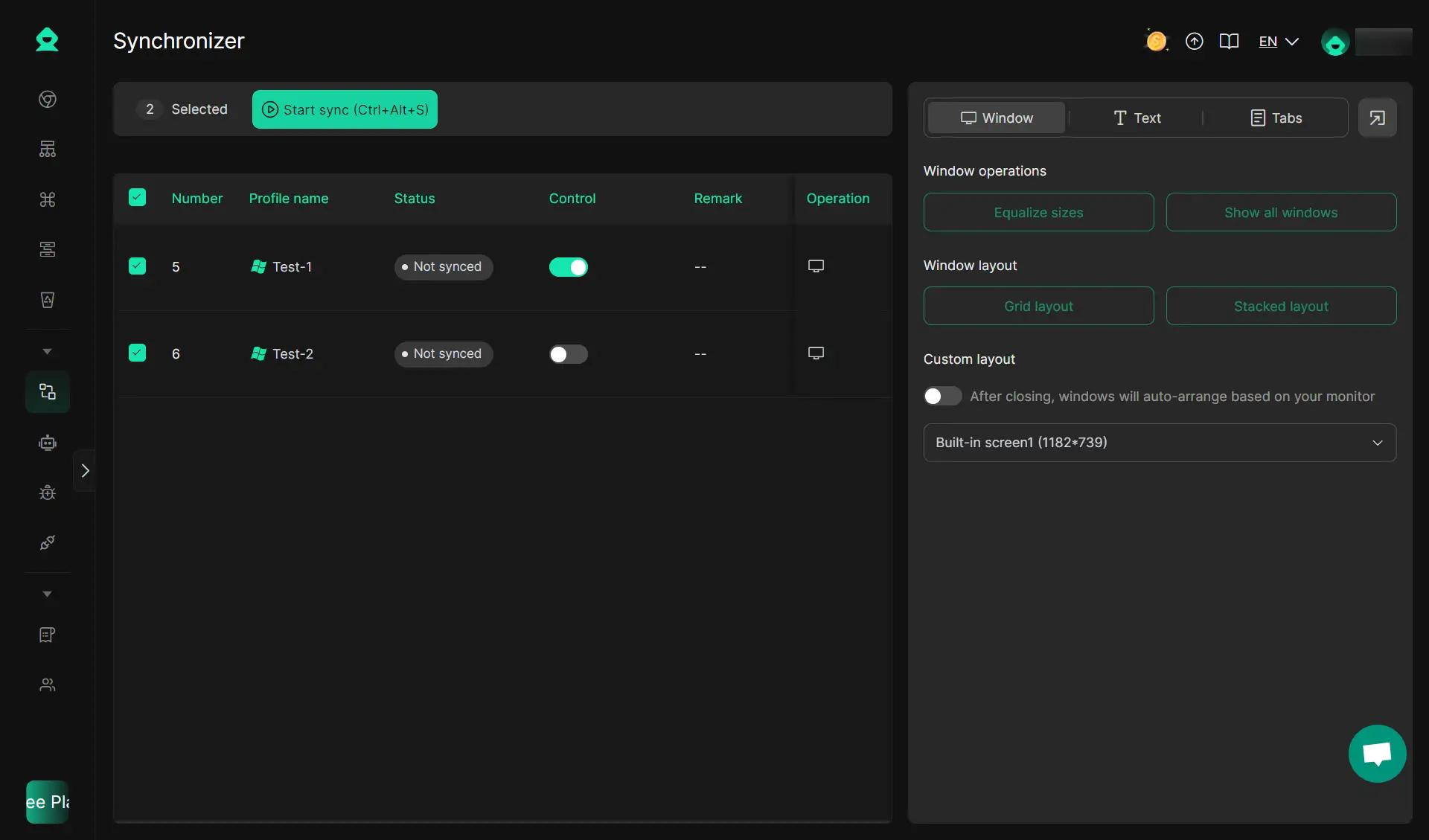
As you scale, speed comes from doing the same action once and applying it across multiple profiles. With the DICloak Synchronizer, you can perform an action in one main window—such as opening a target page or moving through a step—and mirror that action across multiple selected profiles at the same time. When you combine Synchronizer with bulk profile creation and centralized profile management, you can turn what would normally be repeated manual work into a more streamlined multi-profile workflow, while still keeping each account separated at the profile level.
Pros and Cons of the Opinion Edge Scaling Method
An objective analysis of this infrastructure-heavy approach highlights significant trade-offs:
Pros:
- Low Entry Friction: No upfront costs for joining the platform itself.
- Verified Liquidity: Legitimate and verifiable payouts through global processors like PayPal.
- Accessibility: Low technical barrier for the initial entry phase.
Cons:
- Sub-Market Hourly Pay: Average yields of $2-$4 per hour do not replace professional careers.
- Screener Attrition: Users face a persistent risk of disqualification midway through surveys.
- Policy Constraints: Multi-accounting violates standard terms and requires advanced anti-detection measures to mitigate ban risks.
Steps to Secure Opinion Edge Multi-Accounting with DICloak
To establish a multi-account operation, follow this structured deployment sequence:
- Profile Configuration: Generate separate profiles within DICloak. Assign unique user agents and its own fingerprints to ensure no profiles share the same digital signature.
- IP Binding: Assign user-provided proxy to each profile. Ensure the IP's geolocation matches the demographic targets of the account.
- RPA-Assisted Routine Action: Utilize DICloak’s RPA to assist with repetitive activities. Automation can help maintain consistent usage patterns across profiles and reduce repetitive manual work.
Conclusion: The Path to Sustainable Digital Growth
Opinion Edge can be a legitimate option if you’re only looking for modest, occasional earnings, but it’s not built for “scaling” like a growth business—accounts can still be restricted or terminated if platform systems flag unusual activity or policy violations. If you want a more stable, professional workflow, you should focus on a compliant operations system like DICloak to help you manage multiple isolated profiles, keep login sessions separated, and streamline repetitive work through automation—so you reduce operational mistakes and stay organized. If you want to evaluate whether your setup is structured enough, you can start with a free DICloak plan and audit how your profile workflow performs.
Opinion Edge FAQ: Maximizing Performance and Safety
How much does Opinion Edge pay?
Opinion Edge pays different amounts for different surveys. Most surveys pay about $0.25–$2.50 and take 5–30 minutes. Because you can get screened out, many users end up earning only around $1–$3 per hour on average.
Can I replace my primary income with Opinion Edge?
No. It is a side hustle. From a growth perspective, it is a way to cover small recurring costs, not a primary career path.
Is it safe to use an anti-detect browser for surveys?
Tools like DICloak provide the necessary isolation and privacy to manage multiple identities, but they do not negate the need for honest survey responses. Behavioral quality still matters to the AI-matching engine.
What is the most efficient payout mechanism?
PayPal remains the preferred method for liquidity and speed, though gift cards are a viable secondary option.
Why was my account flagged for review?
Most flags originate from IP reputation leaks (using datacenter proxies) or fingerprint correlation, where the platform’s telemetry links multiple accounts to a single hardware ID.
 Web Proxy Tools
 Free Tools
 Cookie Plugin
 UA Generator
 MAC Address Generator
 IP Generator
 IP Address List
 2FA Code Generator
 World Clock
 Anonymous Check
 WebRTC Leak Test
 UUID Generator
 Free Web Proxy Site
 Proxy Checker
 FB Ad Checker
 AI Web Scraping
 Free SMM Tools
 Twitter Shadowban Checker
 Instagram Name Checker
 UTM Generator
 Username Generator
 AI Hashtag Generator
 LinkedIn Headline Generator
 Social Media Image Resizer