The Strategic Impact of Being Social Account Restricted
In 2026, your digital presence is the lifeblood of your business. For modern entrepreneurs, a "social account is restricted" notification is more than a minor annoyance. It is a direct threat to your business continuity. This status acts as a single point of failure. When an account is locked, your audience vanishes, your advertising budget is frozen, and your revenue stops instantly. In a professional setting, these bans lead to massive financial losses and operational paralysis.
Digital moderation has reached a new level of intensity. Platforms now use advanced artificial intelligence to watch every click and technical signal. While these systems occasionally make mistakes, most restrictions are not accidents. They are triggered by specific patterns that the algorithms are trained to catch. Understanding these technical and behavioral patterns is the first step toward achieving permanent account safety.
Common Mistakes That Lead to Your Social Account Restricted Status
Many well-meaning professionals trigger anti-fraud systems by mistake. This happens because they do not "think like the algorithm." Most platforms use automated defenses that do not investigate individual cases. If your activity matches a suspicious pattern, the system will restrict you automatically to protect the platform.
Mass Actions (Spamming)
Performing too many likes, follows, or messages in a short time is a major red flag. Platforms see this as "bot-like" activity. This leads to immediate reach limitations or a total ban on your account.
Simultaneous Logins
Logging into different profiles using the same browser or IP address is a high-risk mistake. Modern systems track your browser fingerprint to link accounts together. If one profile is flagged, every other linked account is also restricted.
Using Cold Accounts
New profiles are under heavy surveillance. If a "cold" account becomes very active right after creation, it has a 99% chance of being blocked. Business accounts must be "warmed up" slowly with natural, human-like activity.
Sudden Location Changes
Changing your login country frequently or using strange IP addresses alerts security systems. The platform may assume your account is hacked. This results in endless identity checks and eventual restrictions.
Use of Suspicious Tools
Using public IP services or low-quality datacenter proxies is a mistake. Security systems monitor these shared resources closely. Using them can result in all your accounts being restricted because the platform recognizes the "dirty" source.
Shared Payment Methods
Using one credit card for multiple business accounts is a critical error. Platforms match this financial data instantly. Even if it works at first, the system will eventually block every account tied to that single payment method.
Bot Farming
Dumping thousands of fake followers on a profile in one day marks the account as fake. The platform may remove the followers, limit your visibility, or ban the account to keep the network's integrity.
Publication of Prohibited Content
Violating community rules regarding nudity, hate speech, or violence is a fast track to a ban. Even if the violation is accidental, AI moderation tools are programmed to issue sanctions immediately.
Fraud and Violation of Commercial Rules
Actions that look like scams, such as fake reviews or advertising banned offers, provoke harsh bans. Marketplaces like Amazon or eBay are very aggressive in restricting sellers who manipulate ratings.
While behavior is important, the technical "trace" you leave behind is even more critical for staying safe.

Hidden Tracking Technologies That Result in Your Social Account Restricted
In 2026, "Incognito Mode" and clearing cookies are obsolete defenses. These methods only hide your history from your own device, not from the platform. Modern websites use much more powerful ways to identify you.
The four key tracking methods include:
- Digital Fingerprinting: This is the most advanced tool. Your browser shares details like your device model, OS, screen resolution, and fonts.
- IP and Geolocation: Sites track your permanent IP address and look for suspicious changes in your location.
- Supercookies and Evercookies: These are identifiers stored in hidden places on your device. They can restore your identity even after you delete standard cookies.
- Behavioral Patterns: Algorithms analyze how you move your mouse, your click rate, and your typing speed to find bots.
A digital fingerprint is nearly impossible to hide without specialized software for several reasons:
- It collects over 40 technical parameters including WebGPU, Canvas, AudioContext, and Media devices.
- The data is sent automatically without you knowing.
- The combination of these details is unique to you, like a real fingerprint.
- Simply logging out does not change these hardware-level signals.
To protect yourself, you must understand which platforms are the most aggressive in using these tracking methods.
A Deep Dive Into the Most Restrictive Platforms of 2026
Not all platforms follow the same rules. Some have "uncompromising" anti-fraud systems that will restrict an account for the smallest error.
Meta (Facebook and Instagram)
Platform Specific Trigger: Meta uses advanced AI to detect "inappropriate" patterns. Because their ecosystem is linked, a violation on Facebook often results in your Instagram account being restricted as well. They are especially suspicious of logging in from new devices without technical isolation.
X is known for aggressive bot-labeling. A common trigger is mass-reposting a popular tag. While you may just be supporting a trend, the system sees this as "manipulation" and freezes the account.
LinkedIn
This platform expects "professional behavior." Using automated tools to send invitations in a repetitive pattern is the top trigger. Adding too many people too quickly will restrict your account.
eBay is extremely strict with seller data. A major trigger is the "reuse of previously blocked data." If you create a new account using any info (IP, fingerprint, or address) from a banned profile, you will be restricted instantly.
Amazon
Amazon tracks a "collection of small problems." If you have slightly overdue shipments and a few buyer complaints, the algorithm will preemptively disable your seller account.
To mitigate these risks, every professional should follow a strict set of proactive rules.
Universal Checklist to Avoid Finding Your Social Account Restricted
Maintaining "digital hygiene" is about making your behavior look natural. If you act like a regular user, you are less likely to be targeted by automated blocks.
Follow Platform Rules
Review the community guidelines for every site you use. Most bans happen because users do not understand what content is forbidden. Ignorance is not an excuse when you are restricted.
Act Naturally (Warming Up Accounts)
Avoid robotic cycles of liking and commenting. For new accounts, start slowly. Fill out your profile and add a few friends first. Gradually increase your activity over several weeks to build trust.
Cautious Automation
If you use software to help manage accounts, do so wisely. Respect the platform's limits. High-speed automation is the fastest way to get your social account restricted.
Avoiding Account Sharing
Most subscriptions are bound to specific devices. If multiple people log into one account from different places, the system may flag it as a security breach. Use professional team plans instead.
Strengthening Security
A restricted account is often a platform's way of protecting you from a hack. Use complex passwords and always enable two-factor authentication (2FA). This makes the platform trust your logins more.
Maintaining Technical Isolation
Always keep the technical environments for different accounts separate. Never log into multiple accounts using the same browser and IP. Each account needs its own "clean" technical profile to avoid being linked.
While hygiene helps, professional operations require a "Clean Technical Environment" provided by tools like DICloak.
For professionals managing multiple accounts, DICloak provides a vital strategic advantage. It ensures that no social account is restricted due to fingerprint linking. DICloak allows you to manage 1,000+ accounts on one device by creating a unique, isolated browser profile for each one.
The core features of DICloak include:
- Isolated Browser Profiles: Each profile has its own custom fingerprint (including WebGPU and Canvas), cookies, and IP settings.
- RPA Automation: The built-in RPA saves time by handling repetitive tasks safely and naturally.
- Synchronizer: This tool allows you to control multiple browser windows at the same time.
It provides better protection because it is built on a Chrome core, making each profile look like a real, separate user to the platforms.
Evaluating DICloak Pricing and Feature Sets for Professional Teams
Choosing the right plan depends on your team size and the scale of your business. Picking the correct tier is essential to prevent any social account is restricted issues.
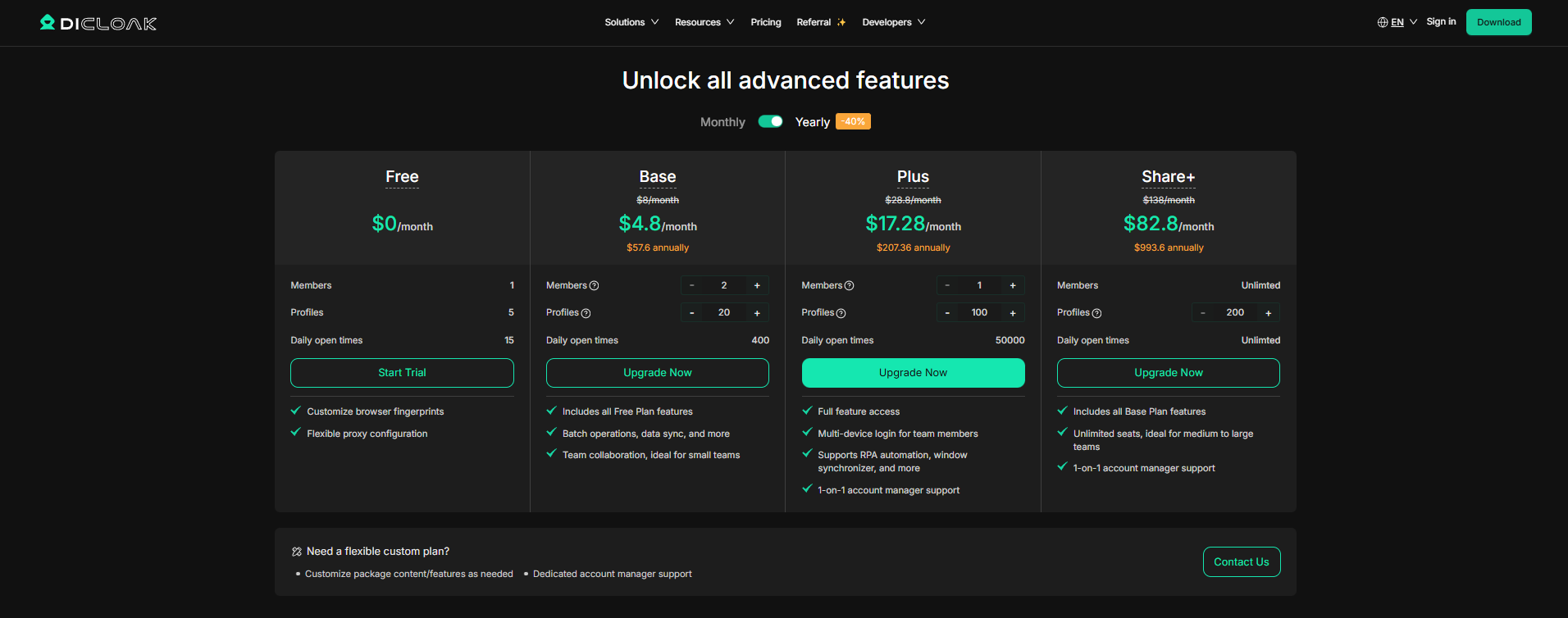
- Base: Best for small teams that need collaboration and basic data sync.
- Plus: The premier choice for advanced users who need heavy RPA and high-volume automation.
- Share+: Designed for large agencies that require unlimited scaling and collaboration.
Now that you understand the pricing tiers, let’s look at how to set up the software to secure your business.
How to Use DICloak to Ensure No Social Account is Restricted
The setup process is the foundation of your long-term account safety. Following these steps creates a professional environment that platforms cannot link.
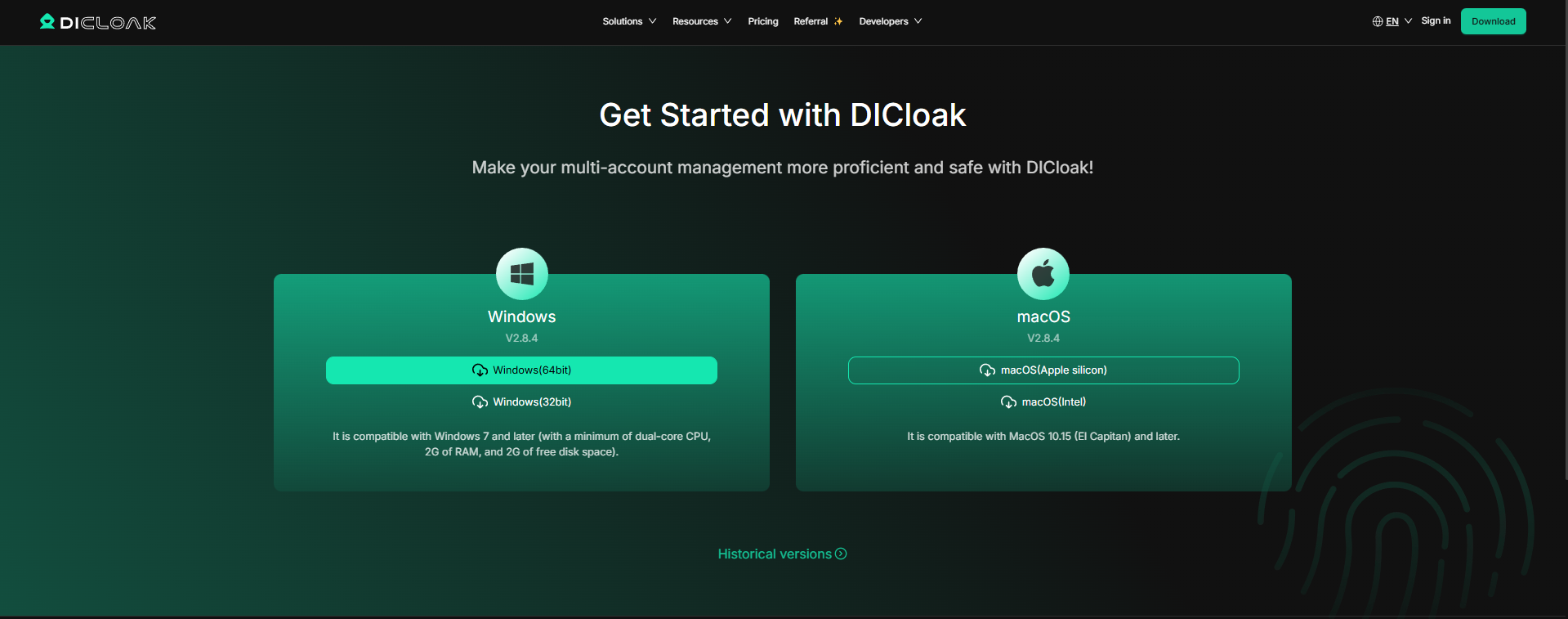
- Download and Register: Download the DICloak application and create your professional account.
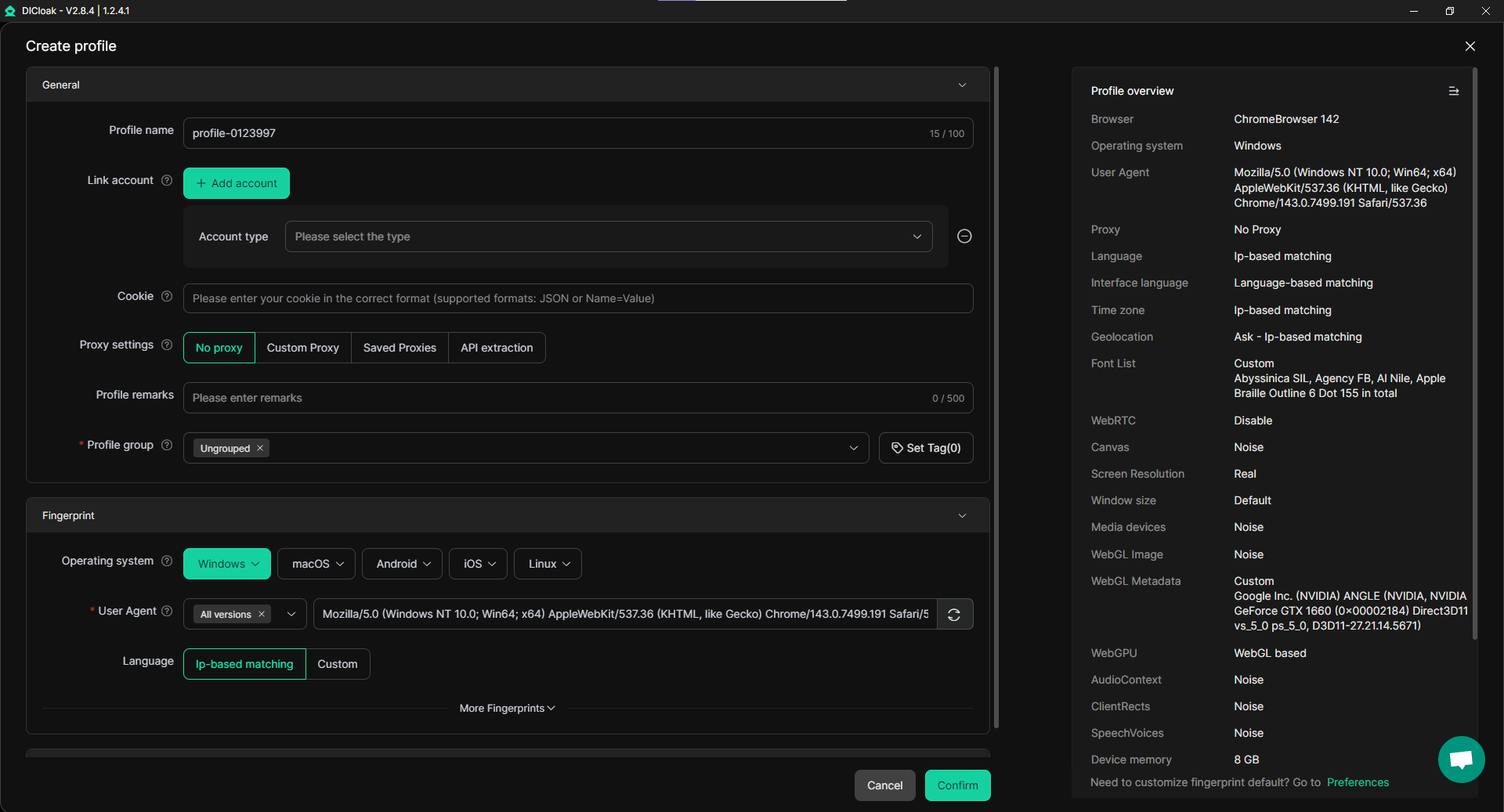
- Create Isolated Profiles: Generate a new profile for every social account. DICloak will automatically create a unique digital identity (fingerprint) for each.
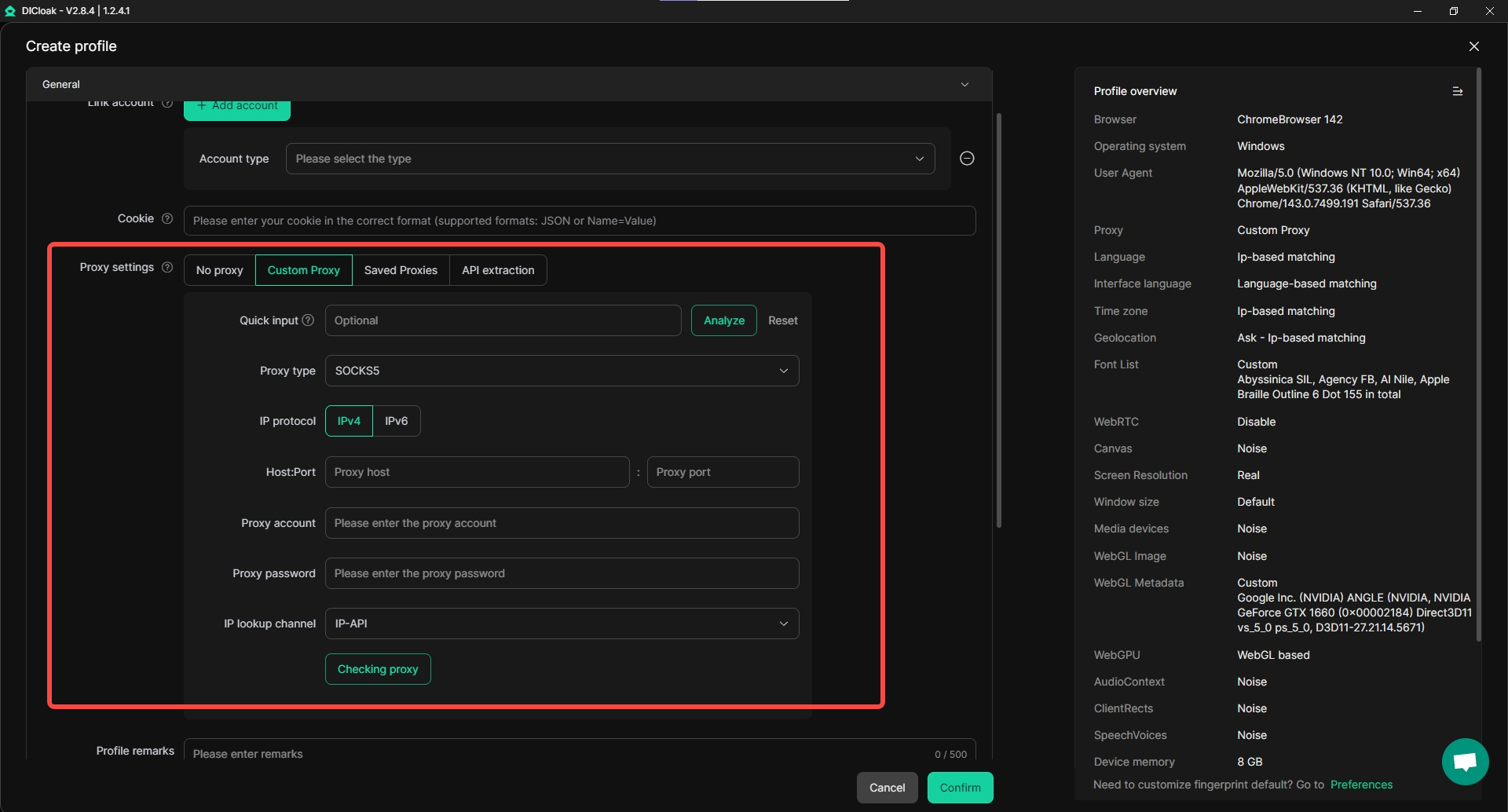
- Integrate Unique Proxies: Add a clean, unique proxy to each profile. This gives every account its own separate IP address.
- Launch and Manage: Open your profiles and log in. Platforms will see each profile as a completely separate device and user.
DICloak creates a "technical wall" between your accounts. Even if one profile has an issue, your other accounts stay safe because they are not linked by hardware fingerprints or IP addresses.
Essential FAQs Regarding Why Your Social Account is Restricted
What should I do if my social account is restricted?
If your social account is restricted, it’s important to review the platform's terms of service, correct any violations, and appeal the restriction if possible. Using DICloak's fingerprint isolation features can also help in avoiding restrictions in the future.
Can I use DICloak to manage multiple accounts without being blocked?
Yes. DICloak is built specifically for multi-account management. It spoofs your digital fingerprint and uses isolated environments to prevent platforms from linking your accounts together.
Does DICloak offer a free trial to test if my social account is restricted?
DICloak offers a permanent Free Plan. This includes 5 profiles and 15 daily opens. This allows you to test the technical environment and features before you upgrade to a paid plan.
Can I access profiles from different devices?
Yes. DICloak supports cloud synchronization. Your team can log into the same profiles from different devices safely because the browser fingerprint remains consistent across all sessions.
How does DICloak differ from a regular browser in preventing restricted accounts?
A regular browser gives your real hardware data to every site. DICloak hides this by creating hundreds of different, realistic fingerprints. It also includes professional tools like RPA automation that regular browsers do not have.
In 2026, combining natural behavior with DICloak’s technical protection is the only way to ensure a business-critical social account is restricted no longer. By following these steps, you can scale your digital operations with total confidence.
 Web Proxy Tools
 Free Tools
 Cookie Plugin
 UA Generator
 MAC Address Generator
 IP Generator
 IP Address List
 2FA Code Generator
 World Clock
 Anonymous Check
 WebRTC Leak Test
 UUID Generator
 Free Web Proxy Site
 Proxy Checker
 FB Ad Checker
 AI Web Scraping
 Free SMM Tools
 Twitter Shadowban Checker
 Instagram Name Checker
 UTM Generator
 Username Generator
 AI Hashtag Generator
 LinkedIn Headline Generator
 Social Media Image Resizer