Trustpilot is one of the most trusted online review platforms today. It helps real customers share honest feedback about businesses. Many people check Trustpilot before they buy a product or service. A high rating can build trust fast, while a low score can push customers away. Because Trustpilot reviews often appear in Google search results, they also affect online visibility and brand reputation.
As reviews become more important, some businesses feel pressure to improve their ratings quickly. This has led to a growing trend where companies try to buy Trustpilot reviews instead of waiting for real customer feedback. New brands or businesses facing negative reviews often see this as a shortcut to get Trustpilot reviews and look more credible. However, this approach comes with real risks that many businesses do not fully understand.
To make a smart decision, it is important to fully figure out how Trustpilot works, why buying reviews is risky, and what safer alternatives exist.
Legality and Policy Compliance When You Buy Trustpilot Reviews
As reviews become more important, many businesses look for faster ways to improve their ratings. However, Trustpilot has clear rules about how reviews should be created. Reviews are expected to come from real customer experiences. When a business tries to buy Trustpilot reviews, those reviews may not meet platform standards and can be removed during quality checks.
Trustpilot monitors review behavior such as timing, wording, and account activity. For example, a sudden rise in similar five-star reviews from new users may raise concerns. When this happens, businesses may notice reviews disappearing or no longer affecting their overall score. This can limit the long-term value of trying to buy Trustpilot reviews.
From a business trust point of view, reviews are part of a company’s public image. Reviews that feel forced or unnatural can reduce credibility instead of improving it. While buying reviews may seem like a quick way to get Trustpilot reviews, it often fails to support stable and trustworthy growth.
6 Best sites to buy Trustpilot Reviews
After learning about platform rules and quality checks, some businesses still look for external services to buy Trustpilot reviews. These sites are often discussed in marketing communities by brands that want faster reputation growth. While none of them are official Trustpilot partners, they are commonly mentioned by companies trying to get Trustpilot reviews in a short time. Below is a clear and practical overview of six well-known options.
1. MediaMister
MediaMister is one of the few providers that openly offers Trustpilot review services. Users can select “Trustpilot” directly from a dropdown menu, which makes the process simple. Many businesses choose MediaMister because it offers non-drop reviews and country targeting. For example, an online store may order reviews from specific regions to match its customer base.
MediaMister also allows drip-feed delivery. This means reviews are posted over time instead of all at once. Businesses often use this to make review growth look more natural. MediaMister is widely known for its long-standing presence in the market, which is why it is often listed first when people search for ways to buy Trustpilot reviews.
Pros: Trusted provider, country targeting, drip-feed options Cons: Limited flexibility beyond preset packages
2. ReputationManage.co
ReputationManage.co focuses on customized reputation solutions rather than volume alone. Businesses that already have Trustpilot profiles often use this service to improve balance after negative feedback. For example, a service-based business with recent low ratings may use ReputationManage to stabilize its overall image.
The platform emphasizes personalized ratings and customer support. It is also known in reputation circles for offering review services across multiple platforms, which appeals to brands managing more than one public profile. Many users see it as a structured way to get Trustpilot reviews as part of a wider reputation strategy.
Pros: Personalized approach, strong support, multi-platform services Cons: Long-term dependence on external reputation tools
3. SidesMedia
SidesMedia is popular among businesses looking for fast visibility. It offers different review packages and focuses on improving profile presence. Startups sometimes use SidesMedia before launching ads, hoping early reviews will improve trust signals.
SidesMedia handles review delivery efficiently, but content control is limited. This means businesses receive reviews without much input on wording. While this can save time, it may reduce alignment with real customer language, which matters when Trustpilot checks review quality.
Pros: Fast delivery, multiple package options Cons: Limited control over review content
4. Growthoid
Growthoid is best known for growth services, but it is often mentioned by brands that care about reputation signals. Businesses using Growthoid usually focus on building a strong five-star image to attract attention and trust.
For example, a consultant or online service provider may aim to present a polished public profile before outreach campaigns. Growthoid users often see reviews as part of brand positioning, not just numbers. This approach shows how some companies try to buy Trustpilot reviews as a credibility layer.
Pros: Strong visual impact, improved trust perception Cons: Cost considerations for smaller businesses
5. Twesocial
Twesocial is used by businesses that want flexible review quantities and steady engagement. It is often chosen by brands that already receive traffic and want reviews to support decision-making for new visitors.
For instance, a local business may use Twesocial to highlight positive experiences before expanding locations. While this can help presentation, the main drawback is that reviews may lack real customer depth, which experienced users can notice.
Pros: Flexible packages, supports brand storytelling Cons: Limited genuine customer feedback
6. TokUpgrade
TokUpgrade focuses on ratings from diverse user backgrounds. This is often attractive to brands that serve multiple audience groups. For example, an online store selling internationally may want reviews that appear varied in tone and perspective.
The platform is sometimes used to increase average ratings and create broader appeal. However, managing a sudden increase in reviews can be challenging, especially if they do not align closely with real customer behavior. This is a common issue when businesses try to buy Trustpilot reviews at scale.
Pros: Diverse reviewer profiles, strong visual impact Cons: Review management can become difficult
Risks of Buying Trustpilot Reviews
After reviewing the popular sites that claim to help businesses buy Trustpilot reviews, it is important to understand the risks that often come with this choice. While these services may promise fast results, the downsides can affect a business far beyond a few missing reviews. These risks usually appear after Trustpilot systems or real users start to notice unusual patterns.
Consequences of Fake Reviews on Trustpilot
Trustpilot is designed to protect review quality. When a business chooses to buy Trustpilot reviews, those reviews are checked for signals such as timing, wording, and account history. If reviews do not look like they come from real customers, they may be flagged. This can happen even weeks or months after the reviews are posted.
Account Suspension and Review Removal
One common outcome is review removal. Businesses often report that paid reviews disappear without warning. In some cases, Trustpilot may also place limits on a company profile or temporarily restrict review features. For example, a business may see its rating drop suddenly after several reviews are removed at once. This can undo all short-term gains and create confusion for real customers trying to understand the sudden change.
Impact on Business Reputation
Reputation damage is another major risk. Customers today are very familiar with online reviews. When reviews sound generic, overly positive, or repeated, people notice. If customers suspect that a company tried to get Trustpilot reviews through artificial means, trust can drop fast. Even loyal customers may start to question the honesty of the brand. In many cases, the brand looks less reliable than before any reviews were added.
SEO and Visibility Risks
Reviews also play a role in how a brand appears in search results. Trust signals, user engagement, and review credibility all influence visibility. When reviews are removed or flagged, this can affect how often a business appears in search features that show ratings and stars.
How Fake Reviews Affect Search Rankings
Fake or removed reviews can weaken trust signals linked to a brand name. For example, if rich snippets stop showing star ratings, click rates may drop. Lower engagement can lead to less visibility over time. This means that trying to buy Trustpilot reviews may hurt long-term SEO performance instead of helping it. For businesses focused on steady growth, these hidden costs often outweigh the short-term boost that paid reviews seem to offer.
How Effective Is It to Buy Trustpilot Reviews?
After seeing the risks, many businesses still ask a simple question: does it actually work to buy Trustpilot reviews? The answer depends on timing, detection, and how real customers react. What looks effective at first often changes over time.
Short-term vs. Long-term Impact
In the short term, buying reviews can seem helpful. A business may see its star rating go up within days. This can make a profile look stronger during a product launch or before running ads. For example, a new online store might add a few five-star reviews to avoid looking empty. This short boost can increase clicks for a brief period.
Over the long term, the effect is rarely stable. Reviews may be removed later, or the score may drop suddenly. When that happens, the business loses the trust it tries to build. Instead of steady growth, the profile becomes unpredictable. This is why many companies realize that buying reviews does not reliably help them get Trustpilot reviews that last.
Trustpilot's Detection Systems for Fake Reviews
Trustpilot uses automated systems and manual checks to protect review quality. These systems look at patterns, not just single reviews. Timing, reviewing history, language style, and behavior all matter. For example, if several reviews appear close together and use similar phrases, they may be reviewed more closely.
This means that even if paid reviews are not removed right away, they can still be flagged later. Businesses are often surprised when reviews disappear weeks after posting. This delayed effect makes buying reviews feel risky, because results are never guaranteed or permanent.
Customer Perception of Purchased Reviews
Customers also play a role in judging reviews. Many people read more than just star ratings. They look at wording, detail, and tone. Reviews that sound too perfect or vague can raise doubts. For example, a review that says “Great service, highly recommended” without details may feel less real than one that mentions a specific product or issue.
When customers sense something is off, trust can drop fast. Instead of helping sales, bought reviews can make a brand look less honest. In contrast, real feedback, even mixed reviews, often feels more believable. This is why businesses focused on long-term trust usually choose safer ways to get Trustpilot reviews based on real customer experiences, rather than trying to buy Trustpilot reviews for quick gains.
Alternatives to Buying Trustpilot Reviews
After seeing that buying reviews brings unstable results, many businesses start looking for safer options. Instead of trying to buy Trustpilot reviews, these alternatives focus on building real feedback over time. They make more effort, but they help brands get Trustpilot reviews that last and feel honest to customers.
Strategies for Encouraging Genuine Reviews
Real reviews usually come from real moments. When customers have a clear and simple way to share feedback, many are willing to do it.
Asking Customers for Feedback
One of the easiest ways to get reviews is simply to ask. For example, after a purchase or support interaction, a short email can invite the customer to leave a Trustpilot review. Businesses that send polite, well-timed requests often see better results than those that never ask. A clear message like “Your feedback helps us improve” feels natural and does not pressure the customer.
Improving Customer Service
Good service creates good reviews. When issues are solved quickly and politely, customers are more likely to share positive experiences. For instance, a customer who receives fast support after a delivery problem may leave a detailed and helpful review. These reviews often sound more real than purchased ones and help build long-term trust.
Tools and Platforms for Authentic Review Generation
There are also tools designed to help businesses collect real reviews in a compliant way. Many companies use automated email tools, order follow-ups, or customer service platforms that connect directly with Trustpilot’s review invitation system. These tools help businesses get Trustpilot reviews from verified customers, without risking review removal.
Over time, these methods build a review profile that looks natural and reliable. While they may not be as fast as trying to buy Trustpilot reviews, they support stable growth, stronger customer trust, and a healthier brand image.
Best Practices for Managing Reviews Instead of Buying Trustpilot Reviews
If you reached the point where buying reviews feels unstable, you are not alone. The good news is you do not need to buy Trustpilot reviews to build trust. The safer path is to manage real feedback well, and make it easy for real customers to leave it. Trustpilot also provides guidance for businesses on replying and inviting reviews in a fair way.
Importance of Responding to All Reviews
Replying to reviews is one of the fastest ways to show you are a real business with real people. Trustpilot recommends staying professional, calm, and helpful, even when you disagree. For example, if a customer says “Shipping was slow,” a good reply is short and human: “I’m sorry it arrived late. If you share your order number, we will check what happened.” This kind of reply does two things. It helps that customer. It also shows new visitors that you take feedback seriously.
Constructive Handling of Negative Feedback
Negative reviews can feel personal. But they can also be useful. Trustpilot’s guidance for businesses is clear: avoid arguing, keep your tone respectful, and try to move the conversation to a solution. A simple process works well: thank them, apologize for the experience, explain the next step, and offer a clear contact method. For example, if a customer says support ignored them, you can reply: “I’m sorry we missed you. Please email our support team with your ticket number so we can fix this today.” When you handle negatives well, you often earn more trust than a perfect page full of five-star reviews.
Use an Antidetect Browser like DICloak
If your team manages reviews from different locations, devices, or contractor accounts, account security becomes a real issue. Sudden login changes, shared passwords, and switching devices can trigger extra checks on many platforms. A practical approach is to use a team workflow that keeps access organized: separate browser profiles for each staff member, clear permissions, and consistent login environments. This helps reduce lockouts and confusion while you focus on the right goal: to get Trustpilot reviews from real customers, not to buy Trustpilot reviews. If you already use an antidetect browser like DICloak for team account access, apply the same “one role, one profile” rule here—clean and consistent.
Why choose DICloak Antidetect Browsers for your business?
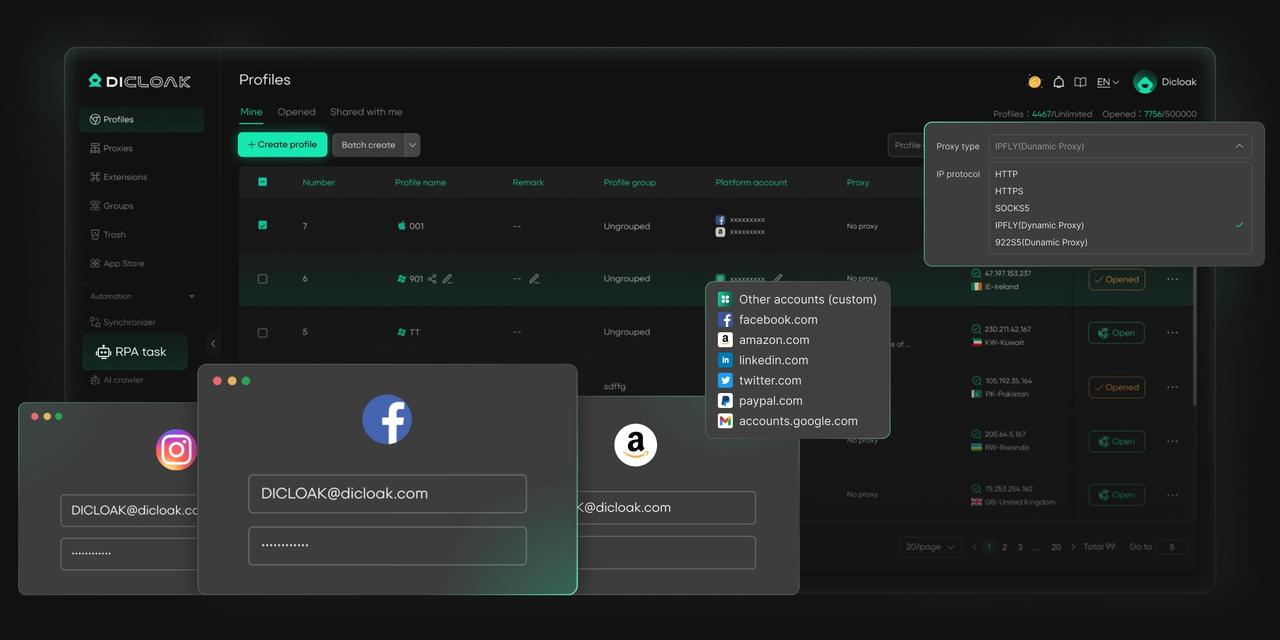
⚡The DICloak Antidetect Browser has become a global favorite for its unparalleled ability to efficiently and securely manage multiple accounts. Designed for professionals in social media management, affiliate marketing, traffic arbitrage, e-commerce, account farming, airdrops, and more, DICloak offers powerful features like RPA automation, bulk operations, and a synchronizer. Additionally, it allows you to customize fingerprints and integrate proxies for each profile, ensuring top-level security and operational efficiency. It’s the ultimate tool for seamless, secure, and scalable operations.
What Makes DICloak Stand Out?
✅ Manage 1,000+ Accounts on One Device: Stop wasting money on extra hardware! DICloak allows you to manage multiple accounts on a single device, cutting costs and boosting efficiency.
✅ Guaranteed Account Safety, No Ban Risks: Every account gets its own isolated browser profile with custom fingerprints and IPs, drastically reducing the risk of bans. Your accounts, your control!
✅ Flexible Proxy Configuration for Maximum Performance: Seamlessly integrate with all major proxy protocols (HTTP/HTTPS, SOCKS5) and manage your proxy pool with bulk operations. No more struggling with IP management—DICloak has you covered.
✅ Streamlined Team Collaboration for Better Results: Easily manage your team with advanced tools like profile sharing, permission settings, data isolation, and operation logs. Your team works smarter, not harder.
✅ Automate the Grind with RPA: DICloak's built-in RPA saves you hours of manual work. Automate repetitive tasks, streamline workflows, and focus on what really matters—growing your business.
✅ Powerful Bulk Tools to Scale Your Operations: Create, import, and launch multiple browser profiles in one click. DICloak makes scaling your business as easy as it gets.
✅ Compatible with All Major Operating Systems: Based on the Chrome core, DICloak supports simulating Windows, Mac, iOS, Android, and Linux operating systems. No matter what platform you need, DICloak has you covered.
🔗 Ready to Get Started?
Visit the DICloak website to explore more details and choose the plan that’s right for you. Start for free today and experience the power of secure, efficient, and scalable multi-account management!
Conclusion: Should You Buy Trustpilot Reviews or Choose Safer Options?
Trustpilot reviews play a major role in how customers judge a business. High ratings can build trust fast, while low scores can push people away. This pressure explains why some companies consider shortcuts and choose to buy Trustpilot reviews. At first, this may look like an easy way to improve appearance and attract attention.
However, as the article explains, buying reviews often brings more problems than benefits. Paid reviews may disappear, profiles can lose stability, and customers may sense that something feels unnatural. Over time, this hurts trust, brand image, and even visibility in search results. What seems like a quick win can turn into long-term risk, especially when reviews no longer reflect real customer experiences.
The more reliable path is to focus on real feedback. Businesses that ask customers for reviews, improve service quality, and respond openly to both positive and negative comments tend to build stronger reputations. These methods help companies get Trustpilot reviews that feel honest and useful. Real reviews may grow more slowly, but they last longer and support real trust.
In the end, managing reviews with care is more effective than trying to control them. Instead of choosing to buy Trustpilot reviews, businesses that invest in transparency, service, and proper review management create a reputation that customers and search engines can trust. This approach supports steady growth and a healthier brand in the long run.
Frequently Asked Questions (FAQs) About Buying Trustpilot Reviews
Is it really safe to buy Trustpilot reviews?
Buying Trustpilot reviews is risky. While some services promise fast results, reviews that are not based on real customer experiences can be removed later. This can cause sudden rating drops and confuse real buyers. In the long run, trying to buy Trustpilot reviews often creates more problems than trust.
Can buying Trustpilot reviews improve my sales?
Buying Trustpilot reviews may help for a short time. A higher rating can attract clicks at first. But if reviews are flagged or removed, trust can drop quickly. Many businesses find that real reviews from real customers convert better than purchased ones. Sustainable sales usually come from honest feedback, not shortcuts.
How does Trustpilot detect fake or purchased reviews?
Trustpilot looks at patterns, not just individual reviews. It checks timing, language style, reviewer behavior, and account history. If reviews appear too similar or arrive too fast, they may be reviewed or removed. This is why businesses that buy Trustpilot reviews often see delayed issues weeks later.
What is a safer way to get Trustpilot reviews without buying them?
A safer option is to invite real customers to leave reviews after a purchase or support interaction. Simple email requests, good customer service, and clear follow-ups work well. These methods help businesses get Trustpilot reviews that feel natural and stay visible long-term.
Should I buy Trustpilot reviews or focus on review management instead?
For most businesses, managing reviews is the better choice. Responding to feedback, fixing problems, and encouraging real customers to share experiences builds real trust. Instead of trying to buy Trustpilot reviews, focusing on honest review growth supports long-term reputation, SEO value, and customer confidence.
 Web Proxy Tools
 Free Tools
 Cookie Plugin
 UA Generator
 MAC Address Generator
 IP Generator
 IP Address List
 2FA Code Generator
 World Clock
 Anonymous Check
 WebRTC Leak Test
 UUID Generator
 Free Web Proxy Site
 Proxy Checker
 FB Ad Checker
 AI Web Scraping
 Free SMM Tools
 Twitter Shadowban Checker
 Instagram Name Checker
 UTM Generator
 Username Generator
 AI Hashtag Generator
 LinkedIn Headline Generator
 Social Media Image Resizer