If you're a student or educator looking to unlock exclusive discounts, access powerful academic resources, or simply streamline your online education experience, a .edu email can open the door to a wide range of benefits. But how exactly do you get one, especially if you're not enrolled in a traditional school? Whether you're exploring ways to enroll in a community college, considering online education programs, or simply curious about how to get a .edu email, this guide breaks down everything you need to know.
From understanding what a .edu email is and the benefits it offers, to step-by-step instructions on how to apply and ensure your email works smoothly, we cover it all. Plus, we provide insider tips on what to do once you have your .edu email, how to use it effectively, and even how to manage multiple academic accounts with advanced privacy tools like DICloak. Ready to dive in? Let’s explore the world of .edu emails and how they can help you make the most out of your educational journey.
Understanding .edu Emails: Why Do People Want to Get a .edu Email?
Getting a .edu email is something many students and educators are curious about. These email addresses are not just ordinary emails; they are tied to educational institutions and come with special benefits. Let’s dive into what a .edu email is, why people want one, and how it can be helpful in everyday life.
What is a .edu Email?
A .edu email is a special email address that ends with “.edu.” This means it is tied to a real school, college, or university. In some countries, only accredited colleges, universities, and some educational groups can use the .edu domain. This makes the email rare and trusted by many services online.
Several educational institutions worldwide provide .edu email addresses to their students and staff, which serve as an official platform for all types of communication between the school, students, and staff. These emails are generally free for those enrolled at the institution. For example, if you attend “Example University,” your email might be jsmith@example.edu. The format for a typical .edu email address is name-of-student@institute-name.edu.
For example, if you are a student at a university, the .edu email is not just a way to send and receive messages — it links you directly to school systems and administrative services, and it is often required for logging into your student portal.
If you are not currently enrolled in any school, college, or university, obtaining a .edu email address typically requires purchasing an email extension from third-party providers. However, these services may not be official, and using them comes with certain risks.
Benefits of Having a .edu Email Address
Now that we know what a .edu email is, let’s take a closer look at why people want to get one. Having a .edu email offers many benefits, ranging from discounts to access to premium software. This section highlights the most valuable perks that come with owning a .edu email.
People want to know how to get a .edu email because it unlocks many real benefits in school and daily life.
One big benefit is access to discounts and deals. Companies like Amazon, Apple, and Spotify give special student or education pricing when you sign up with a .edu email. You could save money on music or apps you use every day.
Another benefit is free or reduced access to software tools. For example, students with a .edu email can get Microsoft Office 365 Education free or at a lower price. This package includes Word, Excel, PowerPoint, and cloud storage that help with homework.
There are also special software and tools for learning. Students can get access to the GitHub Student Developer Pack, which gives free access to coding tools and cloud services that normally cost money.
These benefits make many people ask “how to get a .edu email” so they can save money and get tools for school or projects.
Common Uses for .edu Emails
In addition to discounts and software tools, there are other ways .edu emails are useful. These email addresses are commonly used for important school-related tasks.
- Teachers and schools often use it to send announcements, class updates, and schedules. This keeps all school messages in one place. (blog.hocking.edu)
- Students use
.edu emails to log into campus services like online classes, library portals, and school systems. Without this email, they may not be able to access these important tools.
- Students often use their
.edu email to sign up for apps, websites, or software that asks for a school email to verify student status. For example, signing up for discounted Adobe Creative Cloud or student-level cloud credits becomes easy with an .edu email.
In these ways, a .edu email is more than a regular email address — it becomes a key to school tools, savings, and academic resources.

How to Get a .edu Email: Methods and Steps
Now that you understand why many people want a .edu email, let’s look at real, legal ways how to get a .edu email and the steps involved. These methods help you get an official education email address that gives you access to student tools, resources, and discounts online.
Create Your Own .edu Email Address
This method is only applicable to those who are eligible to own a .edu email address. To be eligible, you must be a student, faculty member, staff, or affiliated member of an accredited educational institution. If you meet the eligibility criteria, follow these steps:
- Step 1: Gather necessary documents like proof of enrollment (current class schedule or acceptance letter), government photo ID, and social security number (SSN).
- Step 2: Visit your community college or educational institution’s website, find the application portal, and fill out the application form.
- Step 3: Enter your correct details and attach the required documents in the specified format (e.g., PDF, PNG).
- Step 4: Cross-check the information and submit your application.
- Step 5: Wait for approval; this may take a few days.
- Step 6: Once approved, you’ll receive your .edu email address and instructions to set up your account.
Enrolling in Community Colleges
One common and real way to get a .edu email is by enrolling in a community college. Many community colleges issue official .edu emails to students after they apply. You do not always need to take a full degree; sometimes enrolling in just one class is enough to get your student account.
Application Process for Community Colleges
To start, find the official website of a community college you like. Community colleges often have open admissions, which means they accept many students with simple requirements like a government ID and basic contact details. After you submit your application online and your enrollment is approved, the college IT system usually sends you a welcome message with your new .edu email and login details.
For example, many students enroll at local community colleges that offer affordable classes and trigger the creation of a .edu email. In some cases, you receive the email shortly after your application is processed, even if you haven’t started classes yet.
Pros and Cons of Community College Enrollment
Pros:
- You get a legitimate .edu email linked to a real institution.
- You also gain access to school resources like library portals and student discounts.
Cons:
- You may have to pay tuition or fees for even a single class.
- Your email may only remain active while you are enrolled.
Many people find this method valuable because it gives both a real email address and access to school services.
Online Adult Education Programs
Some online adult education programs also provide .edu emails when you register. These programs are part of real schools or learning networks and may give emails as part of student enrollment.
Examples of Programs Offering Free .edu Emails
A few colleges and online institutions that offer learning programs will create student accounts with .edu addresses. These programs may focus on adult learners, continuing education, or professional certificates. When you sign up and are accepted into the program, the school’s system may automatically issue you an .edu email address, just like a traditional student.
This method can work well for adults who want how to get an edu email without attending a physical campus. Just be sure the online program is accredited and real so your .edu email stays valid.
Registering with Partner or Satellite Campuses
Some colleges have partner campuses or satellite programs that automatically create .edu emails for new students. These can include vocational schools or special academic programs.
Accessibility for International Students
Many of these partner programs let people from other regions enroll online without needing residency documents. Because of this, students from various places may still qualify for a .edu email if the program is part of an accredited institution.
This makes how to get a .edu email more possible for people around the world, not just students already living near the institution. Remember, the key is to confirm the program is legitimate and tied to an accredited institution before you sign up.
Exploring Alumni and Guest Accounts
If you already went to a college or university in the past, you might still qualify for an email through alumni services. Many schools offer alumni email accounts that let former students continue using a .edu address.
How to verify Alumni Programs
To check if your school offers an alumni email, contact the alumni office or search the school’s official website. Many institutions provide alumni email services for graduates through their alumni programs.
Other institutions may offer similar services with different rules, such as limited access after graduation or forwarding features that link your old student email to a new email. It’s important to follow the official process and provide proof like your graduation year or student ID so the school can verify you are an alum.
Other Ways to Buy a .edu Email Address
If you are not affiliated with an educational institution and still want to get a .edu email, there are a few other methods to consider. However, some of these methods may involve risks and legal concerns, especially when purchasing or generating a .edu email through unofficial means.
1. Buy a .edu Email Address
If you do not meet the eligibility criteria and want to buy a .edu email, you can look for reputable providers that offer this service. However, be cautious when purchasing, as these services might not be official, and there could be risks involved.
- Step 1: Research and find trusted providers with positive reviews.
- Step 2: Inquire about their process and verify the authenticity of their service.
- Step 3: Review their pricing plans, refund policies, and acceptable payment methods (credit/debit cards or PayPal).
- Step 4: Once satisfied, make the payment and set up your email account.
2. Generate a .edu Email Address Through a .edu Email Generator
A .edu email generator is a quick way to generate a temporary .edu email. However, this method is unreliable and insecure because the generated email is often temporary and can be accessed by hackers.
- Step 1: Open a .edu email generator website and enter basic details like your name and institution name.
- Step 2: Click on "Generate" to create the email address.
- Step 3: Use temporary email to access online services. Remember, this email is not permanent, and you may need to generate a new one if you continue using the services.
If you want to explore how to get a .edu email, the safest method is through official enrollment or authorized programs tied to accredited institutions. This way, you receive a legitimate email that ensures long-term access to academic resources and benefits.
How to Get a .edu Email: Verification Process
After you learn how to get a .edu email, the next step is to make sure that the email works properly. Verifying your new account makes sure you can use it for login, forwarding, and student benefits without trouble. Verification also helps avoid problems when you try to use the email with school services or student offers.
Validity Checks for .edu Emails
Once you get your .edu email, the first thing to do is check that it is valid. A valid email means the system will accept it for logins and student checks. A simple test is to send a message from the new .edu email to your personal inbox. If it arrives, it shows the email is real and working.
Another way to check validity is by trying to sign in to known student platforms that many schools use. For example, once students receive their student email from an institution’s system, they use it to log in to online classroom systems, school apps, and email portals. These systems confirm your .edu email before giving you access. This step is important, because many services check if the email belongs to a real institution before giving you discounts or student access.
In some cases, even retailers and software companies send a confirmation message to your .edu email to verify student status before they give you special pricing. This means you may need to open the email and click a link to confirm it is yours before the discount is applied.
Ensuring Email Functionality (Forwarding and Login)
After you confirm your .edu email is valid, the next step is to make sure it works well every day. This means checking two things: logging in and email forwarding.
- Login Checks: To check login functionality, go to the official login page of your school’s email system. Enter your full .edu email address and the password you set up. If you can sign in without errors, your email is set up correctly. Some schools use extra security steps like sending a code to your phone when you log in from a new device. This is called multi‑factor authentication and it keeps your email secure.
- Forwarding Setup: If you prefer to see all important messages in your personal email, you can set up forwarding. Forwarding sends a copy of incoming .edu emails to another email address you use daily. Most student email systems allow you to set this up in the email settings. For example, you can open your email settings and find the option to “forward” or “email forwarding,” then type your personal email address where you want messages to go. Once forwarding is set, you will get important school updates, discount offers, and login confirmations in your usual inbox. This makes it easier to stay on top of messages without logging into your .edu account all the time.
Verifying your email and checking these features gives you peace of mind that your .edu email works as expected. This helps you use it confidently for school tools, online accounts, and student offers that require a functioning education email address.
Common Issues and Solutions After Getting a .edu Email
After you learn how to get a .edu email, some people still face problems when they try to use it. These problems can be confusing at first. Don’t worry — many issues have simple fixes. In this section, we explain common problems and how to solve them.
Reasons for Application Failures
When you try to get your .edu email, sometimes the application can fail. One common reason is that your identity or student status could not be confirmed. Many schools require clear proof that you are officially registered before they issue an email. If the proof is missing, the school system may reject your application. For example, some applications are denied because the school did not receive valid student ID or enrollment letters, so they could not confirm your status.
Another reason your attempt to use the email with student offers may fail is that some websites will not recognize every .edu email domain. Some student discount services only accept specific email formats or may require additional verification through a third‑party system like SheerID. If your .edu email isn’t verified quickly, the site may show an error.
Also, technical issues like server delays or login errors can make it look like your application failed. If your school email system is not ready yet, you may get a message saying the account cannot be confirmed right now. Waiting a few hours and checking again often solves this.
Best Practices for Improving Approval Odds
To improve your chance of approval when you try to get a .edu email, follow these steps:
- Use correct and clear documents. When you apply, make sure your student ID, enrollment proof, or registration letter is clear and easy to read. Some systems check documents manually, and blurry images can lead to rejection.
- Provide matching details. The name and information on your documents must match what you enter on the application form. If the school sees differences between the name on your ID and what you typed, they may reject the request.
- Follow the school’s instructions carefully. Some institutions have specific steps for verification. For example, they may ask you to upload a school portal screenshot or use a special verification link. Doing this right helps avoid delays.
- Use accepted student verification services. Sometimes student discount platforms have a second way to confirm you, like uploading your student ID to a verification partner. If your .edu email alone does not work, these alternate options can still prove you are a student.
These steps help you get closer to success when learning how to get a .edu email and use it with other services.
Regional Considerations for International Applicants
If your school email ends with something other than “.edu,” some websites may not recognize it as a valid educational email. Some services and offers only accept the .edu domain and do not verify other academic email types. This can cause problems when you try to use the email for student pricing or site logins.
In such cases, you might need manual verification. For example, some student verification programs let you upload your student ID card or enrollment letter instead of relying only on your email. This method can help you prove your student status even when your email address does not fit the usual pattern.
Also, some platforms are slowly expanding to include non‑“.edu” school domains for international students, but this progress is often slow and inconsistent. Due to this, many people still ask about how to get an edu email so they can avoid regional verification problems and simplify access to student offers.
By understanding these common issues and following simple best practices, you can solve many problems that happen after you get a .edu email. This helps ensure your account works well and gives you the student access and benefits you expected.
Recommendation: Use DICloak Browser for Safe and Organized Web Access
As you learn how to get a .edu email, you may also find yourself logging into many websites, student platforms, and tools at once. Using the same browser for all accounts can lead to mixed cookies, session errors, or even blocks when sites think you are doing something unusual. That’s where a dedicated browser like DICloak Antidetect Browser can help — especially if you manage multiple accounts or care about privacy and clean session control.
DICloak is an advanced browser designed to handle multiple browser profiles independently. Every profile runs in a separate environment, so your .edu email logins, student accounts, and personal accounts stay isolated and separate from each other. This environment isolation means cookies, cache, session tokens, and other tracking data never mix across accounts.
Another important feature of DICloak is proxy configuration. With DICloak, you can customize proxy settings for each profile. This allows you to control your online presence and protect your privacy, especially when accessing location‑based services or school resources. By setting different proxies for each account, you can avoid unexpected flags or restrictions, ensuring smooth access to student portals and special offers.
Finally, DICloak supports browser automation — this helps save time when you repeat tasks such as logging into different platforms, checking messages, or switching between accounts. With automation tools built in, you can reduce manual effort and avoid mistakes when accessing multiple services with your .edu email.
Using a tool like DICloak alongside understanding how to get an edu email and its proper use can improve your web workflow, protect your privacy, and make managing multiple accounts safer and easier overall.
Why choose DICloak Antidetect Browsers for your business?
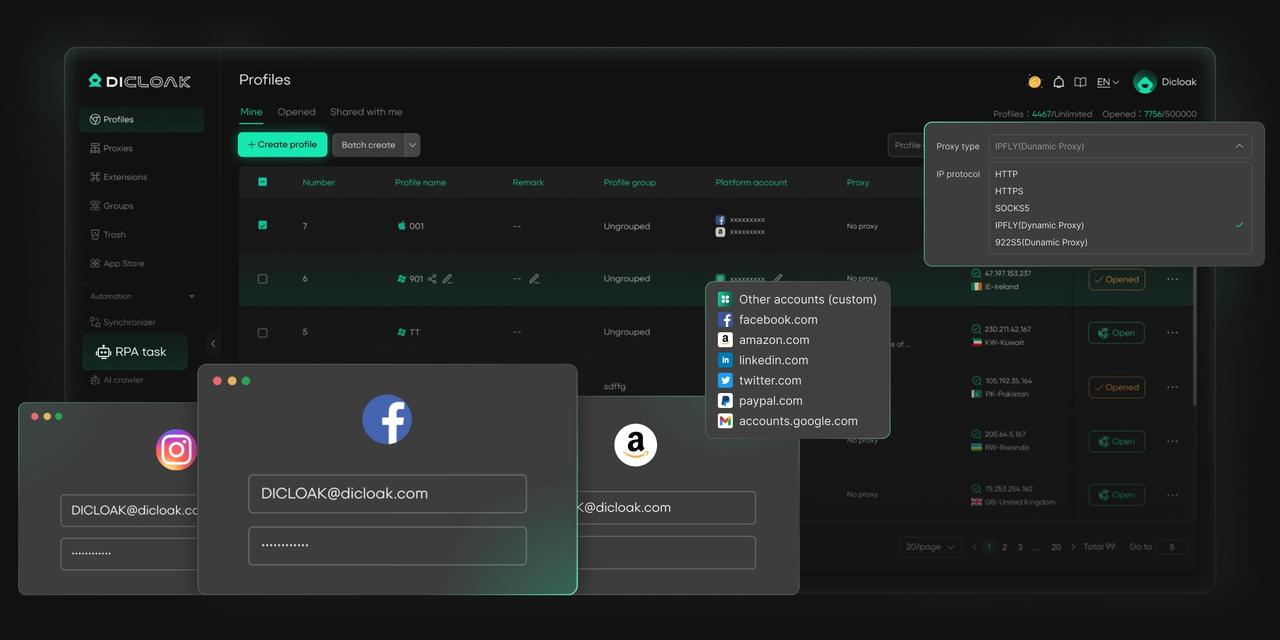
⚡The DICloak Antidetect Browser has become a global favorite for its unparalleled ability to efficiently and securely manage multiple accounts. Designed for professionals in social media management, affiliate marketing, traffic arbitrage, e-commerce, account farming, airdrops, and more, DICloak offers powerful features like RPA automation, bulk operations, and a synchronizer. Additionally, it allows you to customize fingerprints and integrate proxies for each profile, ensuring top-level security and operational efficiency. It’s the ultimate tool for seamless, secure, and scalable operations.
What Makes DICloak Stand Out?
✅ Manage 1,000+ Accounts on One Device: Stop wasting money on extra hardware! DICloak allows you to manage multiple accounts on a single device, cutting costs and boosting efficiency.
✅ Guaranteed Account Safety, No Ban Risks: Every account gets its own isolated browser profile with custom fingerprints and IPs, drastically reducing the risk of bans. Your accounts, your control!
✅ Flexible Proxy Configuration for Maximum Performance: Seamlessly integrate with all major proxy protocols (HTTP/HTTPS, SOCKS5) and manage your proxy pool with bulk operations. No more struggling with IP management—DICloak has you covered.
✅ Streamlined Team Collaboration for Better Results: Easily manage your team with advanced tools like profile sharing, permission settings, data isolation, and operation logs. Your team works smarter, not harder.
✅ Automate the Grind with RPA: DICloak's built-in RPA saves you hours of manual work. Automate repetitive tasks, streamline workflows, and focus on what really matters—growing your business.
✅ Powerful Bulk Tools to Scale Your Operations: Create, import, and launch multiple browser profiles in one click. DICloak makes scaling your business as easy as it gets.
✅ Compatible with All Major Operating Systems: Based on the Chrome core, DICloak supports simulating Windows, Mac, iOS, Android, and Linux operating systems. No matter what platform you need, DICloak has you covered.
🔗 Ready to Get Started?
Visit the DICloak website to explore more details and choose the plan that’s right for you. Start for free today and experience the power of secure, efficient, and scalable multi-account management!
Conclusion
A .edu email is essential for students and educators, providing access to academic resources, discounts, and school services. It is tied to accredited educational institutions and used for official communication.
To get a .edu email, you can enroll in a community college, sign up for online adult education programs, or explore alumni accounts offered by schools. Once obtained, it should be used for academic purposes only, such as accessing student platforms and receiving school-related communications. Misuse can lead to account suspension.
Verification is necessary to ensure your .edu email is functional for login and email forwarding. After confirming your email’s validity, set up forwarding to stay organized.
Common issues like application failures can arise from incomplete documentation or delays in verification. To improve approval odds, submit clear documents and follow application instructions carefully. International students may face challenges, as some services only accept .edu emails from specific regions.
For managing multiple accounts and ensuring privacy, DICloak is a useful tool. It offers environment isolation, proxy configuration, and browser automation, keeping your academic accounts secure and organized.
By following these steps, students and educators can fully benefit from their .edu email and maintain secure, organized access to academic resources.
Frequently Asked Questions (FAQs)
How to get a .edu email if I am not currently enrolled in a school?
If you're not currently enrolled in a school or university, you can still obtain a .edu email by enrolling in an accredited educational institution, such as a community college, or an online adult education program. Some schools also offer .edu emails to alumni or special programs.
What are the main benefits of having a .edu email address?
A .edu email provides access to exclusive discounts on software, services, and learning tools. Many companies offer student pricing when you sign up with a .edu email. It also allows you to access academic resources, school portals, and official communications from your educational institution.
How do I verify that my .edu email is working correctly?
After obtaining a .edu email, it’s important to verify that it functions properly. Test its validity by logging into your school’s portal or checking whether emails are being forwarded correctly. Ensure you can access student services and offers linked to your .edu email.
Can I use my .edu email for personal or business purposes?
While it may be tempting, .edu email addresses should only be used for academic purposes. Misusing the email for personal business, marketing, or non-academic activities can result in the suspension of your account. Always use your .edu email for school-related communications and student benefits.
How to get a .edu email if I am an international student?
International students can obtain a .edu email by enrolling in an accredited educational institution that accepts international applicants. Once you are enrolled, your institution will provide you with a .edu email to access resources and communicate with faculty. Be sure to check if the school supports international students before applying.
 Web Proxy Tools
 Free Tools
 Cookie Plugin
 UA Generator
 MAC Address Generator
 IP Generator
 IP Address List
 2FA Code Generator
 World Clock
 Anonymous Check
 WebRTC Leak Test
 UUID Generator
 Free Web Proxy Site
 Proxy Checker
 FB Ad Checker
 AI Web Scraping
 Free SMM Tools
 Twitter Shadowban Checker
 Instagram Name Checker
 UTM Generator
 Username Generator
 AI Hashtag Generator
 LinkedIn Headline Generator
 Social Media Image Resizer