Why do CAPTCHAs keep getting harder to bypass in 2026?
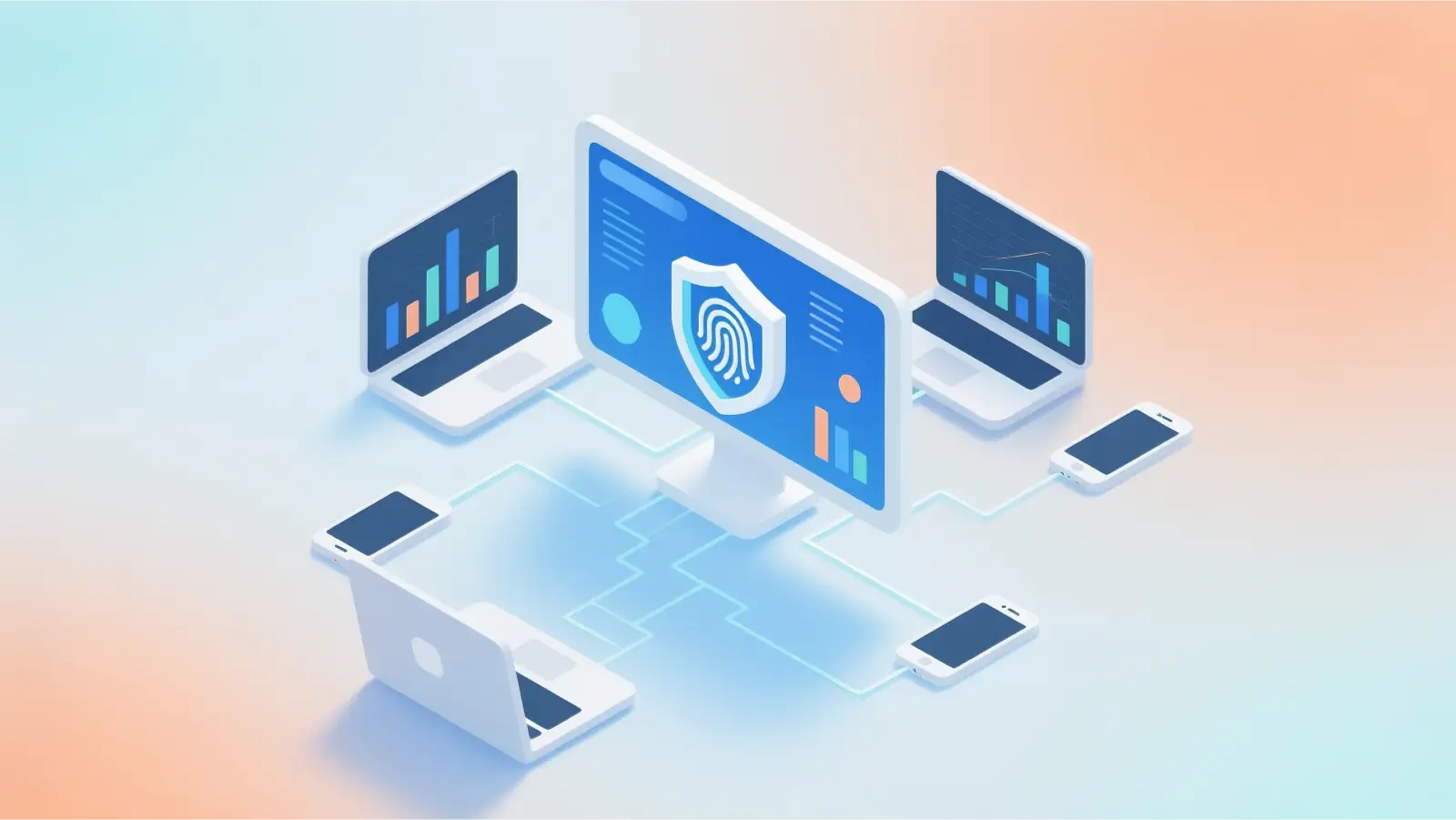
If you’re still treating CAPTCHAs as isolated image puzzles, your pipeline is already dead. Modern bot detection has migrated from static challenges to continuous behavioral telemetry. In 2026, solving the puzzle is secondary; the real hurdle is the risk score assigned to your browser profile before the CAPTCHA even renders. Defenses now analyze Canvas fingerprints, WebGL vendor strings, and mouse micro-movements to distinguish between a legitimate user and a headless script. If your bot doesn't "feel" human across the entire session, a successfully returned token from a solver will simply lead to a shadow-ban or an infinite loop of harder challenges.
Speed vs. Accuracy: How to choose between OCR and Human-in-the-Loop solvers?
The choice between machine-driven speed and human-driven logic isn't about which is "better"—it's about matching the solver to the target's defensive depth.
OCR-based Solving: When millisecond speed is the priority
Optical Character Recognition (OCR) is the workhorse for high-volume, low-security targets. Services like AZcaptcha and TrueCaptcha utilize neural networks to "read" images in 0.2s to 0.3s. This is the budget-friendly route, with prices sitting between $0.33 and $1.00 per 1,000 requests. However, there is a massive technical caveat: TrueCaptcha is strictly limited to "normal" image-to-text CAPTCHAs. If you try to point an OCR solver at a modern hCaptcha or a rotating Cloudflare Turnstile, the failure rate will be 100%.
Human-in-the-Loop: Why some puzzles still require a manual touch
For enterprise-grade obstacles like AWS WAF or complex hCaptcha grids, human-in-the-loop services (e.g., 2Captcha or Bypass Captcha) remain the gold standard for accuracy. While OCR is instant, a human solver will take 3 to 15 seconds for a standard reCAPTCHA v2, and up to 90 seconds for high-complexity challenges. You are paying for that cognitive flexibility at a rate of $1 to $3 per 1,000 requests. It’s slow, it’s expensive, but for high-security targets, it’s often the only way to get a valid token.
Which CAPTCHA solver API offers the highest success rates for enterprise sites?
The market has shifted toward "Web Unlockers"—fully managed APIs that handle the solver, the proxy, and the browser fingerprint simultaneously.
| Service |
Primary Method |
Key Feature |
Success Rate |
Best For |
| Bright Data Web Unlocker |
Behavioral Emulation |
Automated Fingerprinting |
99% (Verified) |
High-Value Enterprise Targets |
| CapSolver |
AI-based API |
Selenium/Puppeteer Native |
Very High |
Automation Framework Scaling |
| 2Captcha |
Human-in-the-loop |
30+ CAPTCHA types |
High |
Complex hCaptcha/AWS WAF |
| DeathByCaptcha |
Hybrid (Human + OCR) |
Budget-to-Accuracy Balance |
High |
General-purpose Scraping |
Web Unlockers are replacing standalone solvers because they eliminate the "token mismatch" problem. By managing the user-agent and request headers for you, these services ensure the solved token actually works within the context of the session.
What is the real cost of automated CAPTCHA solving in 2026?
Engineering managers often look at the "sticker price" and ignore the attrition of failed requests.
The Pay-As-You-Go vs. Monthly Subscription dilemma
If you have a massive, predictable volume, AZcaptcha’s unlimited monthly plans ($25–$300) are hard to beat. However, for precision work, the tiered pay-as-you-go models are more realistic. For instance, Bright Data offers a sliding scale: $3/1k on the entry plan, dropping to $2.30 (Growth), $2.03 (Business), and $1.89 (Premium) as your volume increases.
Calculating the "Hidden Cost" of failed requests and retries
A $0.50/1k solver that fails half the time is more expensive than a $2.00/1k solver with a 99% success rate. To protect your margins, look for "slowness insurance"—a feature pioneered by EndCaptcha—or policies like Bright Data’s, where you only pay for successful requests. If your script spends 60 seconds waiting for a human solver only to receive an invalid token, the lost compute time and proxy bandwidth often cost more than the solve itself.
How to solve reCAPTCHA v3 and hCaptcha without triggering a shadow-ban?
Solving a token-based CAPTCHA is useless if your reputation score is already tanked.
Dealing with invisible reCAPTCHA v3 scores
reCAPTCHA v3 doesn't present a puzzle; it assigns a score from 0.0 to 1.0. If your browser profile is inconsistent—for example, if your User-Agent claims you’re on Windows but your hardware profile reveals a Linux kernel—Google will return a low score. The solver will "succeed" in providing a token, but the target site will block you anyway. Solving v3 requires matching your automation’s internal state to the external fingerprint.
Why browser extensions like Buster are risky for bulk scraping
Buster is a hobbyist tool, not an engineering solution. It relies on speech recognition to solve audio challenges, which is a massive red flag for modern detectors. Audio challenges are more heavily monitored for bot-like acoustic patterns and are strictly rate-limited. If you use Buster for bulk operations, you will be flagged and temporarily blocked within minutes. It is also limited exclusively to reCAPTCHA, making it useless for the broader web.
Why integrating a solver with an antidetect browser is the ultimate stealth move?
In a professional workflow, a solver is just one component of a "stealth stack." Using an antidetect browser like DICloak allows you to wrap your solver in a bulletproof browser profile, drastically increasing the longevity of your sessions.
- Independent Fingerprint Management: DICloak creates isolated environments for every profile, ensuring that a CAPTCHA challenge on one account doesn't leak and flag your entire farm.
- Proxy Integration: You can pair your solver with residential or ISP proxies directly within the DICloak profile. This ensures the IP reputation matches the browser's geographic "home."
- Automation Compatibility: Use DICloak’s API to connect your solver services to real, non-headless browser instances, which naturally return higher reCAPTCHA v3 scores.
- Cookie Retention: This is the key to ROI. By using DICloak to retain cookies and active sessions, you only pay to solve a CAPTCHA once. Subsequent requests use the "warm" session, bypassing the need for a solver on every page load.
7. What are the biggest mistakes when implementing a CAPTCHA API?
Even the most expensive API will fail if your implementation logic is lazy.
Ignoring the time-to-solve (TTS) threshold
If you’re using EndCaptcha, they guarantee a 7-second solving time. If your script’s internal Timeout is set to 5 seconds, you’re throwing money into a black hole. Your architecture must be asynchronous. You shouldn't block your main thread waiting for a solver; you should dispatch the challenge, handle other tasks, and poll for the token.
Failing to rotate User-Agents and fingerprints alongside the solver
If you solve 50 CAPTCHAs using the same browser fingerprint, the target site’s security engine will correlate those "human" solves to a single device. Eventually, the site will stop serving puzzles and move straight to a hard 403 block. You must rotate your underlying device profile and User-Agent in sync with your solver requests to prevent pattern recognition from killing your proxies.
Common Questions About CAPTCHA Solving Tools (FAQ)
Is there a 100% free CAPTCHA solver that actually works? No. Tools like Buster are "toys" for manual use. Any "free" API is likely harvesting your data or using your bandwidth as a proxy exit node. For professional scraping, if you aren't paying for the solve, you are the product.
What is the fastest CAPTCHA solver for high-speed scraping? OCR-based solvers like AZcaptcha (0.2s–0.3s) are the fastest, provided you are only targeting simple image puzzles.
How do I solve CAPTCHAs in Python or Selenium? Integrate the solver via API. Most providers like CapSolver and 2Captcha offer Python libraries that allow you to pass the site key and receive a token, which you then inject into the g-recaptcha-response textarea element.
Why does my CAPTCHA solver keep failing on Cloudflare? Standard solvers can't handle Cloudflare’s behavioral "Turnstile" or Five-Second Challenge. You need a Web Unlocker API that can handle the JavaScript challenge-response header, not just a simple token solver.
Do I still need proxies if I use a CAPTCHA solver? Absolutely. CAPTCHA frequency is a direct function of IP reputation. Using a solver on a flagged datacenter IP is a waste of money; you’ll just get hit with another challenge immediately.
Are human-based solvers safer than AI-based ones? Human solvers are more accurate for high-entropy puzzles (hCaptcha), but they are slower. The "safest" approach is using an AI-based Unlocker that emulates human behavior to prevent the CAPTCHA from appearing in the first place.
Final Verdict on Choosing a Solver
Stop looking for a "silver bullet" and start building a layered defense-bypass strategy. Use OCR (AZcaptcha/TrueCaptcha) only when speed and cost-per-request are the primary constraints on simple sites. For any target that matters—especially enterprise sites with reCAPTCHA v3 or hCaptcha—invest in human-in-the-loop solvers or Web Unlocker APIs like Bright Data. To keep your costs from spiraling, wrap these solvers in an antidetect environment like DICloak to maintain session longevity. A solved CAPTCHA is a tactical win, but a retained session is a strategic victory.
 Web Proxy Tools
 Free Tools
 Cookie Plugin
 UA Generator
 MAC Address Generator
 IP Generator
 IP Address List
 2FA Code Generator
 World Clock
 Anonymous Check
 WebRTC Leak Test
 UUID Generator
 Free Web Proxy Site
 Proxy Checker
 FB Ad Checker
 AI Web Scraping
 Free SMM Tools
 Twitter Shadowban Checker
 Instagram Name Checker
 UTM Generator
 Username Generator
 AI Hashtag Generator
 LinkedIn Headline Generator
 Social Media Image Resizer