Have you ever been locked out of Twitter or noticed your engagement suddenly plummeting? If so, you might be wondering, “Can you get IP banned on Twitter?” While most users are familiar with account suspensions, the concept of an IP ban can be confusing. In this article, we’ll dive into how IP bans work on Twitter, what triggers them, and how you can avoid facing restrictions in the future. Whether you’re managing a single account or multiple accounts, knowing the ins and outs of Twitter’s enforcement methods can help you stay safe and avoid getting blocked. Keep reading to discover everything you need to know about preventing bans and protecting your online presence!
What is an IP Ban on Twitter?
When it comes to online platforms like Twitter, users often wonder “can you get IP banned on Twitter?” An IP ban blocks a specific IP address from accessing the platform. This section explains what an IP ban is, how it works, and why it may be applied, even though Twitter doesn't rely on it as the primary method.
Definition of IP Ban
An IP ban occurs when a website blocks a specific IP address from accessing its platform. Each device has a unique IP address, and when blocked, access is denied until the ban is lifted. On Twitter, users often confuse account suspensions or temporary blocks with an IP ban, as the issue may stem from other factors, not just the IP itself. Understanding this helps clarify access problems.
Types of IP Bans:
- Temporary IP Ban: This short-term block (minutes to hours) is triggered by unusual activity, like too many requests in a short period. Once the ban expires, access is restored.
- Permanent IP Ban: A more severe block used for serious violations, though Twitter usually relies on other methods, like account suspensions or device fingerprinting, instead of permanent IP bans.
Twitter's Official Policies on IP Bans: Can You Get IP Banned on Twitter?
Now that you know what an IP ban is, it’s time to look at Twitter’s official stance. Many people ask “can you get IP banned on Twitter,” but the answer is more complex than a simple yes or no. Twitter has clear rules about behavior and how it enforces them. These rules focus more on accounts and devices rather than simple IP addresses.
Twitter’s Stance on IP Bans
Twitter’s published policies and many user reports show that Twitter does not normally ban users just by their IP address. Instead, Twitter suspends or bans accounts that break its rules. Suspensions can be temporary or permanent, depending on the violation. For example, posting content that violates Twitter’s rules can lead to a permanent account suspension, not an IP block.
Users in technical forums report that IP bans are rare on Twitter and that most people who think they were IP banned were actually dealing with an account or device-level action instead.
Still, Twitter’s system might take note of an IP if it sees repeated rule evasion. For example, if someone repeatedly creates new accounts after being suspended, Twitter’s safety systems may link that pattern with the same IP and apply stricter measures.
Alternative Ban Methods Used by Twitter
Even though Twitter does not often use direct IP bans, the platform uses several other methods to stop rule-breaking behavior. These methods are more sophisticated and harder to evade.
Account-Level Tracking Twitter watches user accounts closely. When an account breaks rules such as spam, abuse, or repeated violations, Twitter can temporarily or permanently suspend that account. Suspended accounts cannot post, follow, or log in until the issue is resolved. In high‑profile cases, companies or news outlets have reported permanent suspensions of major accounts for repeated policy violations.
Account‑level tracking also includes behavior patterns such as excessive follows, mass direct messages, or automated posts. These patterns can cause Twitter to flag an account even if the user hasn’t broken content rules directly, simply because the behavior looks like an attempt to evade rules.
Device-Level Tracking In addition to accounts, Twitter can link rule violations to the device you use to access the platform. This is called device‑level tracking. The platform may use signals from the device, such as unique identifiers, to tell that multiple accounts are being used from the same phone or computer. This makes it harder for a user to evade a ban by simply creating a new account, because Twitter can connect the new account to the same physical device.
For example, people have reported that when they create a new Twitter account on the same device after a suspension, the new account gets banned very quickly. Often this happens even when changing the email or username, because the device fingerprint stays the same.
In short, Twitter prefers account and device tracking to enforce rules rather than standard IP bans. So when people ask “can you get IP banned on Twitter,” the more accurate answer is that Twitter usually focuses on the user’s actions and device signals rather than just the internet address you are using.
How Do IP Bans Work on Twitter Once You Know Whether You Can Get IP Banned on Twitter?
Now many people still ask “can you get IP banned on Twitter?” and how those bans would work if they happened. This section explains how IP bans would work technically, and what actions might trigger limits or blocks on Twitter. While real IP bans on Twitter are rare, understanding these basics helps you protect your account and avoid mistakes.
Mechanics of IP Bans
An IP ban is a technical rule that stops a specific internet address from connecting to a site. When an IP is banned, all traffic from that address can be blocked. Usually, platforms do this to stop harmful or automated use.
For most services, when an IP ban happens, you might see errors like “403 Forbidden” or “you are blocked” when you try to load the site. But on Twitter, this is not common. Most users who think they were IP banned have devices or accounts flagged instead. In rare cases where Twitter does block an IP, it is usually temporary and tied to very unusual behavior, not ordinary social use.
Some developers who tried to scrape large amounts of Tweets have worried about rate limits or IP-level actions. In one project, a user asked if tools like snscrape would get an IP ban for collecting millions of Tweets, showing that heavy automated use can trigger limits or blocks on the Twitter API.
Common Triggers for IP Bans
Even though Twitter rarely bans by IP, there are certain actions that could lead to restrictions or blocks linked to your IP. These triggers are mostly about unsafe or bot-like behavior.
Excessive Requests
One common trigger is making too many requests in a short time. If your device or software sends many page loads, likes, or follows quickly, the system might think it is not a real person. This can cause temporary limits — like reduced access or delayed actions. Users who try to collect massive data or use automated scripts often face these limits.
For example, developers pulling hundreds of thousands of Tweets quickly may hit Twitter’s rate limits. When these limits are reached, Twitter can block requests from that IP or API key for a period of time. This is a type of defensive block — not a classic IP ban, but it feels like one to the user.
Bot‑Like Behavior
Automated behavior — actions that look like machines instead of humans — is another trigger. Twitter is full of bots trying to gain attention or spread messages. Some bots like to auto‑follow or auto‑reply, and Twitter’s systems watch for these patterns.
If the system sees multiple accounts from the same IP doing repeated likes, follows, or messages very fast, it might temporarily block or throttle that IP. While this is usually a system rate limit or machine‑learning flag, users affected might believe they have been IP banned.
Spamming and Violations
Posting spam or breaking Twitter’s posting rules can lead to account suspension or limits. Twitter’s spam detection systems watch for repetitive or harmful content, and will suspend accounts that violate these rules.
In rare cases where many accounts from one IP are tied to spam or evasion behavior, Twitter’s safety tools might also limit access from that IP temporarily to stop continued abuse. This can feel like an IP ban, but it is usually tied to broader policy enforcement rather than a simple IP block.
For example, users who create multiple accounts and post identical spam messages from the same network sometimes report that new accounts are flagged quickly. In these situations, Twitter may take coordinated action by limiting that IP’s interaction with the platform.
Consequences of Getting IP Banned on Twitter After Knowing If You Can Get IP Banned on Twitter
Now that we know what an IP ban is and how it works, it’s important to recognize the consequences of getting banned on Twitter. While true IP bans are rare, restrictions can still affect your access and visibility on the platform. If you suspect “can you get IP banned on Twitter,” this section helps clarify what you might experience, whether it's an account suspension, shadowban, or another form of restriction.
Impact on User Access
If you face an IP ban-like restriction on Twitter, the most immediate effect is losing access to the platform in some way. For example, you might not be able to post, reply, or even access your account without being shown a restriction notice. While Twitter doesn't typically use IP bans to block users, the impact often feels the same — especially when access to your account or content becomes limited or completely blocked.
- If you are suspended, you will receive a notice, and you cannot interact with the platform until your suspension is lifted.
- For visibility restrictions, like shadowbans, your content can still exist, but it won’t reach your followers or appear in search results, leading to a huge drop in engagement.
Signs You May Be IP Banned
If you suspect you’ve been blocked or restricted on Twitter, there are several signs to look for, including account suspension, shadowbanning, or rate limiting. These signs indicate that Twitter has placed some form of restriction on your account or activity, which might feel like an IP ban even if one wasn’t implemented.
Account Suspension Indicators
One clear sign that your account is restricted is a suspension. When your account is suspended, you will likely see:
- “Your account has been suspended” message when trying to log in.
- Your profile shows “Account suspended” to other users.
- Emails from Twitter explaining why the suspension occurred. Suspensions happen when you violate Twitter’s rules, like posting abusive content or spamming. If you receive a suspension notice, you may be able to appeal, and Twitter will provide a path for account recovery. For example, if you spammed too many posts, or violated the platform’s harassment rules, you might see an account suspension.
Shadowbanning Signs
If you're shadowbanned, your account isn’t fully suspended, but your content is hidden from a larger audience. Signs of shadowbanning include:
- Tweets not showing up in search results.
- Replies disappearing in threads, making it hard for others to see your responses.
- Engagement dropping dramatically—likes, retweets, or comments suddenly hit zero or near zero.
- You can still tweet, but no one seems to see your posts. Shadowbans can be difficult to detect unless you check your account visibility or ask others if they can see your posts. Many users realize they’ve been shadowbanned when their engagement drops to nearly nothing, despite tweeting regularly.
Device/Fingerprint Ban Signs
Twitter also uses device-level tracking to prevent users from circumventing bans. If you're blocked at the device level, signs include:
- New accounts you create are immediately suspended, even with different emails and phone numbers.
- Suspensions happen within minutes or hours of account creation, indicating a device-level block.
- You can create new accounts using a different device, which avoids the ban. This type of restriction is harder to detect because you may be able to create new accounts, but only for a short time before they are blocked again. This behavior shows that Twitter is tracking devices, not just IPs. For example, some users who had their accounts suspended reported that switching to a different computer or phone allowed them to create accounts successfully.
Rate Limiting (Not a Ban)
Another common restriction is rate limiting, which isn’t technically a ban, but it can block certain actions. You’ll know you’re facing rate limiting if:
- You receive “Rate limit exceeded” errors when trying to perform actions on Twitter.
- Certain actions are temporarily unavailable, such as liking or following multiple accounts at once.
- The restriction lifts after 30 minutes to an hour. Rate limits are typically applied when Twitter detects that a user is making too many requests too quickly, often through its API or automated tools. Unlike an IP ban, this restriction is temporary and intended to protect the platform from excessive usage. If you receive rate-limited errors, wait for the restriction to end, and avoid overusing automated tools that may trigger this action.
Can You Bypass an IP Ban on Twitter Once You Know If You Can Get IP Banned on Twitter?
Even though true IP bans on Twitter are rare, many people still wonder “can you get IP banned on Twitter” and if there are ways to get around such a ban. This section explains the common methods people try to bypass a block and the risks that come with these actions. Understanding both the techniques and the dangers can help you stay safe and avoid more trouble.
Methods to Circumvent IP Bans
When Twitter blocks your IP, users often try hiding or changing it with proxies or network switching. These methods don’t remove the ban but can make it appear as though you're connecting from a new address. However, they come with risks and don’t guarantee access.
Proxies and Network Switching:
Using a proxy or switching networks (e.g., from Wi-Fi to mobile data) can mask your IP, but Twitter may still detect unusual behavior or patterns, leading to further restrictions. For example, using the same proxy for multiple accounts could trigger Twitter’s security systems.
Risks:
- Penalties: Bypassing a ban may lead to more severe actions, like account suspensions or stricter checks.
- Ethical Concerns: Bypassing bans violates Twitter’s terms of service and raises privacy risks with insecure proxies.
The best way to regain access is by appealing the ban through Twitter’s official process and adjusting your behavior to comply with their rules.
How to Prevent Future IP Bans on Twitter Once You Know Whether You Can Get IP Banned on Twitter?
After understanding how Twitter bans and restrictions work, it’s important to focus on how to prevent such issues in the future. If you’re worried about getting IP banned on Twitter, there are clear steps you can follow to protect your account. This section will help you set up your accounts and practices to avoid the consequences of bans.
Best Practices for Account Management
- Follow Twitter's Guidelines: Avoid spamming, harassment, or sharing harmful content. Maintain a clean account record to minimize the risk of suspension.
- Limit Automation: Avoid excessive use of automation tools. Spread out activities to make your behavior appear natural and prevent being flagged as a bot.
- Understand Twitter’s Policies: Familiarize yourself with Twitter’s terms of service, especially around spam, harassment, and fake accounts. Stay compliant with these rules to avoid bans.
Tips for Managing Multiple Accounts
For people managing multiple Twitter accounts, like social media managers or marketers, there are specific strategies to avoid getting banned. Running multiple accounts can be tricky, and if you don't follow the right practices, you may face restrictions.
Ethical Practices to Avoid Bans
- Device Fingerprint: Don’t log in and out of many accounts on the same device. Use different devices or multi-account tools to keep accounts isolated.
- Phone Numbers: Don’t use the same phone number for multiple accounts. Use unique numbers or virtual numbers for each account.
- Duplicate Content: Avoid posting identical content across multiple accounts. Ensure each account shares unique, relevant content to prevent being flagged as spam.
Using an Antidetect Browser
For professional multi-account management, tools like an antidetect browser can help. An antidetect browser creates completely isolated environments for each Twitter account, allowing you to maintain unique browser fingerprints for each account. This prevents Twitter from linking your accounts together and helps avoid detection.
Key features to look for in an antidetect browser include:
- Unique browser fingerprints for each account (Canvas, WebGL, fonts, etc.).
- Cookie isolation to keep profiles separate, with no data leakage between them.
- Distinct timezone and language settings for each account.
- Separate hardware characteristics to prevent linking.
By using tools like DICloak or other antidetect browsers, you can ensure each account has its own unique digital fingerprint, which is harder for Twitter to trace. This is one of the safest ways to manage multiple accounts without running into bans or restrictions.
Create Distinct Account Identities
It’s also important to create distinct identities for each Twitter account.
- Use unique email addresses for each account.
- Link different phone numbers (or virtual numbers) to each account.
- Personalize each profile with a unique picture, bio, and theme.
- Post different content and follow different users to ensure the accounts don’t overlap in behavior.
By following these steps, you reduce the chance that Twitter will link your accounts together. It also helps you maintain compliance with Twitter's rules.
Establish Natural Behavioral Patterns
A key to avoiding detection by Twitter’s systems is to create natural behavior patterns for your accounts.
- Stagger account creation over time instead of creating many accounts at once.
- Vary your activity so that you don’t tweet at exactly the same time every day.
- Avoid mass liking, following, or retweeting at the same time across all accounts.
Twitter looks for patterns of behavior that might indicate bot activity, so spreading out your actions and allowing each account to develop naturally reduces the risk of detection.
What to Do If You Are IP Banned on Twitter Once You Know Whether You Can Get IP Banned on Twitter?
If you are facing a restriction or suspension on Twitter and wondering “can you get IP banned on Twitter,” there are specific steps you can take to recover your account. Although Twitter doesn’t commonly apply true IP bans, other types of restrictions such as account suspensions or shadowbans may feel like an IP block. Here’s what you should do if you believe you've been banned or restricted, and how you can try to regain access.
How to Appeal a Ban or Suspension
If you’re suspended or restricted, the first thing you should do is appeal the suspension. Twitter has an official process for submitting appeals, allowing you to explain why you believe the suspension was a mistake. Here's how to get started:
Steps to Appeal Your Suspension
- Log in to your suspended account: If possible, log in and follow the on-screen instructions to begin the appeal process.
- Appeal prompt: After logging in, you will likely see a suspension notification with a prompt to appeal the decision.
- Fill out the appeal form: You’ll need to explain why you think the suspension was incorrect. Be clear, polite, and factual in your response. For example, you might say something like, “I believe my account was mistakenly flagged for spam due to a high volume of posts, but all content was legitimate.”
- Wait for Twitter’s response: The review process can take anywhere from a few days to weeks, depending on Twitter’s current workload. During this period, avoid creating new accounts or making duplicate appeals as that could delay the review process.
Interacting with Twitter Support for Recovery
After submitting your appeal, keep in touch with Twitter Support if necessary. Effective communication with support can help speed up the process or improve your chances of a successful recovery.
Effective Communication Strategies
- Be clear and concise: When explaining your issue, use simple language and avoid making the appeal too long. Stick to the key points — why you believe the suspension was a mistake, what you were doing, and any context that might be helpful.
- Stay polite and professional: Avoid aggressive language, and remember that the support team is more likely to help if you communicate respectfully.
- Don’t spam support: Don’t submit multiple appeal forms or send constant follow-up emails, as this can cause delays. Instead, wait for the official response and only follow up if requested.
Sometimes, Twitter will reach out to you with additional questions or information, so be sure to respond promptly and accurately.
Options If You Can’t Appeal or If Your Appeal Fails
If your account is permanently banned and your appeal is denied, you still have options. However, it’s important to follow a proper setup to avoid facing the same issues again with a new account.
Option 1: Wait It Out
If the suspension is temporary, the best option is to wait for the suspension to end. Twitter often applies temporary restrictions for minor infractions or too much activity in a short time. These bans typically last from a few hours to a few days. However, don’t try to create a new account during this time, as this could worsen the situation and lead to permanent bans.
Option 2: Start Fresh with Proper Setup
If your account is permanently banned and you are not able to recover it through an appeal, you can create a new account, but you need to do it the right way:
- Wait before creating a new account: Don’t immediately try to create a new account right after the ban. It’s a good idea to wait at least a few weeks to avoid triggering Twitter’s detection systems.
- Use an antidetect browser: Tools like Multilogin or DICloak can help you create isolated profiles with unique fingerprints for each new account, making it harder for Twitter to link them to the old account.
- Use a residential proxy: When setting up a new account, use residential proxies for each new account. These IPs come from real homes and are harder for Twitter to flag as suspicious. Avoid using free proxies that could be already flagged by Twitter.
- Create distinct account identities: Ensure that each new account has:
- A unique email address
- Different phone numbers (if possible, use virtual phone numbers for added privacy)
- A separate profile picture
- Custom bio and content
- Different followers and posting patterns
- Don’t use the same device: Don’t access multiple accounts on the same device or network without proper fingerprint masking. Creating new accounts on the same device without adjustments is a sure way to get flagged.
Option 3: Create a Completely New Account with Safe Practices
- Stagger account creation: Create accounts at different times, rather than all at once. If you create multiple accounts on the same day, Twitter might flag them for suspicious behavior.
- Vary your activity patterns: Don't tweet or like posts at the exact same time every day. This looks unnatural and could be flagged as automated.
Following these steps will help reduce the risk of being banned again while giving you a fresh start with your new Twitter account.
Why choose DICloak Antidetect Browsers for your business?
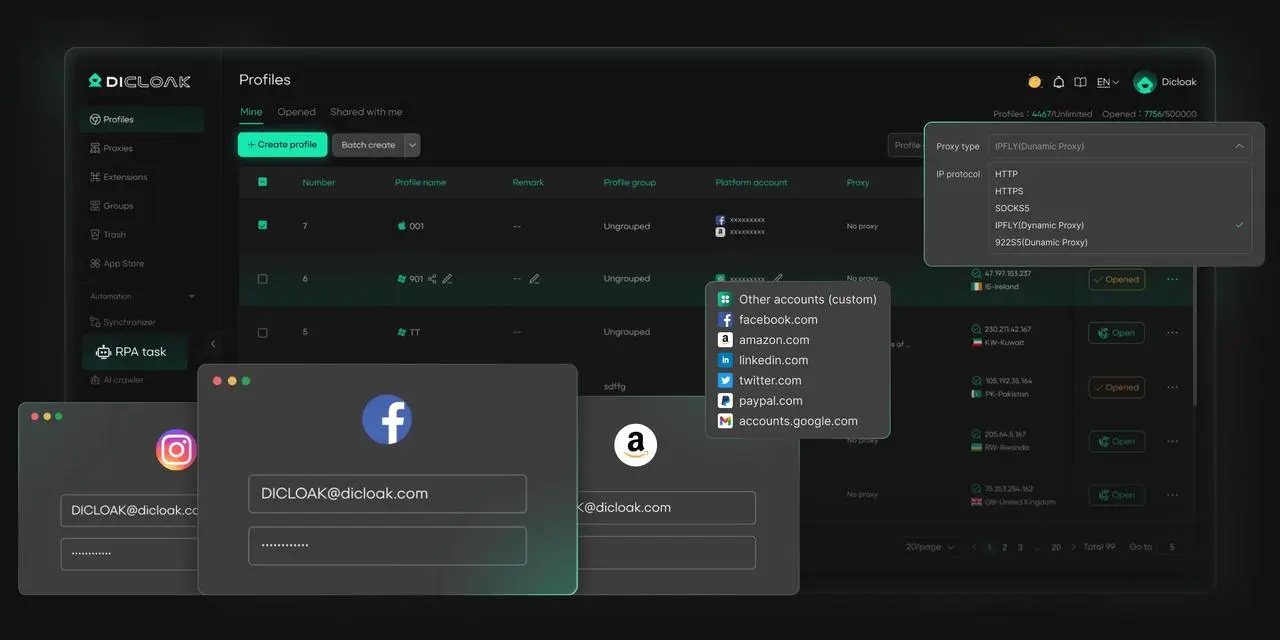
⚡The DICloak Antidetect Browser has become a global favorite for its unparalleled ability to efficiently and securely manage multiple accounts. Designed for professionals in social media management and more, DICloak offers powerful features like RPA automation, bulk operations, and a synchronizer. Additionally, it allows you to customize fingerprints and integrate proxies for each profile, ensuring top-level security and operational efficiency. It’s the ultimate tool for seamless, secure, and scalable operations.
What Makes DICloak Stand Out?
✅ Manage 1,000+ Accounts on One Device: Stop wasting money on extra hardware! DICloak allows you to manage multiple accounts on a single device, cutting costs and boosting efficiency.
✅ Guaranteed Account Safety, No Ban Risks: Every account gets its own isolated browser profile with custom fingerprints and IPs, drastically reducing the risk of bans. Your accounts, your control!
✅ Flexible Proxy Configuration for Maximum Performance: Seamlessly integrate with all major proxy protocols (HTTP/HTTPS, SOCKS5) and manage your proxy pool with bulk operations. No more struggling with IP management—DICloak has you covered.
✅ Streamlined Team Collaboration for Better Results: Easily manage your team with advanced tools like profile sharing, permission settings, data isolation, and operation logs. Your team works smarter, not harder.
✅ Automate the Grind with RPA: DICloak's built-in RPA saves you hours of manual work. Automate repetitive tasks, streamline workflows, and focus on what really matters—growing your business.
✅ Powerful Bulk Tools to Scale Your Operations: Create, import, and launch multiple browser profiles in one click. DICloak makes scaling your business as easy as it gets.
✅ Compatible with All Major Operating Systems: Based on the Chrome core, DICloak supports simulating Windows, Mac, iOS, Android, and Linux operating systems. No matter what platform you need, DICloak has you covered.
🔗 Ready to Get Started?
Visit the DICloak website to explore more details and choose the plan that’s right for you. Start for free today and experience the power of secure, efficient, and scalable multi-account management!
Conclusion
If you're worried about being IP banned on Twitter, it’s important to know that Twitter rarely uses IP bans but instead relies on methods like rate limiting, shadowbans, and account suspensions to restrict access. These actions can make it feel like an IP ban, especially if your engagement drops or you lose access. To prevent this, follow best practices such as maintaining good account behavior, understanding Twitter's policies, and avoiding excessive automation.
If you are suspended, you can appeal through Twitter’s support system, but if the suspension is permanent, creating a new account with proper setup can help. Using antidetect browsers and residential proxies will ensure your accounts stay isolated and safe. By following these steps, you can reduce the risk of facing future restrictions and enjoy a smoother Twitter experience. So, while can you get IP banned on Twitter is a valid concern, knowing how Twitter handles bans and how to prevent them will help you avoid trouble.
FAQ
Can You Get IP Banned on Twitter for Using Multiple Accounts?
While Twitter typically does not use IP bans as its primary enforcement method, managing multiple accounts from the same IP can still raise red flags. Twitter is more likely to use account-level tracking and device-level tracking to detect suspicious activities. To avoid potential restrictions, follow Twitter's rules and maintain natural behavior across your accounts, without spamming or automating actions excessively.
How Do I Know If I’m IP Banned on Twitter?
If you're having trouble accessing Twitter, such as being unable to log in or seeing messages like "403 Forbidden", you might think you're IP banned. However, Twitter generally doesn’t enforce IP bans. Instead, you might be dealing with rate limiting, shadowbanning, or suspensions due to other violations. If your tweets aren't showing up in search results or your engagement drops, you could be facing a shadowban or another form of restriction.
What Are the Main Triggers for an IP Ban on Twitter?
The main actions that could trigger IP bans on Twitter are excessive requests, bot-like behavior, and spamming. For example, sending too many requests in a short time or automating tasks like following, liking, or posting can get flagged by Twitter's detection systems. While account-level tracking and device-level tracking are more common, these activities can still lead to temporary access restrictions or rate limits that feel like an IP ban.
Can I Bypass an IP Ban on Twitter Using Proxies?
While some users try to bypass IP bans on Twitter by using proxies or switching networks, this doesn’t always work. Twitter’s security systems track not just IP addresses but also device fingerprints and account behaviors. Even if you change your IP, the system may still link your accounts together, leading to further restrictions. Trying to bypass a ban can result in additional penalties or even permanent account suspension.
How Can I Prevent Getting IP Banned on Twitter in the Future?
To avoid IP bans on Twitter, follow best practices for account management. Avoid excessive automation or posting too frequently, and ensure your activities appear natural. When managing multiple accounts, create distinct profiles with unique email addresses, phone numbers, and content. Using antidetect browsers can also help maintain unique profiles and avoid detection by Twitter’s tracking systems, reducing the risk of being flagged for suspicious activity.
 Web Proxy Tools
 Free Tools
 Cookie Plugin
 UA Generator
 MAC Address Generator
 IP Generator
 IP Address List
 2FA Code Generator
 World Clock
 Anonymous Check
 WebRTC Leak Test
 UUID Generator
 Free Web Proxy Site
 Proxy Checker
 FB Ad Checker
 AI Web Scraping
 Free SMM Tools
 Twitter Shadowban Checker
 Instagram Name Checker
 UTM Generator
 Username Generator
 AI Hashtag Generator
 LinkedIn Headline Generator
 Social Media Image Resizer