Why People Buy Discord Members in the First Place
You built a Discord server. You set up the channels, wrote the rules, maybe even designed a custom bot. Then you opened it to the public and got three members, two of whom are your friends.
That gap between effort and result is exactly why so many server owners search for ways to buy Discord members. The logic feels simple: a server with 500 members looks more credible than one with 12. People join communities that already look active. Social proof is real, and starting from zero is genuinely hard.
Services offering 1,000 Discord members for $10 or $15 are everywhere. Some promise "real" members. Others are upfront about using bots. Most sit somewhere in between, and figuring out which is which before you pay is harder than it sounds.
This article covers what you actually get from these services, what the risks look like in practice, and what approaches to growing a Discord server hold up over time.
What You Actually Get When You Buy Discord Members
The number goes up. That part is usually true. If you pay for 500 members, you will likely see your member count rise by something close to that.
What you do not get is activity. Purchased members, whether bots or incentivized real accounts, almost never talk, react, share content, or bring other people in. Your server looks bigger in the member list but feels just as empty in every channel.
For most use cases, that gap matters a lot. Advertisers, brand partners, and serious community members can tell the difference between a server with 2,000 members and zero messages in the past week versus one with 400 members and daily conversation.
The Real Risks: Bans, Fake Counts, and Wasted Money
Discord's Terms of Service prohibit artificially inflating server membership. Buying members, whether through bots or coordinated fake accounts, can violate those terms. Enforcement varies, but the risks are real and worth understanding before you spend anything.
- Server termination: Discord can remove your server entirely if it detects manipulation. This is more common with servers that buy large volumes of members quickly or that show obvious bot patterns.
- Account bans: The accounts used to pad your member count often get banned in batches. When that happens, your member count drops fast, sometimes below where you started.
- Wasted spend: Most services that sell cheap members deliver accounts that leave or get banned within days. You pay, the number goes up, then it comes back down. There is no lasting value.
- Reputation damage: If you are building a community around a brand, game, or project, getting caught using fake members can hurt trust with your real audience.
How Discord Detects Fake Members
Discord uses a combination of behavioral signals and account metadata to flag suspicious activity. You do not need to know every detail of their system, but understanding the basics helps you see why cheap services fail.
Accounts that join dozens of servers in a short window, never send messages, and share similar creation dates or IP ranges look like bots to automated detection systems. Discord has gotten better at this over time, and services that worked two or three years ago are far less reliable now.
Sudden spikes in member count with no corresponding increase in message activity also trigger review. A server that gains 800 members overnight but shows flat engagement is easy to flag.
Some services rotate proxies and try to space out joins to look more natural. This slows detection but does not eliminate it. The accounts still lack real behavioral history, which is what Discord's systems ultimately look for.
What Types of Services Are Out There
Bot-Filled Member Services
These are the cheapest options, often $5 to $20 for hundreds or thousands of members. They use automated accounts that join your server in bulk. The member count goes up fast, but these accounts have no real activity and often get swept in Discord ban waves.
If your only goal is a temporarily higher member count for a screenshot or a short-term pitch, these services technically deliver that. For anything longer-term, they are a poor investment.
Real User Promotion Networks
Some services pay real Discord users small amounts to join servers. The members are technically real accounts with history, but they joined for a few cents and have no interest in your community. Retention is low. Most leave within days or weeks.
These cost more than bot services, anywhere from $30 to $100 or more for a few hundred members, and the outcome is only marginally better for actual engagement.
A smaller number of services focus on targeted promotion, putting your server in front of people who actually match your niche. These are closer to paid advertising than member buying, and they can work if the targeting is good. They are also significantly more expensive and less predictable.
How to Grow Discord Members Without Buying Them
Organic growth is slower, but the members you get this way actually use your server. Here are approaches that consistently work:
- List your server on discovery platforms. Sites like Disboard, Discord.me, and Top.gg let users browse servers by category. A well-written listing with clear tags and an active server gets real joins from people looking for exactly what you offer.
- Cross-promote in relevant communities. Reddit, Twitter/X, and niche forums often have threads or channels for sharing Discord servers. Participating genuinely in those spaces before dropping your link makes a real difference.
- Create content that links back to your server. YouTube videos, TikToks, blog posts, or even Reddit comments that mention your server as a place to continue the conversation bring in members who already know what you are about.
- Run events. Game nights, AMAs, giveaways, and live Q&As give people a reason to join and come back. Even small events create activity that makes the server feel worth joining.
- Collaborate with other server owners. Partnering with servers in adjacent niches for shoutout exchanges is one of the most effective low-cost growth methods available.
None of these are instant. But a server with 300 engaged members is more valuable than one with 3,000 ghost accounts by almost any measure.
When Managing Multiple Discord Accounts Makes Sense
There are legitimate reasons to run multiple Discord accounts. Community managers often need a test account to check how new members experience the server. Moderators sometimes use separate accounts for different roles. Developers test bot behavior across accounts. Agencies managing communities for multiple clients need to keep those accounts separate and organized.
The challenge is that Discord, like most platforms, links accounts through browser fingerprints, cookies, and IP data. Logging into multiple accounts from the same browser session often triggers flags, even when the intent is completely legitimate.
This is where a browser profile tool becomes useful for teams doing real operational work. With DICloak, each account runs in its own isolated browser profile with a unique fingerprint, so the profiles do not share session data or look like the same user to Discord's systems:
- Each Discord account gets its own browser profile with separate cookies, local storage, and fingerprint data, so accounts stay independent even when managed from the same machine
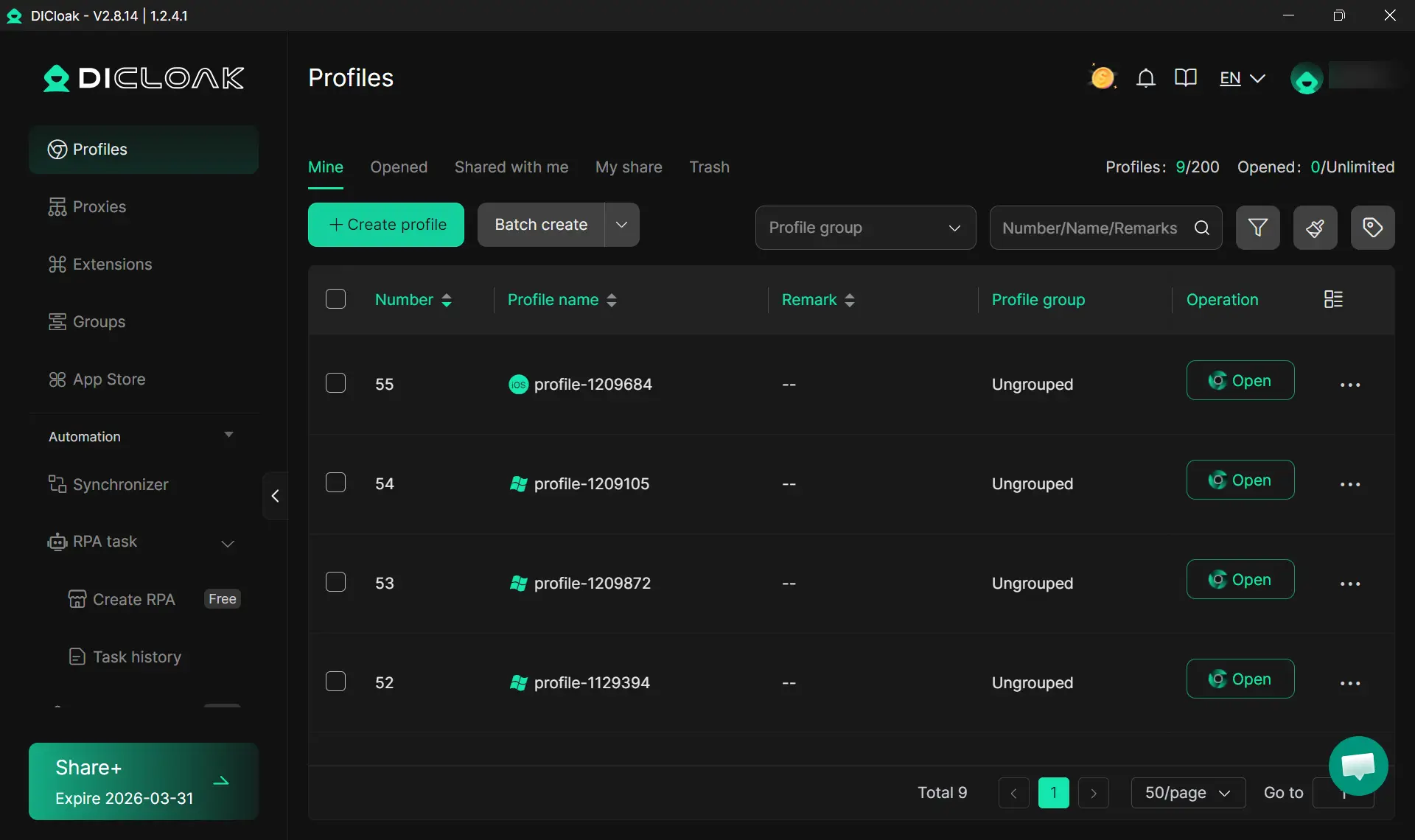
- Proxy integration lets you assign a different IP address to each profile, which keeps accounts from appearing to originate from the same location
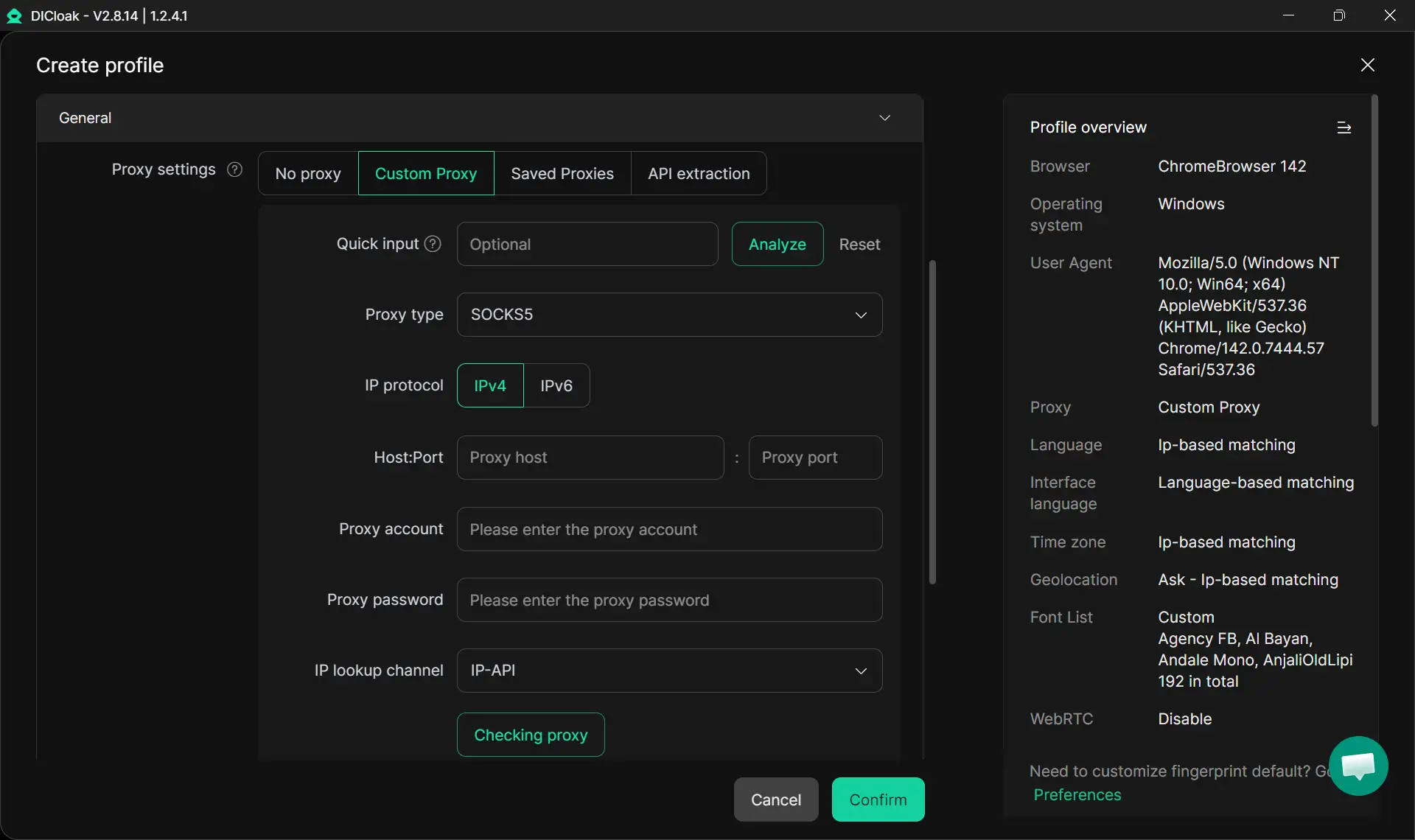
- Team members can share specific profiles without sharing passwords, which matters for agencies or moderation teams handing off account access
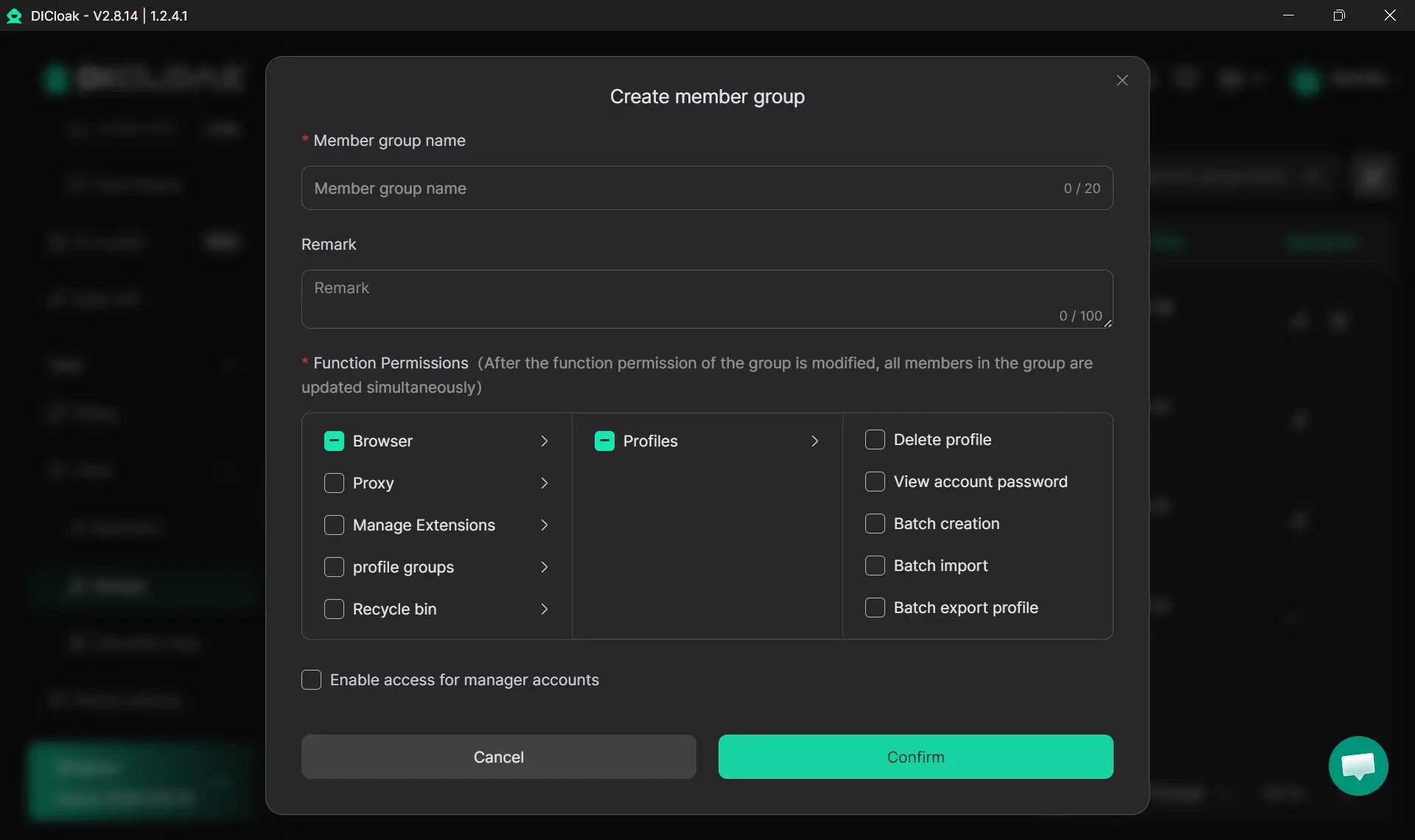
- RPA automation handles repetitive tasks across profiles, without requiring manual switching between accounts
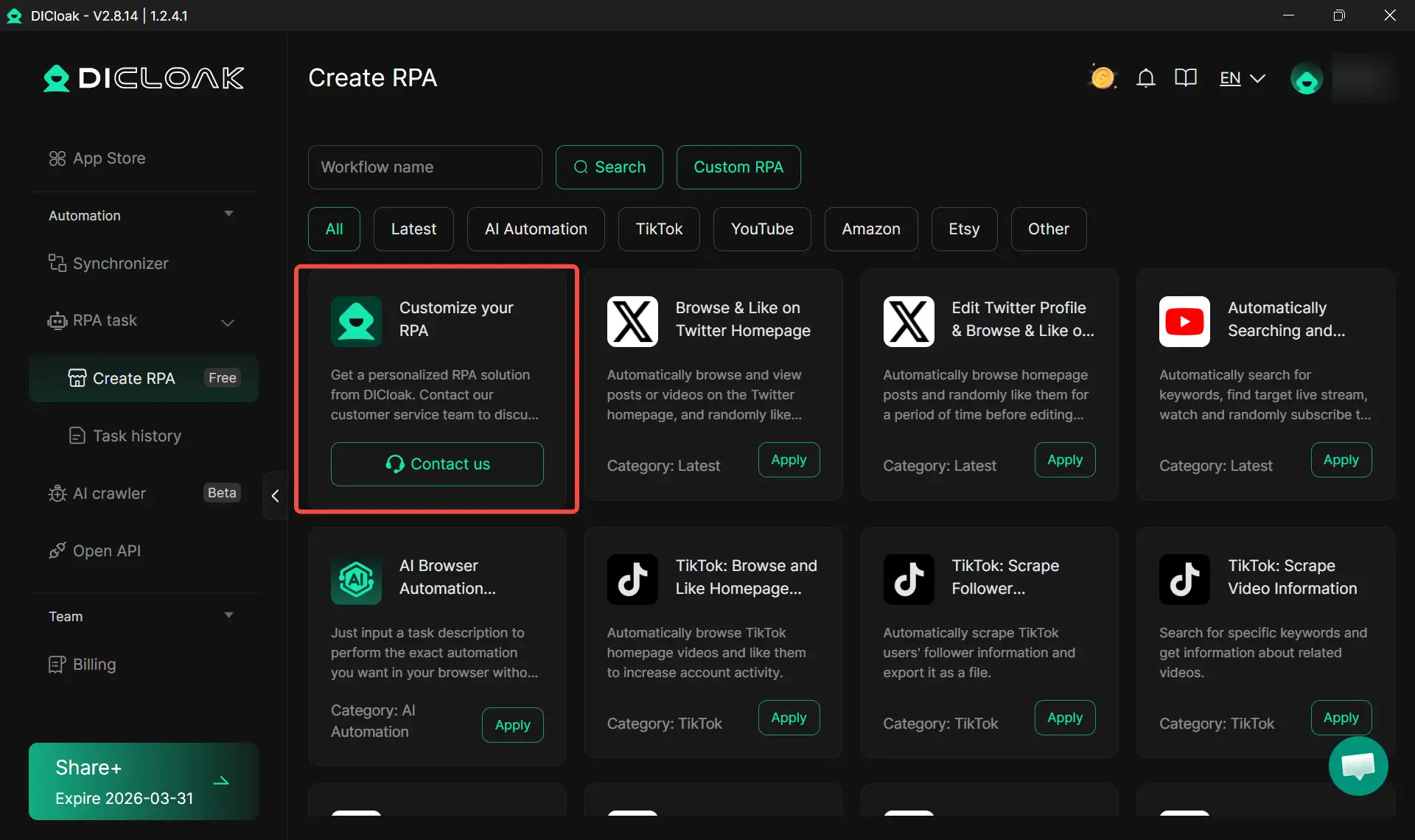
- Profile states save between sessions, so you pick up exactly where you left off on each account without relogging or reconfiguring settings
This kind of setup is built for teams doing real work across multiple Discord accounts, not for inflating member counts.
FAQs
Is buying Discord members against the rules?
Yes, in most cases. Discord's Terms of Service prohibit artificially inflating server membership. Violations can result in server removal or account bans, though enforcement is not always immediate or consistent.
Do bought Discord members ever stay active?
Rarely. Bot accounts have no real interest in your server and often get banned in platform sweeps. Even real-user services deliver members with low retention because those users joined for a small payment, not genuine interest.
Can Discord tell if I bought members?
Discord uses behavioral signals, account metadata, and activity patterns to detect manipulation. Sudden membership spikes with no engagement increase are easy to flag. Services that try to mimic organic growth are harder to detect but not immune.
What is the fastest legitimate way to grow a Discord server?
Listing on discovery platforms like Disboard and Top.gg, combined with active promotion in relevant Reddit or social media communities, tends to produce the fastest real growth. Events and collaborations with other servers also accelerate membership when done consistently.
Is it legal to buy Discord members?
Buying Discord members is not illegal in most regions, but it violates Discord's platform rules. The legal question and the platform-policy question are separate. You can face server bans without any legal consequence, and the financial harm from losing a server you built is real regardless of legality.
Why would someone need multiple Discord accounts legitimately?
Community managers, developers, and agencies often need separate accounts for testing, moderation, or managing different client communities. Running those accounts without triggering platform flags requires keeping each one in a genuinely isolated environment.
Final Verdict
The decision to buy Discord members usually comes down to a short-term credibility problem. If that is your situation, it is worth asking whether the number itself solves the problem or whether you need actual activity. A server with visible conversation and a clear purpose attracts real members faster than a padded count with empty channels. Start with the discovery platforms, run one event, and see what happens before spending money on members who will not stick around.
 Web Proxy Tools
 Free Tools
 Cookie Plugin
 UA Generator
 MAC Address Generator
 IP Generator
 IP Address List
 2FA Code Generator
 World Clock
 Anonymous Check
 WebRTC Leak Test
 UUID Generator
 Free Web Proxy Site
 Proxy Checker
 FB Ad Checker
 AI Web Scraping
 Free SMM Tools
 Twitter Shadowban Checker
 Instagram Name Checker
 UTM Generator
 Username Generator
 AI Hashtag Generator
 LinkedIn Headline Generator
 Social Media Image Resizer