In the high-stakes arena of 2026 digital marketing, losing an ad account is no longer just a minor setback—it is a direct threat to your revenue stream. You might have the best creatives and the most expensive proxies, yet you still wake up to the dreaded "Account Disabled" notification. The reality is that ad platforms have evolved significantly, deploying AI that can see right through traditional privacy methods. To survive and scale in this environment, you need to understand exactly why your current tools are failing you and how to adapt your infrastructure for resilience.
The Hidden Crisis: Why Standard Browsers Fail Affiliate Marketers
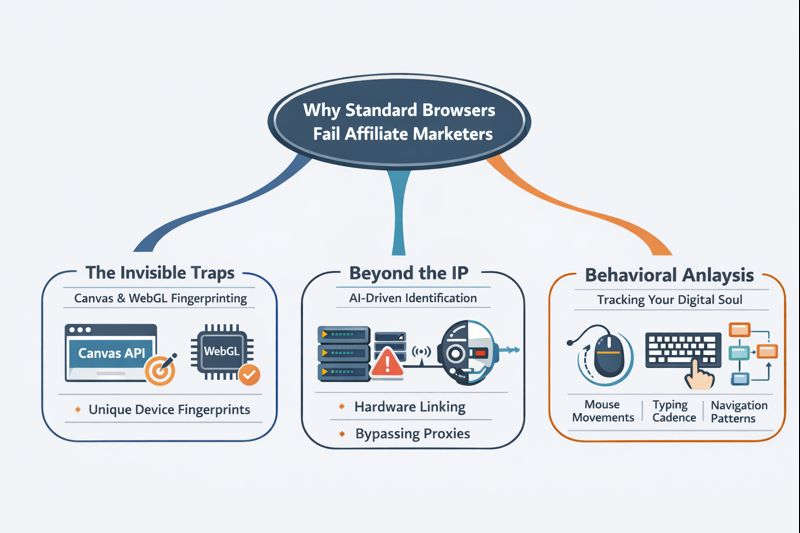
If you are serious about scaling your campaigns, simply clearing your cookies or using Incognito mode is no longer a viable strategy. Using a specialized antidetect browser for affiliate marketing is the only way to effectively separate your digital identities and protect your business assets. Standard browsers like Chrome, Safari, or Edge are designed to be helpful, which means they eagerly share your device data with every website you visit to optimize performance. For a casual user, this is a feature. For an affiliate marketer running high-volume traffic arbitrage across multiple accounts, this data sharing is a critical vulnerability that leads directly to account bans.
Beyond the IP: The Rise of AI-Driven Identification Systems
For years, the golden rule of multi-accounting was simple: change your IP address, and you change your identity. However, in the current landscape, relying solely on proxies is a rookie mistake. Major platforms like Meta, Google, and TikTok now utilize sophisticated AI-driven identification systems that look right past your IP address.
These algorithms analyze the consistency of your hardware environment. If you log into ten different business managers from the same machine—even with ten different high-quality residential proxies—the AI sees one computer managing them all. This "hardware linking" is the primary cause of immediate suspensions. The platform detects that despite the different IPs, the request is coming from the exact same device configuration, flagging your operation for "Circumventing Systems" before you even spend a dollar.
The Invisible Traps: Canvas and WebGL Fingerprinting Explained
The mechanisms used to track you are often invisible to the naked eye, making browser fingerprinting protection vital for survival. When you visit a webpage, the site executes scripts that force your browser to render a hidden 3D image or text via the Canvas API.
Because every graphics card and driver combination renders these images with microscopic differences, the result creates a unique hash or "fingerprint" that identifies your specific device with frightening accuracy. Two critical components of this tracking are:
- Canvas Fingerprinting: This acts like a digital signature of your graphics stack. Even if you block cookies, your Canvas fingerprint remains the same, allowing platforms to link your new accounts to previously banned ones.
- WebGL Readouts: This exposes the exact make and model of your graphics card (GPU) and driver version. If your 50 "independent" accounts all report the exact same high-end NVIDIA GPU and driver hash, you have effectively handed the platform proof that these accounts are connected.
Behavioral Analysis: How Platforms Identify Your Digital 'Soul'
It is not just about what hardware you use, but how you act. 2026 security algorithms analyze your "digital soul"—the biometric nuances of your behavior. Platforms now track metrics such as:
- Mouse Velocity and Curvature: Bots and scripts often move in straight lines or instant jumps; humans move in imperfect curves.
- Typing Cadence: The rhythm and speed at which you press keys are unique to you.
- Navigational Patterns: How quickly you click "Create Campaign" after logging in matters.
If you create a fresh account and immediately sprint to the ads manager without any natural browsing history, you are flagged as high-risk. This is why advanced affiliate marketing automation tools are now essential. They allow you to deploy "Cookie Robots" that visit trusted sites (like news portals or e-commerce stores) to mimic human scrolling and clicking behavior. This warms up the profile's trust score before you ever attempt to launch a campaign, blending your activity in with the noise of legitimate users.
Why Browser Fingerprinting Protection is Vital for an Antidetect Browser for Affiliate Marketing
Understanding how platforms track you is only half the battle; effectively countering those measures is where the real revenue is protected. For modern affiliates, simply clearing cookies or using "Incognito Mode" is akin to putting a piece of tape over a webcam while leaving the front door wide open. To survive the rigorous scrutiny of 2026 ad networks, you need an antidetect browser for affiliate marketing that moves beyond basic privacy and deploys military-grade spoofing technologies.
The goal isn't just to hide—it is to blend in. Platforms like Meta and TikTok rely on consistency. If your digital fingerprint looks too private or incomplete, it raises a red flag immediately. Browser fingerprinting protection is the art of presenting a coherent, non-suspicious digital identity that satisfies the platform's verification algorithms while keeping your true hardware hidden.
Spoofing vs. Masking: The Battle for Profile Authenticity
Newcomers to traffic arbitrage often make the fatal mistake of trying to mask or block detection attempts completely. They might install privacy plugins that block Canvas readouts or disable WebGL entirely. In the eyes of an ad network, this behavior is abnormal. A legitimate user on a standard iPhone or Windows laptop does not block these signals; their device broadcasts them freely.
A high-quality antidetect browser for affiliate marketing does not block these requests. Instead, it uses Spoofing. When Facebook asks for your Canvas hash, the browser doesn't refuse; it generates a fake but mathematically valid "fingerprint" that differs slightly from your real machine. This process, often called "Noise Injection," ensures that you appear as a standard user with a unique device, rather than a suspicious bot trying to hide something. This subtle distinction between blocking (suspicious) and spoofing (authentic) is often the deciding factor between a banned account and a successful campaign.
Neutralizing AudioContext and Font Enumeration Tracking
While visual tracking gets the most attention, audio and font analysis are silent killers of ad accounts. The AudioContext API allows websites to analyze how your machine processes audio signals. Due to minute differences in sound cards and drivers, this processing creates a unique "sonic fingerprint." If you manage 50 accounts on one laptop, every single account will produce the exact same audio processing result, linking them instantly.
Similarly, Font Enumeration checks the list of installed fonts on your system. A genuine Windows user has a specific set of system fonts (like Segoe UI), while a Mac user has others (like San Francisco). If your User-Agent says "iPhone" but your browser reveals installed Windows fonts, the discrepancy triggers an immediate ban. Advanced tools automatically curate the font list for each profile, ensuring that a simulated device only displays the fonts native to that specific environment.
WebRTC Leaks: Plugging the Hole in Your Anonymity Shield
One of the most common reasons for "Chain Bans" is a WebRTC leak. Web Real-Time Communication (WebRTC) is the technology used for browser-based video calls and audio streaming. To function, it needs to know your true IP address, often bypassing proxy settings entirely to establish a direct connection.
For an affiliate marketer, this is catastrophic. You might be routing your traffic through a high-trust UK mobile proxy, but if the WebRTC protocol leaks your real local IP address (e.g., from your home in New York), the platform sees the mismatch immediately.
Key defenses include:
- IP Handling: Configuring WebRTC to route strictly through the assigned proxy, never the local network.
- Public IP Spoofing: Replacing the leaked local IP with the public IP of the proxy server.
- Disabling UDP: Forcing connections over TCP to maintain proxy tunnel integrity.
Profile Isolation: The Science of Creating Digital Silos
The foundational principle of modern farming is Profile Isolation. In a standard browser like Chrome, even with "Incognito" mode, there is significant data leakage between tabs and windows via local storage and cache.
An effective antidetect browser for affiliate marketing creates a completely sandboxed environment—a digital silo—for each account. When you open a profile in a tool like DICloak, it creates a separate instance of the browser engine (Chromium or Firefox) with its own isolated cookies, local storage, and cache files.
This isolation means that Facebook or Google cannot read "supercookies" or cross-site tracking data from your other profiles. You can technically have 100 different affiliate marketing automation tools running in 100 different windows simultaneously, and to the outside world, they appear as 100 distinct physical devices located in different parts of the world, never interacting with one another. This separation is the only way to scale traffic arbitrage without the risk of cascading bans wiping out your entire revenue stream.
How an Antidetect Browser for Affiliate Marketing Works in 2026
Implementing an antidetect browser for affiliate marketing shifts your operation from a defensive stance to a proactive, scalable infrastructure. While the sophisticated spoofing technology we previously discussed runs in the background, the actual workflow functions as a centralized "virtual device farm."
When you click "Create Profile," you are not merely opening a new tab; you are instantiating a hermetically sealed container. This container bundles a specific hardware configuration—simulating a genuine GPU, screen resolution, and OS version—with a dedicated proxy connection. To sophisticated algorithms at Meta or TikTok, this profile appears as a unique physical device located in a specific residential area, completely seemingly unrelated to your other forty accounts.
The operational advantage in 2026 comes from the seamless integration of affiliate marketing automation tools. Instead of manually warming up accounts, you can utilize built-in RPA (Robotic Process Automation) features. These allow you to script routine behaviors, such as visiting e-commerce sites or scrolling through news feeds, to build a credible "trust score" before you ever launch an ad.
Key Criteria for Choosing an Antidetect Browser for Affiliate Marketing
Armed with technical knowledge of how detection algorithms work, the next logical step is selecting a tool that fits your operational model. In 2026, not all private tools are built for profit. When evaluating an antidetect browser for affiliate marketing, you must look beyond basic anonymity and focus on features that enable business continuity and horizontal scaling.
Automation Readiness: API Access and No-Code RPA Capabilities
Manual account farming is dead. To manage 50 or 500 accounts, you cannot rely on human clicks for every action. A robust browser must serve as one of your primary affiliate marketing automation tools.
Look for browsers that offer a Local API or built-in "Cookie Robot." These features allow you to script routine maintenance tasks, such as visiting high-trust websites (Amazon, CNN, Wikipedia) to generate a realistic cookie history before you ever launch an ad. Advanced tools allow for "No-Code" automation, letting you drag and drop commands to simulate human behavior without needing a developer.
Team Collaboration: Sharing Session Data Without 2FA Friction
As your operation scales, you will eventually hire Virtual Assistants (VAs) to manage ad launches. The biggest hurdle here is the "New Device Login" flag. If you create an account in London and your VA logs in from Manila, the platform will instantly lock the account and demand identity verification.
To bypass this, prioritize browsers that allow Cloud Profile Transfer. This feature syncs the entire browser session—including open tabs, local storage, and cookies—to your team member's device. When they open the profile, the ad platform sees the exact same digital fingerprint and active session, bypassing 2FA checks entirely. Leading solutions like DICloak have perfected this workflow, offering granular permission levels that let you assign assets to team members without revealing sensitive login credentials.
Mobile Device Emulation: Targeting the 2026 TikTok Era
With the dominance of mobile-first platforms like TikTok and Instagram Reels, desktop traffic often converts poorly. However, sophisticated algorithms can detect when a desktop browser is simply pretending to be a mobile phone via a resized window.
For effective browser fingerprinting protection on mobile devices, your tool must support deep mobile emulation. This includes simulating Touch Events (taps vs. clicks), Device Orientation (gyroscope data), and even Battery Status API readouts. If your browser claims to be an iPhone 16 but lacks touch data, your trust score will plummet.
Proxy Ecosystem Compatibility: Residential and 4G Integration
Your anonymity is only as strong as your connection. An antidetect browser must integrate seamlessly with Residential and 4G Mobile proxies. Critical features include Mass Proxy Import (uploading 100 proxies at once) and strict WebRTC Leak Protection.
Platforms often use WebRTC to detect your real IP address even behind a proxy. The best browsers will automatically route WebRTC traffic through your proxy tunnel or disable it intelligently, ensuring your "location" remains consistent across all leakage tests.
The 10 Best Antidetect Browser for Affiliate Marketing Solutions Reviewed
Applying rigorous criteria like deep mobile emulation and team scalability narrows the field significantly. While many tools claim to offer privacy, only a select few provide the infrastructure necessary for serious ad farming and traffic arbitrage. Below, we review the top contenders, starting with the definitive antidetect browser for affiliate marketing for the 2026 landscape.
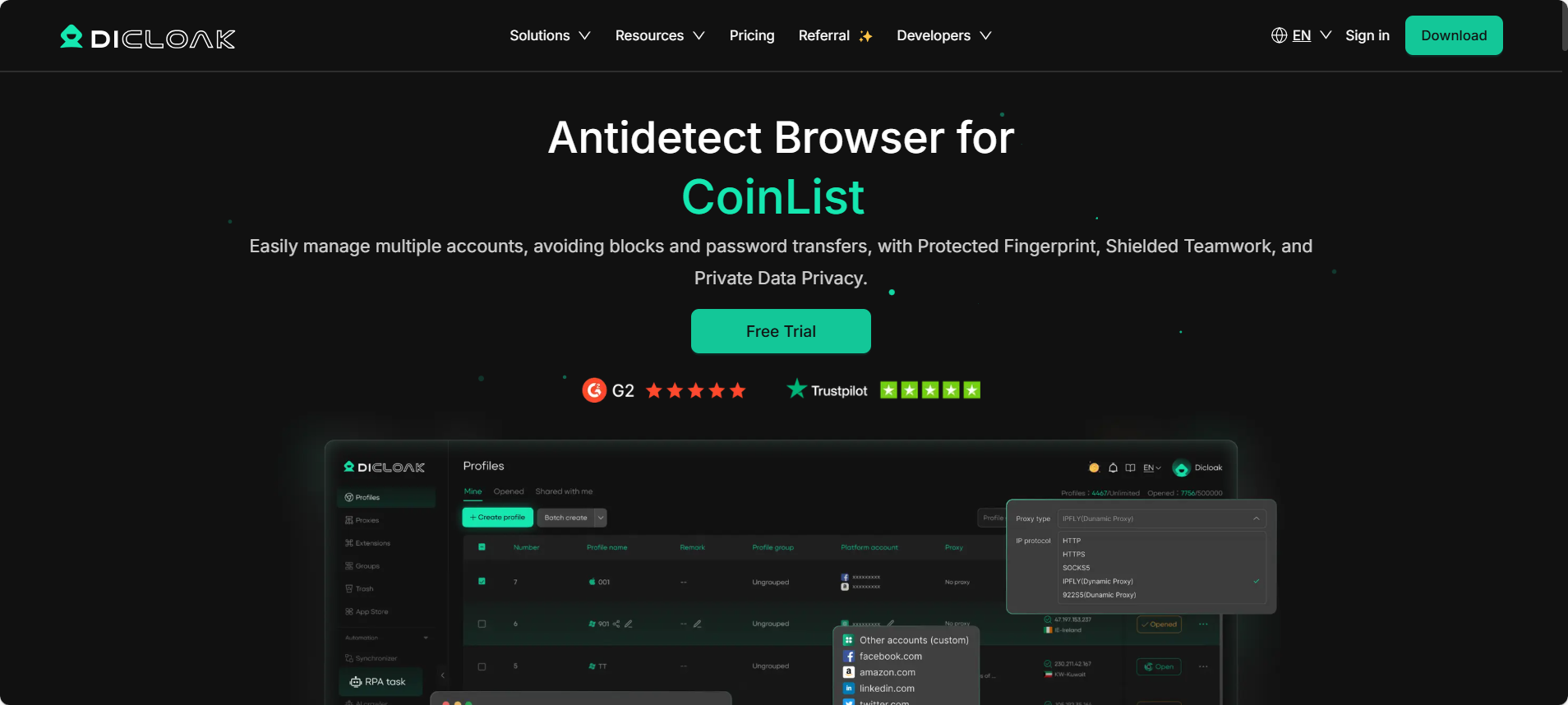
DICloak: Precision Control for High-Stakes Account Management
If your goal is to scale from 10 to 1,000 accounts without triggering the "Unusual Activity" algorithms of Meta or TikTok, DICloak is the premier choice. It stands out by treating browser fingerprinting protection not just as a privacy feature, but as a business continuity asset. DICloak allows you to create highly distinct digital identities—mimicking everything from an iOS device on a 5G network to a Windows desktop on a residential IP—with a level of granularity that simpler tools lack.
The platform is built specifically for teams. Its "Share+" feature solves the agency pain point of sharing access with Virtual Assistants. Instead of handing over passwords (which triggers 2FA), you transfer the live session. This ensures that when your media buyer in another country opens the profile, the ad platform sees the exact same cookies and local storage, effectively neutralizing the risk of immediate bans.
Key Features:
- Deep Fingerprint Management: Masks Canvas, WebGL, AudioContext, and battery status to simulate authentic user environments.
- Team Collaboration: Granular permission settings allow you to assign specific profiles to team members without exposing root credentials.
- Seamless Proxy Integration: Works flawlessly with major residential proxy providers.
- Scalable Architecture: Designed to handle hundreds of profiles without UI lag.
Pricing:
- Free Version: Available with limited profiles for testing.
- Base: $8/month.
- Plus: $28.8/month.
- Share+: $138/month (Best for Teams).
Pros:
- Superior success rate in bypassing detection on strict platforms like Facebook and Google.
- Intuitive interface that simplifies complex fingerprinting settings for non-technical users.
- Excellent team workflow capabilities that prevent "chain bans" caused by accidental data leaks.
Multilogin: The Enterprise Standard for Stealth Arbitrage
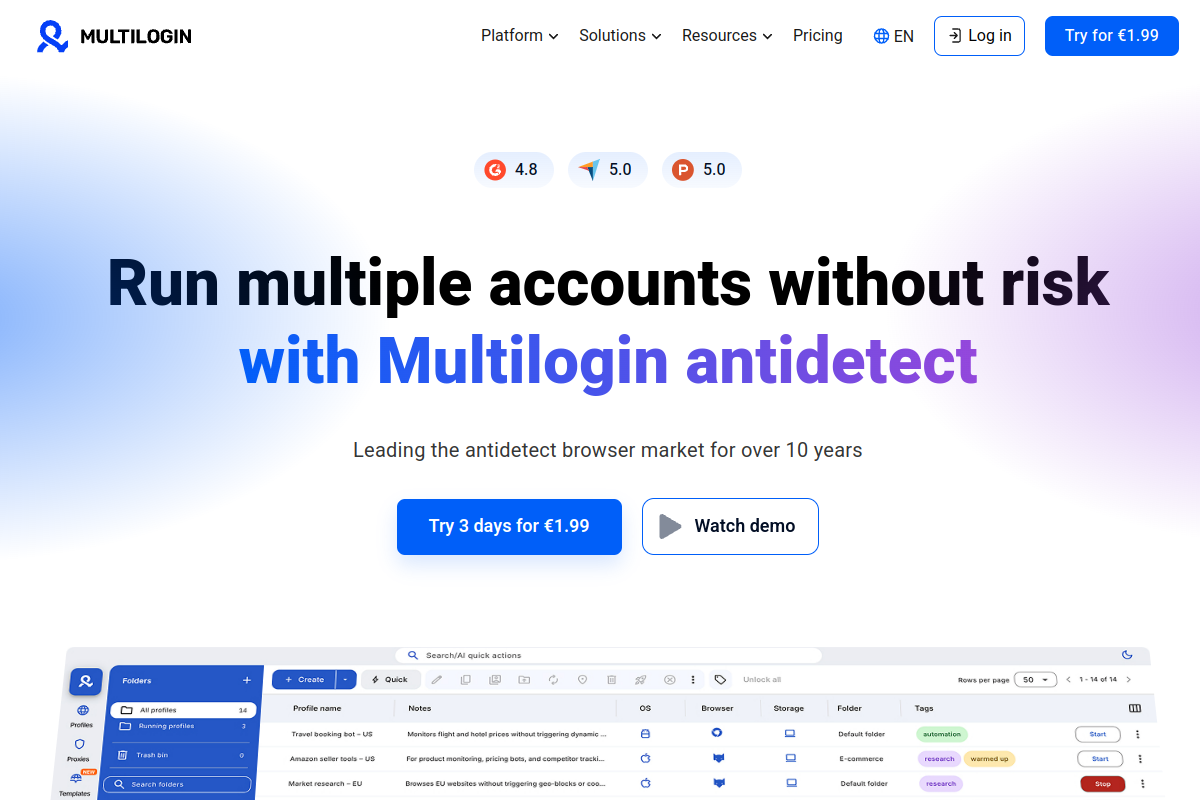
Multilogin is often cited as the pioneer of the industry. It utilizes two custom browser cores, Mimic (Chromium) and Stealthfox (Firefox), to minimize the discrepancies between your real hardware and your digital mask. It is a powerhouse for enterprise-level operations that require custom automation scripts via Selenium or Puppeteer.
Key Features:
- Native automation support for custom coded bots.
- Encrypted cloud storage for profile data.
- Separate browser cores to blend in with natural traffic.
Pricing:
- 3-day Trial: €1.99.
- Pro (10 profiles): €9/mo.
- Business: €159/mo.
Pros:
- Extremely reliable infrastructure with high uptime.
- Deep documentation for developers building custom automation.
Cons:
- Cost: It is one of the most expensive options on the market, making it difficult for beginners to justify the ROI.
- No Permanent Free Plan: Unlike competitors, there is no free tier for ongoing small-scale use.
GoLogin: Simplifying Scale via the Orbita Browser Engine
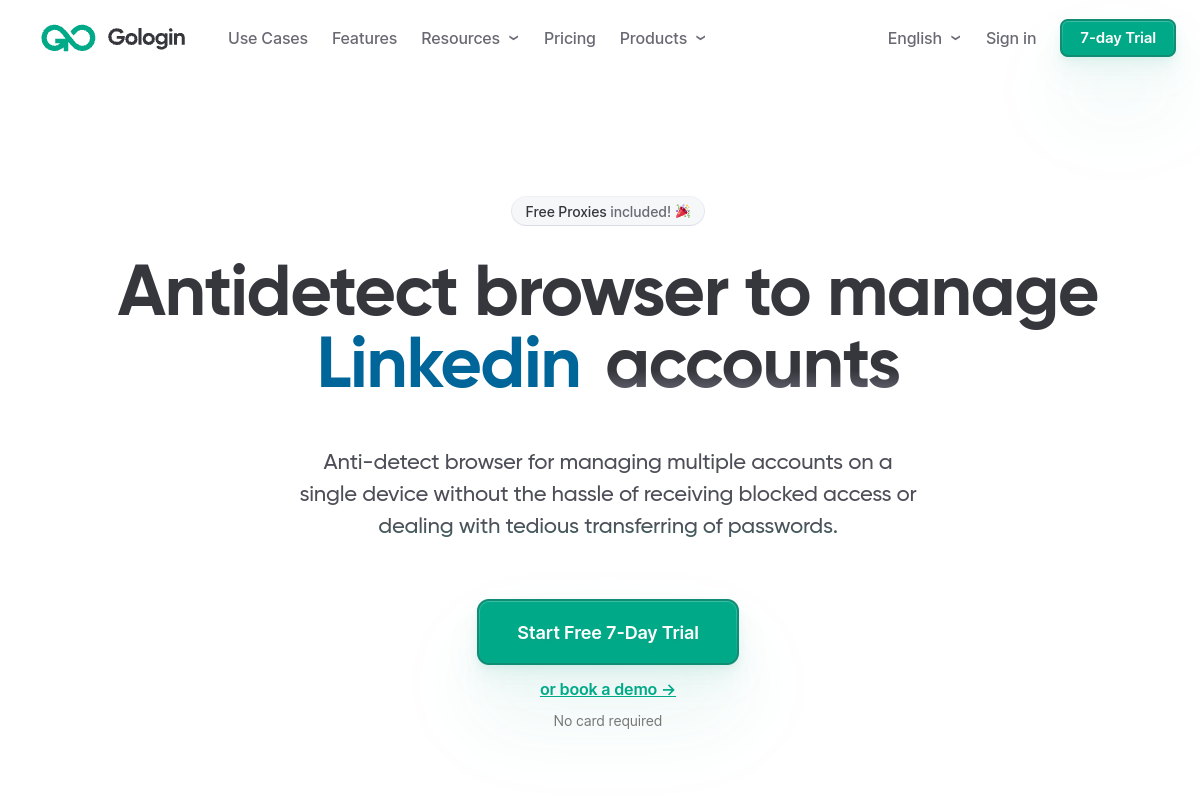
GoLogin is widely favored for its ease of use. It runs on its own "Orbita" browser engine and offers a unique cloud-based execution mode, allowing you to run profiles in the cloud rather than on your local machine. This is particularly useful if your local hardware is outdated or if you need to simulate an Android environment natively.
Key Features:
- Cloud-based profile launching.
- Android mobile app for managing profiles on the go.
- Free built-in proxies (though reliable residential proxies are recommended for ads).
Pricing:
- Pro: $9/mo.
- Business: $119/mo.
- Custom: $449/mo.
Pros:
- A very user-friendly interface for beginners.
- Good mobile app integration for monitoring campaigns remotely.
Cons:
- Latency: The cloud-based browser feature can sometimes suffer from lag, making real-time manual work frustrating compared to local execution.
AdsPower: Dominating Social Commerce with Advanced Automation
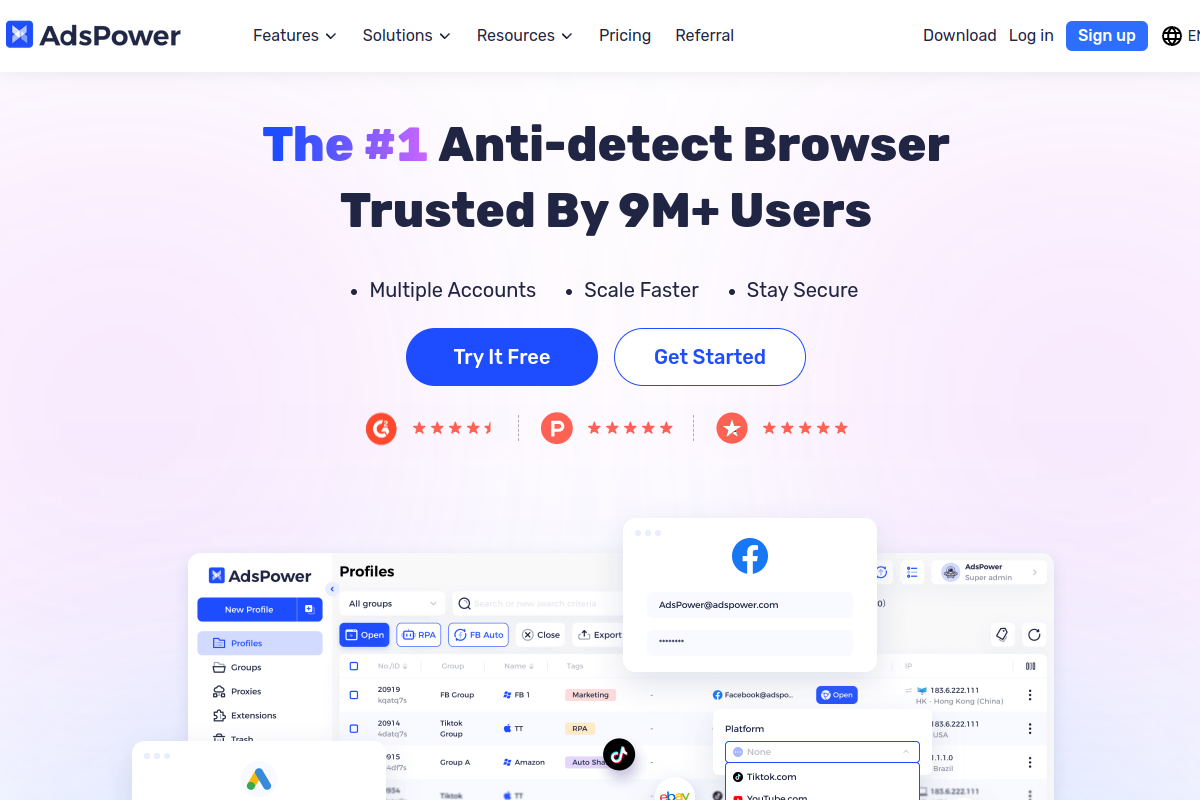
AdsPower has carved a niche among e-commerce and social media marketers by focusing heavily on "No-Code" automation. It positions itself as one of the leading affiliate marketing automation tools, offering a Robotic Process Automation (RPA) builder. This allows you to visually design workflows—like "browse Facebook, scroll for 30 seconds, like a post"—without writing a single line of code.
https://adspower.com
Key Features:
- Drag-and-drop RPA robot for repetitive tasks.
- Synchronizer tool to control multiple windows simultaneously.
- Dual-engine support (Chromium and Firefox).
Pricing:
- Free Tier: 2 profiles.
- Paid Plans: Start from $9/month.
Pros:
- The RPA marketplace is a massive time-saver for warming up accounts.
- Flexible pricing models let you pay only for what you need.
Cons:
- Complexity: The interface is dense with features, creating a steep learning curve for users who just want a simple browser.
Dolphin{anty}: Optimized Workflows for Facebook and Google Ads
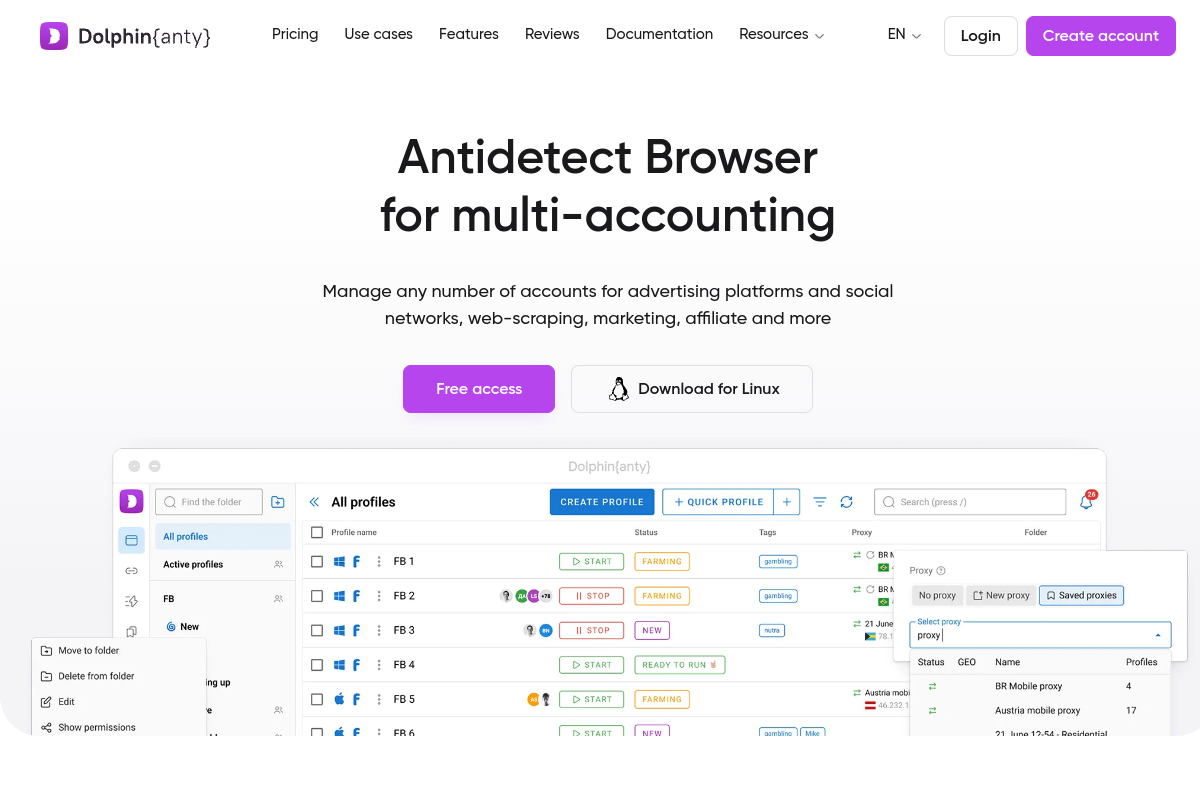
Designed by affiliates for affiliates, Dolphin{anty} focuses specifically on the needs of media buyers. Its interface is streamlined to show ad account statuses, spend limits, and notes right in the browser list, acting almost like a CRM for your ad accounts.
Key Features:
- Real-time ad data synchronization (spend, status) in the dashboard.
- "Cookie Robot" for automated history building.
- Mass proxy import and export tools.
Pricing:
- Starter: $9/mo.
- Base: $89/mo.
- Team: $159/mo.
Pros:
- Tailor-made for Facebook and Google ad farming.
- Excellent built-in tools for organizing large farms of accounts.
Cons:
- Stability: Users have occasionally reported synchronization bugs or downtime during major updates, which can disrupt live campaigns.
Incogniton: Powerful Profile Isolation for Media Buying Teams
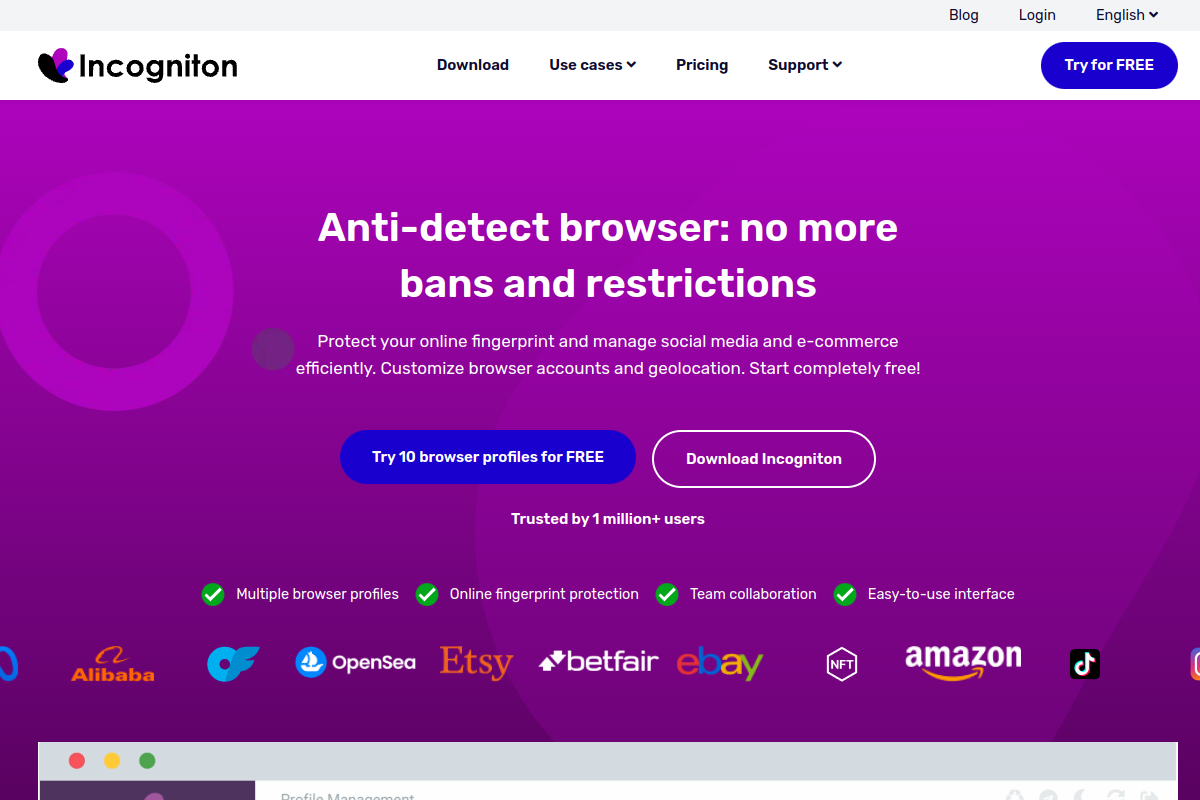
Incogniton allows for high-level profile isolation, ensuring that data from one browser profile does not leak to another. It is particularly known for its generous free plan, making it a common entry point for new affiliates testing the waters of browser fingerprinting protection.
Key Features:
- Human typing simulation to bypass bot detection.
- Bulk profile creator for rapid scaling.
- Team seat management.
Pricing:
- Free Plan: Up to 10 profiles.
- Starter Plus: $19.99/mo.
- Professional: $79.99/mo.
Pros:
- One of the best free tiers available (10 profiles).
- Reliable isolation technology for general browsing.
Cons:
- Performance: The client can become resource-heavy and slow when running more than 10-20 profiles simultaneously on a standard machine.
Browser.lol: On-Demand Cloud Browsing for Remote Efficiency
Browser.lol is a unique entry on this list. It is less of a persistent account management tool and more of a disposable virtual browser service. It allows you to spin up a browser in the cloud instantly for quick tasks, making it useful for verifying ad placement from different geos without setting up a full profile.
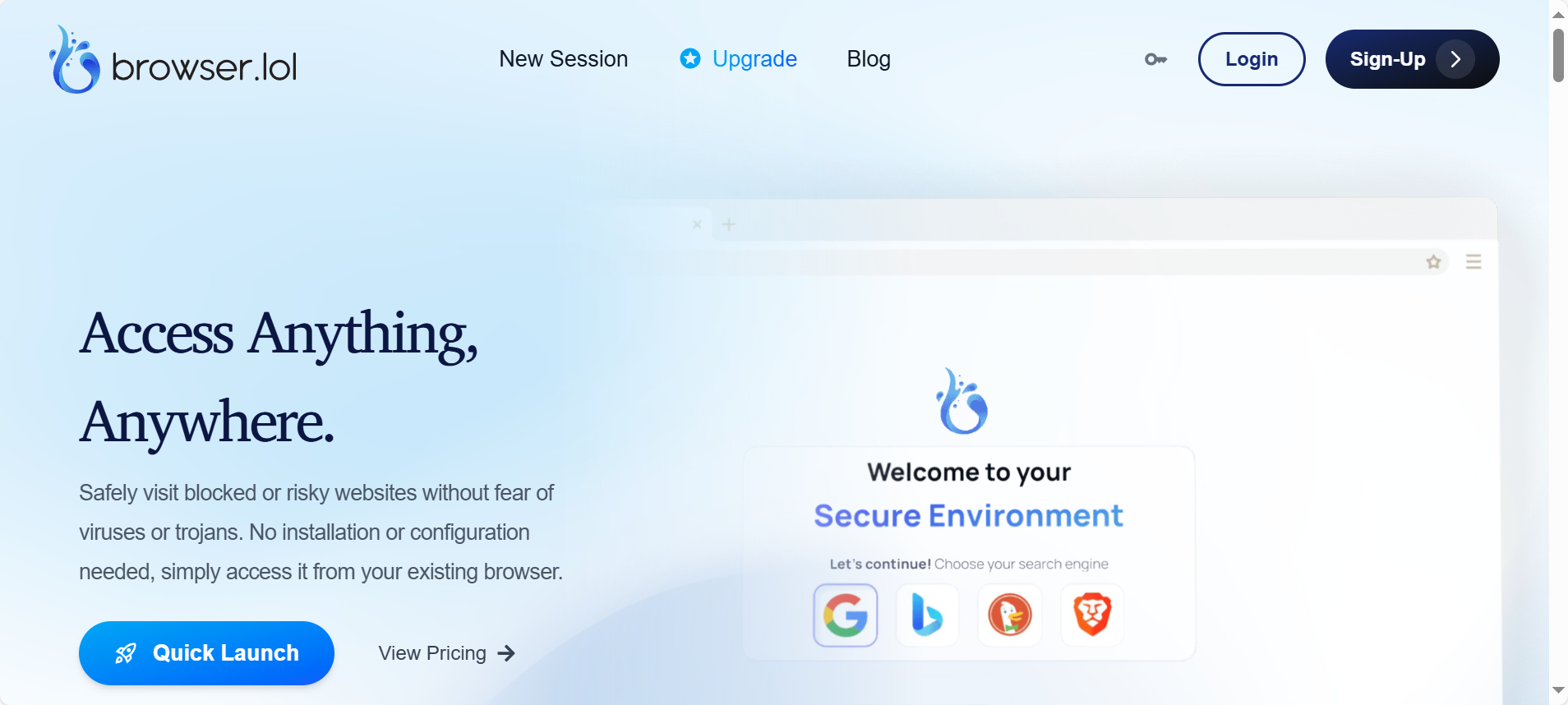
Key Features:
- No installation required; runs in your existing browser.
- Disposable sessions for ultimate privacy.
- Multiple geographic locations available instantly.
Pricing:
- Premium: $9/month.
- Browser Unlock: $24 (One-time payment).
Pros:
- Instant access with zero setup.
- Excellent for quick "sanity checks" of your affiliate links from different countries.
Cons:
- Not for Farming: It lacks the persistent storage and cookie management features required for long-term ad account farming.
Octo Browser: High-Speed Performance for Massive Account Farms
Octo Browser prides itself on speed and stealth. It uses a genuine Chromium core that passes complex checks like pixelscan and iphey without requiring heavy manual configuration. It is designed for professionals who need to manage hundreds of profiles without the browser crashing.
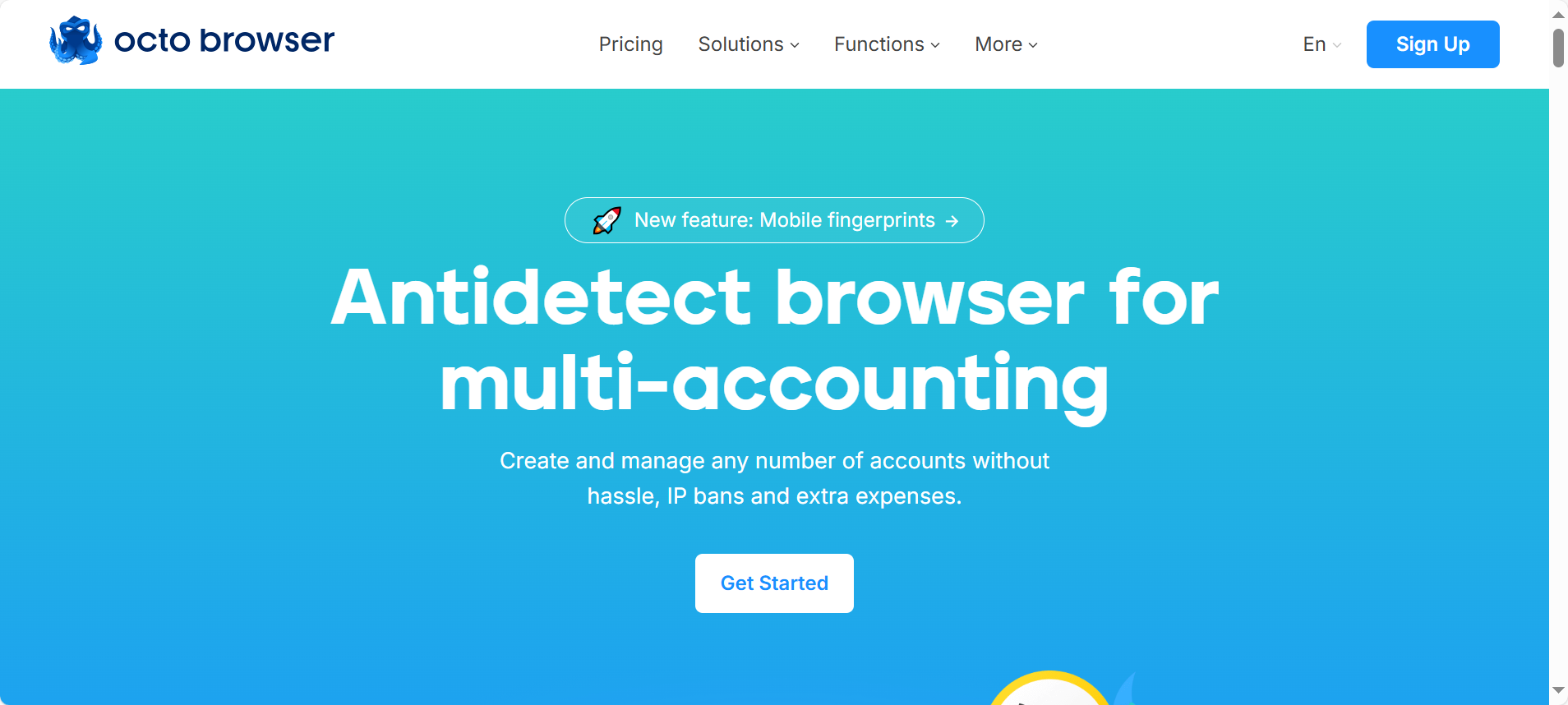
Key Features:
- Real device fingerprinting (no noise added, just real parameters).
- API automation support.
- Supports video streaming without lag (crucial for TikTok research).
Pricing:
- Lite: €10/mo.
- Starter: €29/mo.
- Base: €79/mo.
Pros:
- Extremely fast and lightweight client.
- Passes deep fingerprinting checkers reliably.
Cons:
- Price: There is no free plan, and the entry-level pricing is slightly higher than competitors for the features offered.
MoreLogin: Leveraging Canvas Technology for Secure Scaling
MoreLogin is a newer contender that emphasizes "Canvas Fingerprinting" technology to create realistic user environments. It aims to democratize access to high-end anti-detect features with competitive pricing and a modern interface.
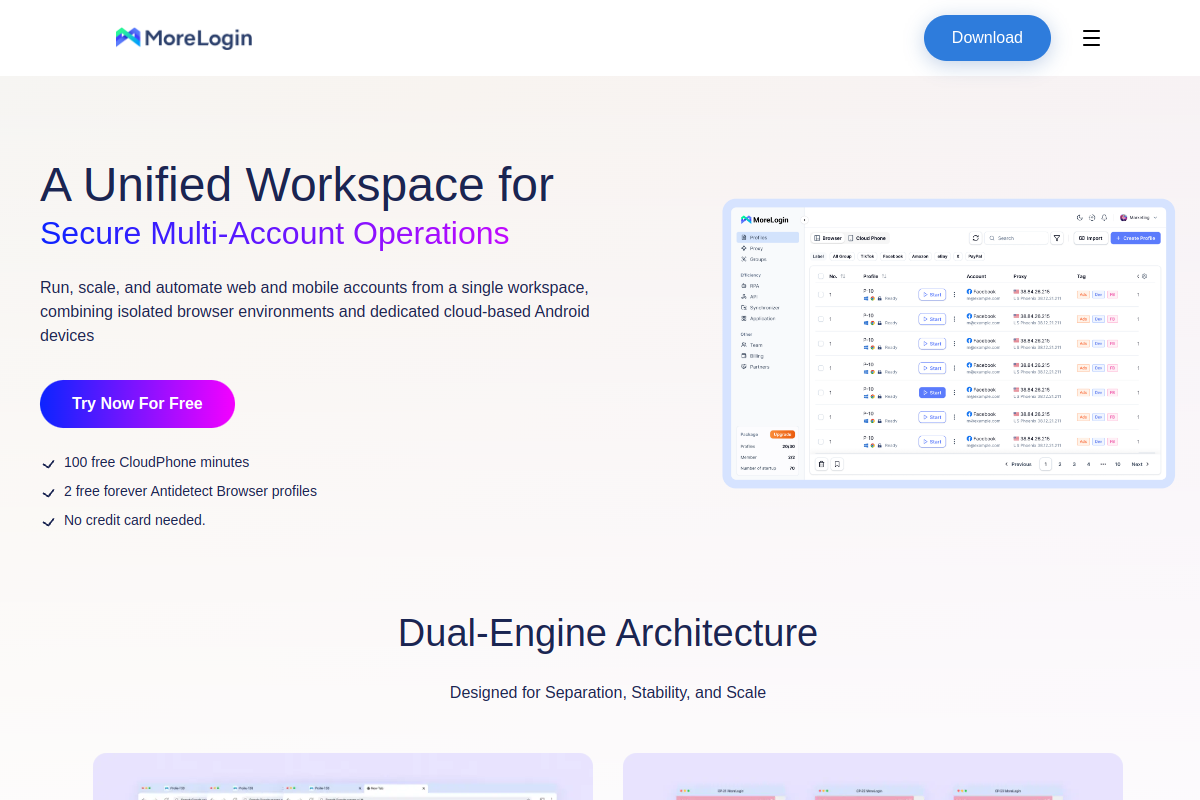
Key Features:
- Real-time fingerprint synchronization.
- Social media automation support.
- Team permissions management.
Pricing:
- Free Tier: 2 profiles.
- Paid Plans: Start roughly at $9/mo for 10 profiles.
Pros:
- Modern, clean interface.
- Cost-effective scaling for mid-sized teams.
Cons:
- Ecosystem: As a newer tool, it has fewer third-party integrations and a smaller community knowledge base compared to giants like Multilogin.
Hidemium: Modern Defense Mechanisms for the Global Affiliate
Hidemium offers a balanced mix of mobile and desktop emulation capabilities. It is particularly strong in automating cross-platform workflows, making it a viable option for affiliates running campaigns across both desktop web and mobile app ecosystems.
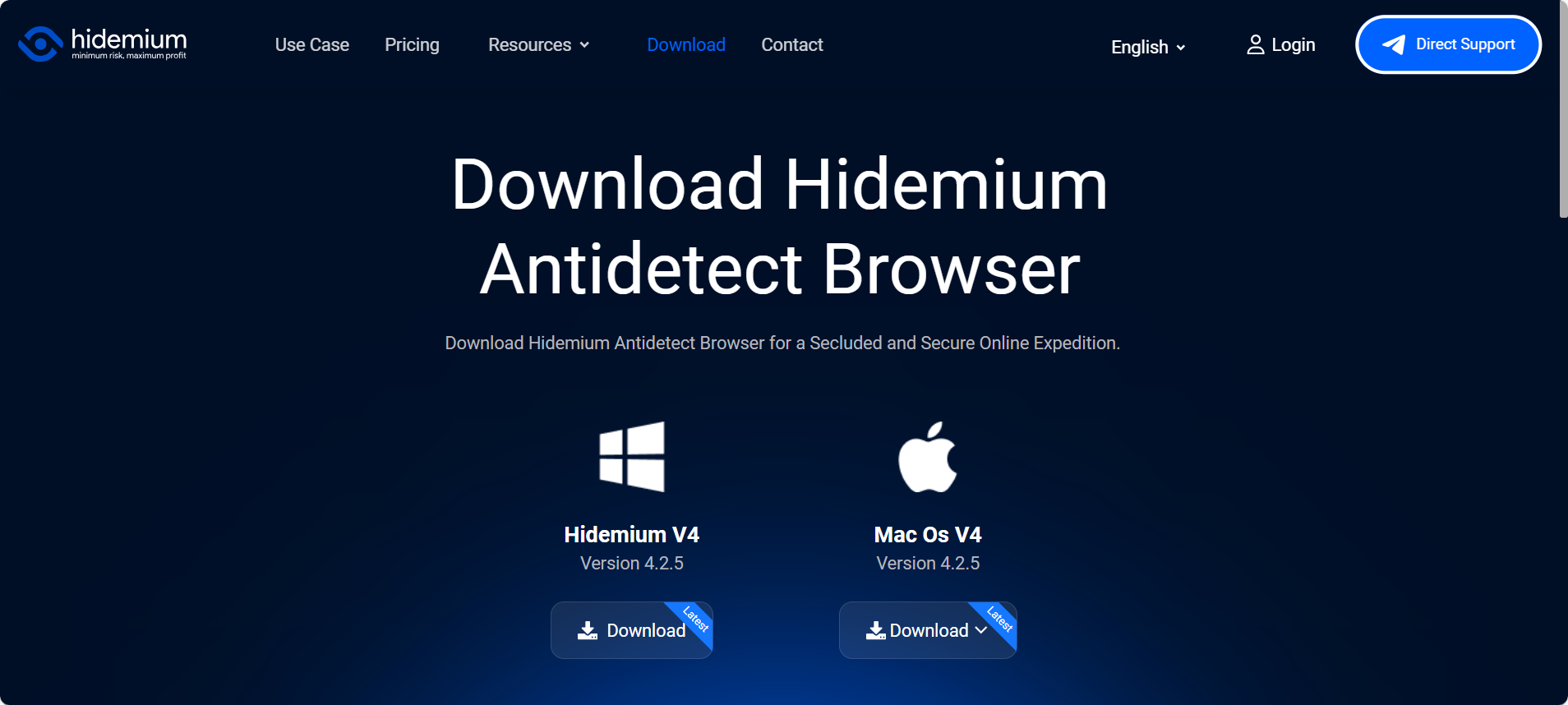
Key Features:
- Custom browser core optimized for anonymity.
- Easy proxy setup with auto-fill.
- Automated workflow support.
Pricing:
- Basic: $15.00/mo.
- Advanced: $20.00/mo.
- Business: $420.00/mo.
Pros:
- Strong focus on mobile emulation features.
- Versatile tool for both e-commerce and affiliate marketing.
Cons:
- Pricing Structure: The jump from "Advanced" ($20) to "Business" ($420) is massive, leaving a gap for mid-sized agencies.
Operational Strategy: Scaling Your Antidetect Browser for Affiliate Marketing
Selecting the right software is merely the baseline; the real profit lies in your operational execution. To succeed with an antidetect browser for affiliate marketing in 2026, you must treat every profile as a distinct, valuable digital asset. The days of "churn and burn" are over—sustainable traffic arbitrage now requires a military-grade Standard Operating Procedure (SOP).
The 'Cookie Robot' Protocol: Building Trust Before the Launch
New accounts with zero history are immediate red flags to platform algorithms. Before running a single ad, use the "Cookie Robot" feature—a core capability in tools like DICloak—to automate browsing on high-authority websites (e.g., Wikipedia, CNN, Amazon). This builds a realistic cache and cookie history, signaling to platforms that the user is a legitimate human. A 3-to-5-day warm-up period is now the industry standard for bypassing initial security filters.
Implementing the 1:1 Rule: Profile and Proxy Hygiene
The golden rule of account farming is strict isolation. Ensure robust browser fingerprinting protection by assigning one unique Residential Proxy to exactly one browser profile. Never rotate a used IP to a fresh account. This "1 Profile = 1 IP" methodology prevents "chain bans"—if one account is flagged, the rest of your farm remains invisible and secure.
Scaling Horizontally: Transitioning from Solo to Team Workspaces
As your campaigns scale, the bottleneck shifts from software to human resources. Modern browsers allow you to share live sessions with Virtual Assistants (VAs) without ever revealing passwords or triggering 2FA verification. By transferring the profile's local storage and cookies, your team can manage ads immediately from their own devices without alerting the platform's security systems.
Leveraging Affiliate Marketing Automation Tools for Daily Tasks
Manual account management is impossible at scale. Advanced affiliates integrate affiliate marketing automation tools via API (using frameworks like Selenium or Puppeteer) to handle repetitive tasks. You can script these tools to auto-check ad spend, refresh tokens, or farm engagement on new profiles while you sleep, allowing you to focus on high-level strategy rather than administrative maintenance.
FAQs about Antidetect Browser for Affiliate Marketing
Is using an antidetect browser for affiliate marketing legal?
Yes, utilizing an antidetect browser for affiliate marketing is legal for legitimate business purposes like managing ad accounts and competitive analysis. These tools serve as privacy shields offering browser fingerprinting protection, though using them for fraud or credential theft violates both the law and platform terms of service.
Can I use an antidetect browser to manage multiple Facebook accounts?
Absolutely, creating isolated environments for traffic arbitrage is the primary function of these tools. By spoofing hardware parameters like Canvas hashes, the browser ensures Meta detects each profile as a unique physical device, protecting your farm from algorithmic "chain bans."
What is the 'Cookie Robot' feature and why do I need it?
The Cookie Robot is an automated warm-up script found in advanced tools like DICloak that visits high-authority websites to generate a realistic history. Platforms like TikTok and Google flag accounts with empty HTTP cookies as suspicious bots, so this feature builds the necessary trust score before you launch ads.
How many browser profiles can I run on a single computer?
The limit depends entirely on your hardware resources, specifically RAM and CPU cores. On a standard 2026 workstation with 16GB of RAM, you can comfortably run 10 to 15 active profiles simultaneously, though you can store unlimited inactive profiles in the cloud.
Do I still need to buy separate proxies for each browser profile?
Yes, assigning a unique residential or 4G proxy to every profile is mandatory to follow the "1 Profile = 1 IP" rule. While the browser successfully masks your device fingerprint, it cannot hide your network address, making proxies essential to prevent linkage via IP analysis.
What are the best affiliate marketing automation tools for 2026?
The most effective affiliate marketing automation tools are now integrated directly into browsers like DICloak, offering "No-Code" RPA capabilities. These features allow you to visually script routine tasks, such as auto-farming accounts or checking ad spend, without needing complex coding knowledge.
Conclusion
In 2026, affiliate marketing success depends on infrastructure, not shortcuts. AI-driven fingerprinting, behavioral analysis, and cross-account linking have made standard browsers and basic privacy methods ineffective, often leading to chain bans that destroy entire operations. A professional antidetect browser for affiliate marketing is now essential to isolate accounts, spoof realistic device fingerprints, and present consistent behavior across platforms. True browser fingerprinting protection is about blending in, not hiding. Tools like DICloak stand out by combining deep fingerprint control, automation, and team-friendly profile sharing, allowing affiliates to scale safely and sustainably. With proper profile isolation, proxy hygiene, and automated warm-up workflows, account bans become a controllable risk rather than a constant threat.
 Web Proxy Tools
 Free Tools
 Cookie Plugin
 UA Generator
 MAC Address Generator
 IP Generator
 IP Address List
 2FA Code Generator
 World Clock
 Anonymous Check
 WebRTC Leak Test
 UUID Generator
 Free Web Proxy Site
 Proxy Checker
 FB Ad Checker
 AI Web Scraping
 Free SMM Tools
 Twitter Shadowban Checker
 Instagram Name Checker
 UTM Generator
 Username Generator
 AI Hashtag Generator
 LinkedIn Headline Generator
 Social Media Image Resizer