Your web scraper just hit another wall. Maybe you're juggling multiple social media accounts and platforms keep connecting the dots. Or you're drowning in proxy marketing speak about "premium residential IPs" and "99.9% uptime guarantees."
Choosing the right proxy provider goes beyond price tags and flashy websites. The wrong choice means burned money, blocked accounts, or getting flagged across every platform you touch.
The proxy landscape has shifted dramatically. Strategies that worked in 2023 can expose you in 2026. Detection systems have gotten smarter, IP pools face heavier scrutiny, and the performance gap between quality providers and budget options has grown into a chasm.
What Makes a Proxy Server "Top Tier" in 2026
The best proxy providers share key traits that set them apart. Pool size matters, but not if half those IPs are already flagged by major platforms.
- IP sourcing transparency has become non-negotiable. Top providers explain exactly how they acquire residential IPs—through legitimate software partnerships, not malware or sketchy browser extensions. This directly impacts both performance and legal safety.
- Detection rates tell the real story. Quality residential proxies from reputable sources see 2-5% detection rates on major platforms. Poor providers can hit 20-30% or worse.
- Session control determines how well you maintain consistent connections. The best providers offer both rotating and sticky sessions with precise timing controls.
- Geographic precision has improved dramatically. Top providers now deliver city-level targeting in major markets, not just country-level routing.
- Protocol support should cover HTTP, HTTPS, and SOCKS5 at minimum. Specialized use cases may need additional protocols.
Understanding Proxy Types: Residential vs Datacenter vs ISP
Residential Proxies
Residential proxies route traffic through real consumer devices and home internet connections. They're hardest to detect because traffic looks genuinely human.
- Strengths: Highest success rates against sophisticated detection. Perfect for social media management, e-commerce operations, and accessing geo-restricted content.
- Weaknesses: Most expensive at $5-15 per GB. Slower speeds due to consumer connection routing. Less reliable uptime since they depend on real users' internet.
Datacenter Proxies
Datacenter proxies come from server farms and cloud providers. They're fast, cheap, and reliable but easier to spot.
- Strengths: Lightning-fast speeds, excellent uptime, very affordable at $1-3 per IP monthly. Ideal for high-volume web scraping where speed trumps stealth.
- Weaknesses: Easily flagged by sophisticated platforms. Shared IP ranges often get blanket-blocked. Poor choice for social media or e-commerce account management.
ISP Proxies (Static Residential)
ISP proxies blend datacenter infrastructure with residential IP addresses. They're hosted in data centers but use IP ranges assigned to internet service providers.
- Strengths: Better detection resistance than datacenter proxies, faster and more reliable than residential. Good middle ground for many scenarios.
- Weaknesses: Pricier than datacenter options, smaller IP pools than residential providers. Limited geographic coverage.
Mobile Proxies
Mobile proxies route through cellular networks and mobile devices. They're the newest category and often most effective against detection.
- Strengths: Extremely hard to detect or block since mobile IPs are shared among many users. Excellent for social media automation and mobile app testing.
- Weaknesses: Most expensive at $50+ per IP monthly. Limited availability and smaller pools. Slower speeds due to cellular network constraints.
Rotating vs Sticky Sessions
Rotating proxies automatically change your IP address at set intervals—every request, every few minutes, or on custom schedules. Perfect for web scraping large datasets while avoiding rate limits.
Sticky sessions maintain the same IP address for extended periods, from 10 minutes to several hours. Essential for activities requiring consistent identity, like managing social media accounts or maintaining shopping sessions.
Quality providers offer both options with configurable timing. The best let you set rotation schedules down to the second.
Shared vs Dedicated IPs
Shared IPs serve multiple customers simultaneously. They're cheaper but carry reputation risks—if another user abuses an IP, everyone gets flagged.
Dedicated IPs belong exclusively to you. They cost more but eliminate reputation contamination from other users. Essential for sensitive operations or when you need consistent IP reputation.
Top Proxy Providers in 2026
The largest residential proxy network with over 72 million IPs. Their web scraping IDE and data collection tools lead the industry.
Strengths: Massive IP pool, excellent geographic coverage, advanced targeting options, robust API, dedicated account managers for enterprise clients.
Weaknesses: Premium pricing with $500/month minimum spend, complex pricing structure, overkill for simple use cases.
Best for: Large-scale data collection, enterprise web scraping, compliance-sensitive operations.
Strong Bright Data competitor focused on business customers. Offers both residential and datacenter proxy solutions.
Strengths: High-quality residential IPs, solid customer support, flexible pricing options, reliable performance, strong compliance practices.
Weaknesses: Smaller pool than Bright Data, limited budget-friendly options, minimum monthly commitments.
Best for: Mid-to-large businesses needing reliable proxy infrastructure with good support.
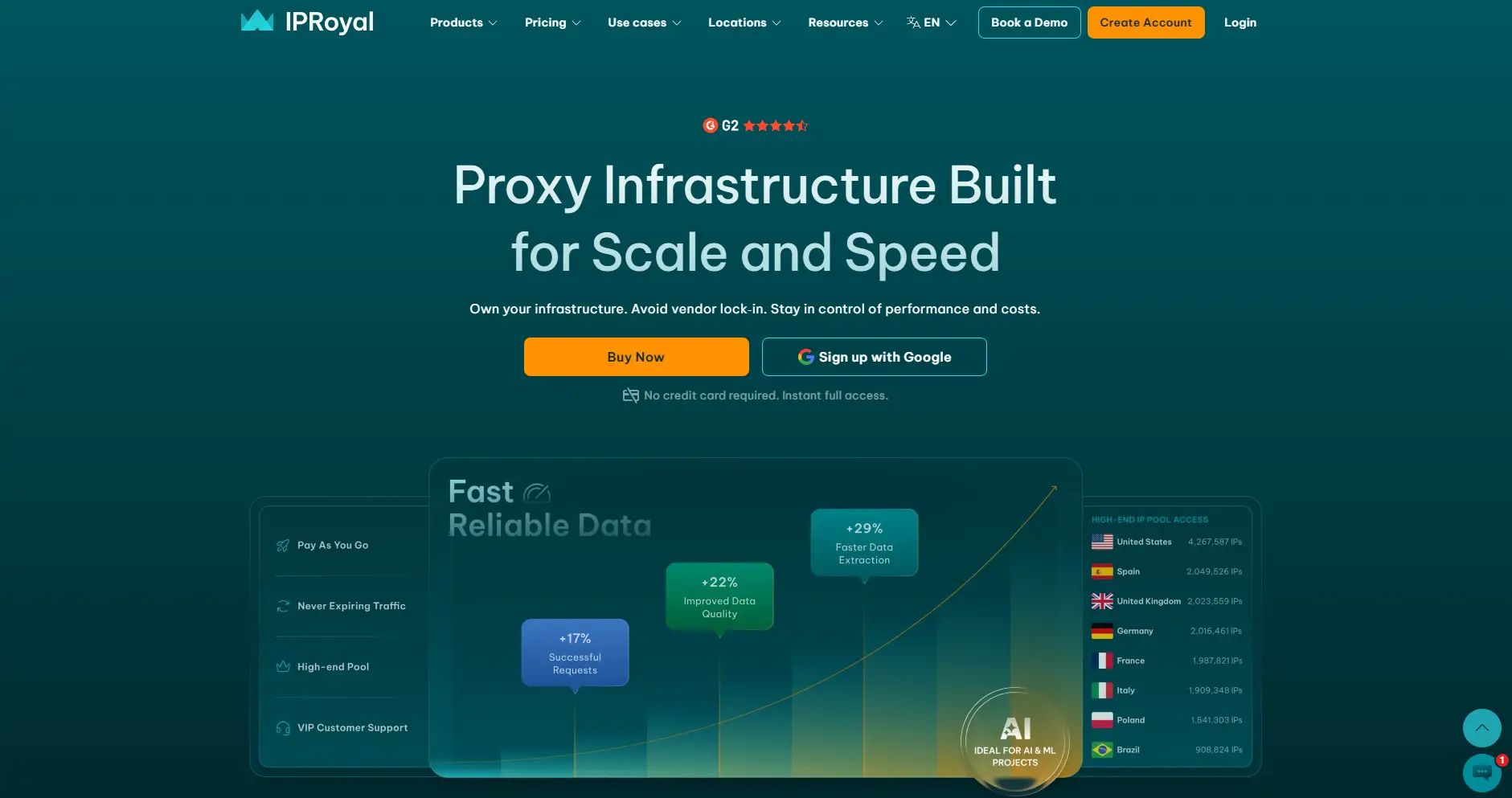
Newer provider gaining traction with competitive pricing and solid performance. Offers residential, datacenter, and mobile proxies.
Strengths: Competitive pricing, no minimum spend requirements, good performance for the price, growing IP pool.
Weaknesses: Smaller network than established players, limited enterprise features, newer track record.
Best for: Small to medium businesses, individual users needing quality proxies without enterprise overhead.
Smartproxy (now Decodo)
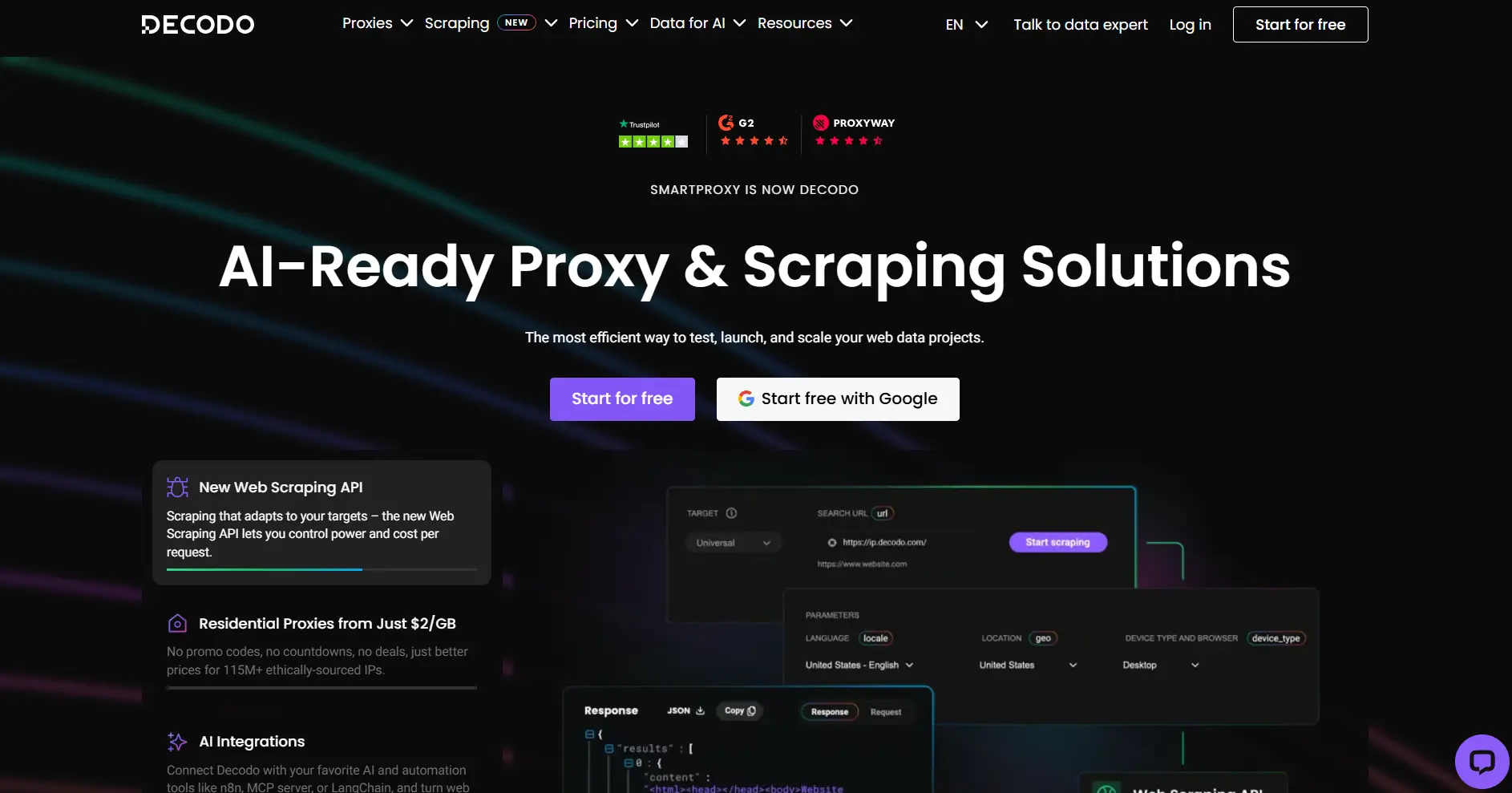
Popular among smaller businesses and individual users. Recently rebranded to Decodo with expanded services.
Strengths: User-friendly dashboard, reasonable pricing, good entry-level option, decent geographic coverage.
Weaknesses: Smaller IP pool, higher detection rates than premium providers, limited advanced features.
Best for: Beginners, small-scale operations, users prioritizing ease of use over maximum performance.
Proxyrack
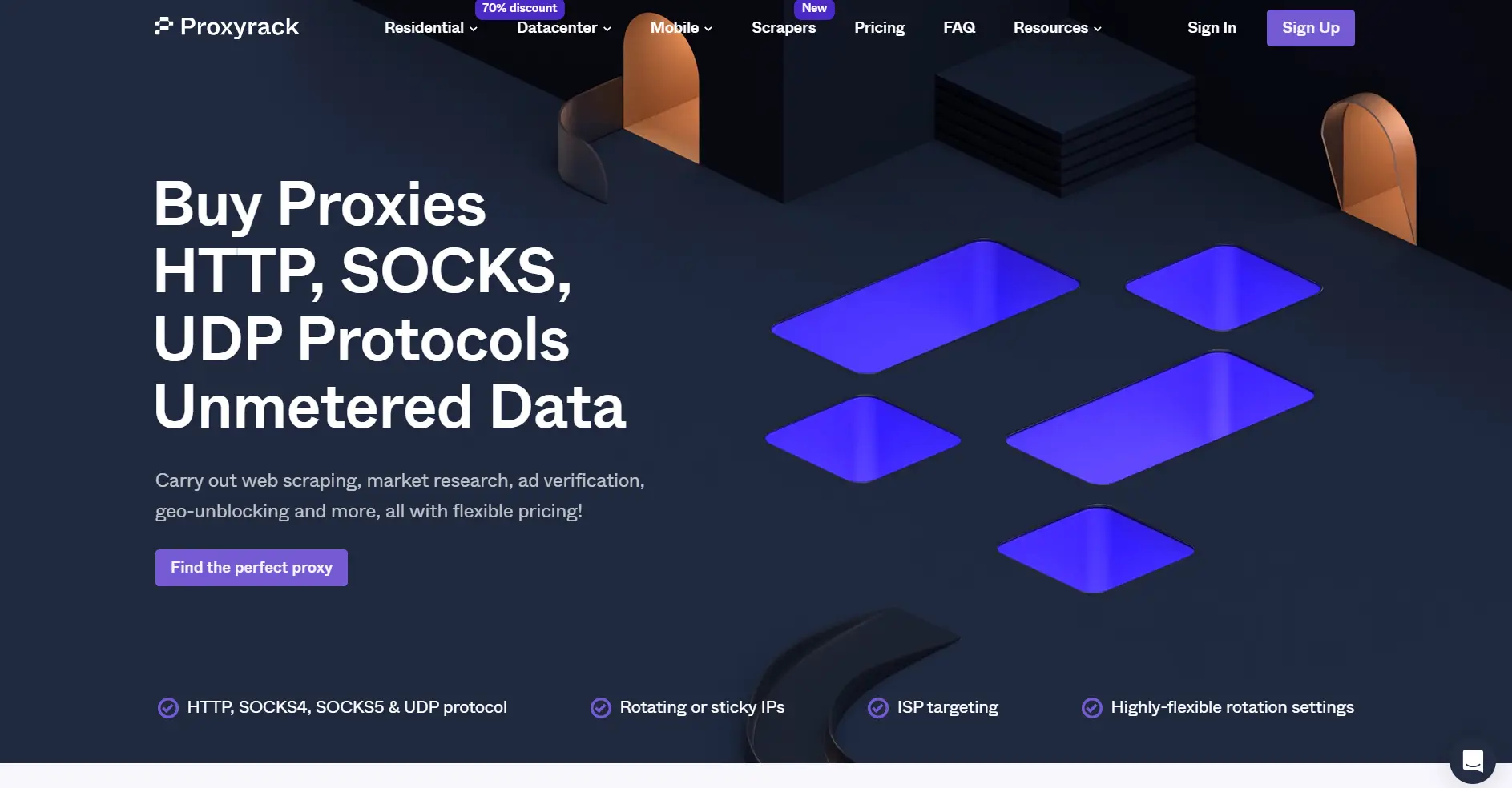
Budget-friendly option with both residential and datacenter proxies. Good value for price-conscious users.
Strengths: Very competitive pricing, unlimited bandwidth options, decent performance for the cost.
Weaknesses: Higher detection rates than premium providers, limited geographic precision, basic customer support.
Best for: High-volume, low-sensitivity use cases where cost matters more than stealth.
How to Evaluate Proxy Providers Before Buying
IP Pool Quality and Size
Don't just count total IPs. Ask about active IPs, rotation frequency, and geographic distribution. A provider claiming 50 million IPs might only have 5 million active at any time.
Request sample IPs for testing. Run them through detection tools and check their reputation on platforms you plan to use.
Geographic Precision
If you need specific locations, verify the provider's targeting accuracy. Some providers offer country-level precision but struggle with city-level targeting.
Test location accuracy using IP geolocation services. Check if the provider offers ASN-level targeting for more precise control.
Pricing Models
Per-GB pricing works well for light usage but gets expensive at scale. Typical residential proxy pricing ranges from $5-15 per GB.
Per-IP pricing suits consistent, long-term usage better. Datacenter proxies typically cost $1-3 per IP monthly.
Unlimited bandwidth plans can offer good value for heavy users but often include speed or concurrent connection limits.
Protocol and Authentication Support
Ensure the provider supports your required protocols. Most modern applications need HTTP/HTTPS and SOCKS5 support.
Check authentication methods. Username/password authentication is standard, but some providers offer IP whitelisting for added security.
Trial Periods and Testing
Reputable providers offer trial periods or money-back guarantees. Avoid providers requiring large upfront commitments without testing options.
Use trial periods to test on your actual target platforms, not just generic speed tests.
When Residential Proxies Are Worth the Premium
Residential proxies cost 5-10x more than datacenter alternatives, but certain use cases demand them.
- Social media management across multiple accounts requires residential IPs. Platforms like Instagram and Facebook actively detect and block datacenter traffic.
- E-commerce operations including price monitoring, inventory checking, and account management benefit from residential proxies' detection resistance.
- Ad verification and competitive research often require the authenticity that only residential IPs provide.
- Geo-restricted content access works better with residential proxies since they appear as genuine users in target locations.
For basic web scraping, SEO monitoring, or other low-sensitivity tasks, datacenter proxies often provide better value.
Common Risks and How to Avoid Them
Free Proxy Lists
Free proxies are tempting but dangerous. They're often harvested from compromised devices, log all traffic, or inject malware. The "free" cost comes with massive privacy and security risks.
Many free proxies are honeypots designed to collect user data or monitor traffic patterns.
Shared Pool Reputation
When using shared IP pools, other users' activities can tank your success rates. If someone abuses an IP for spam or fraud, it gets flagged for everyone.
Choose providers with strict abuse policies and quick IP rotation to minimize reputation contamination.
Provider Logging Policies
Some proxy providers log detailed connection data, potentially exposing your activities. Read privacy policies carefully and choose providers with minimal logging practices.
Look for providers offering session-based logging only, without storing long-term connection records.
Compliance and Legal Issues
Proxy usage legality varies by jurisdiction and use case. Ensure your provider operates legally in their jurisdiction and yours.
Avoid providers that can't explain their IP acquisition methods or operate in jurisdictions with poor legal frameworks.
Managing Multiple Accounts with Different Proxy Assignments
Running multiple accounts across platforms creates operational headaches. Each account needs consistent proxy assignments, proper browser fingerprinting, and careful session management to avoid cross-contamination.
Team operations multiply this complexity. Different team members need access to specific accounts without compromising profile isolation.
For operations requiring multiple browser profiles with distinct proxy assignments, specialized tools like DICloak antidetect browser can streamline workflows:
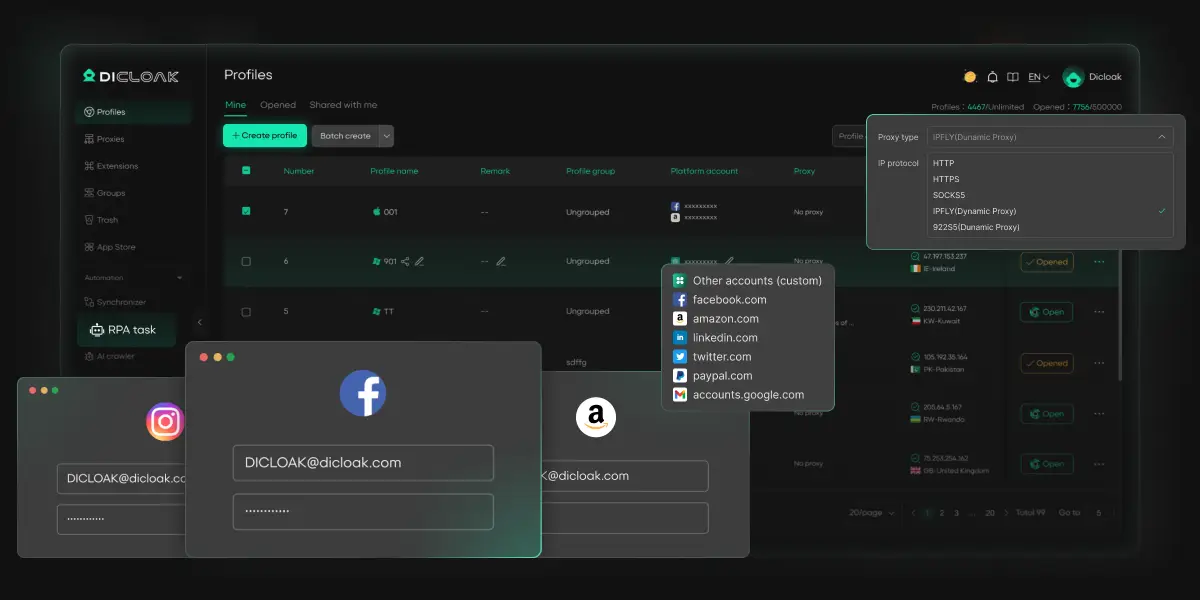
- Profile-based proxy assignment: Each browser profile automatically connects through its designated proxy server, eliminating manual configuration
- Team collaboration controls: Share specific profiles with team members while maintaining proxy consistency and access logs
- Session persistence: Maintain login states and cookies within isolated profiles, even when switching between proxy providers
- Bulk proxy testing: Validate proxy performance across multiple profiles simultaneously before deployment
Frequently Asked Questions
What's the difference between HTTP and SOCKS5 proxies?
HTTP proxies work only with web traffic and can modify requests. SOCKS5 proxies handle any traffic type and don't modify data, making them more versatile for applications beyond web browsing.
How many concurrent connections can I run through one proxy?
This varies by provider and proxy type. Residential proxies typically allow 1-10 concurrent connections per IP. Datacenter proxies often support 100+ connections. Check your provider's specific limits.
Can proxy providers see my traffic?
Most proxy providers can technically see unencrypted traffic passing through their servers. Choose providers with strong privacy policies and use HTTPS connections when possible to encrypt your data.
Why do some proxies work on certain websites but not others?
Websites use different detection methods and maintain separate IP reputation databases. A proxy might work perfectly on one platform while being blocked on another due to previous abuse or detection system differences.
Is it legal to use proxy servers?
Proxy usage is generally legal in most countries, but specific use cases might violate terms of service or local laws. Always comply with website terms of service and local regulations.
How often should I rotate proxy IPs?
This depends on your use case. Web scraping might require rotation every few requests to avoid rate limiting. Account management typically needs sticky sessions lasting hours or days to maintain consistency.
Making the Right Choice for Your Needs
The best proxy provider depends on your specific requirements, budget, and risk tolerance. High-stakes operations requiring maximum stealth should invest in premium residential proxies from established providers. Budget-conscious users doing basic web scraping can often succeed with quality datacenter proxies.
Start with clear understanding of your detection sensitivity, volume requirements, and geographic needs. Test thoroughly during trial periods, focusing on your actual target platforms rather than generic benchmarks.
The cheapest option often becomes the most expensive when it fails at critical moments. Choose providers with transparent practices, responsive support, and pricing models that align with your usage patterns.
The proxy landscape will keep evolving, but providers that prioritize IP quality, ethical sourcing, and customer success will remain the safest bets for serious operations.
 Web Proxy Tools
 Free Tools
 Cookie Plugin
 UA Generator
 MAC Address Generator
 IP Generator
 IP Address List
 2FA Code Generator
 World Clock
 Anonymous Check
 WebRTC Leak Test
 UUID Generator
 Free Web Proxy Site
 Proxy Checker
 FB Ad Checker
 AI Web Scraping
 Free SMM Tools
 Twitter Shadowban Checker
 Instagram Name Checker
 UTM Generator
 Username Generator
 AI Hashtag Generator
 LinkedIn Headline Generator
 Social Media Image Resizer