Before choosing a proxy service, it is important to understand how it works and whether it fits your real needs. Many users look for proxies to avoid blocks, protect their IP address, or run online tasks more smoothly. In this review, we start by explaining what plainproxies is and how it works, so you can clearly see if it is the right solution for your use case in 2026.
Introduction to PlainProxies
What is PlainProxies?
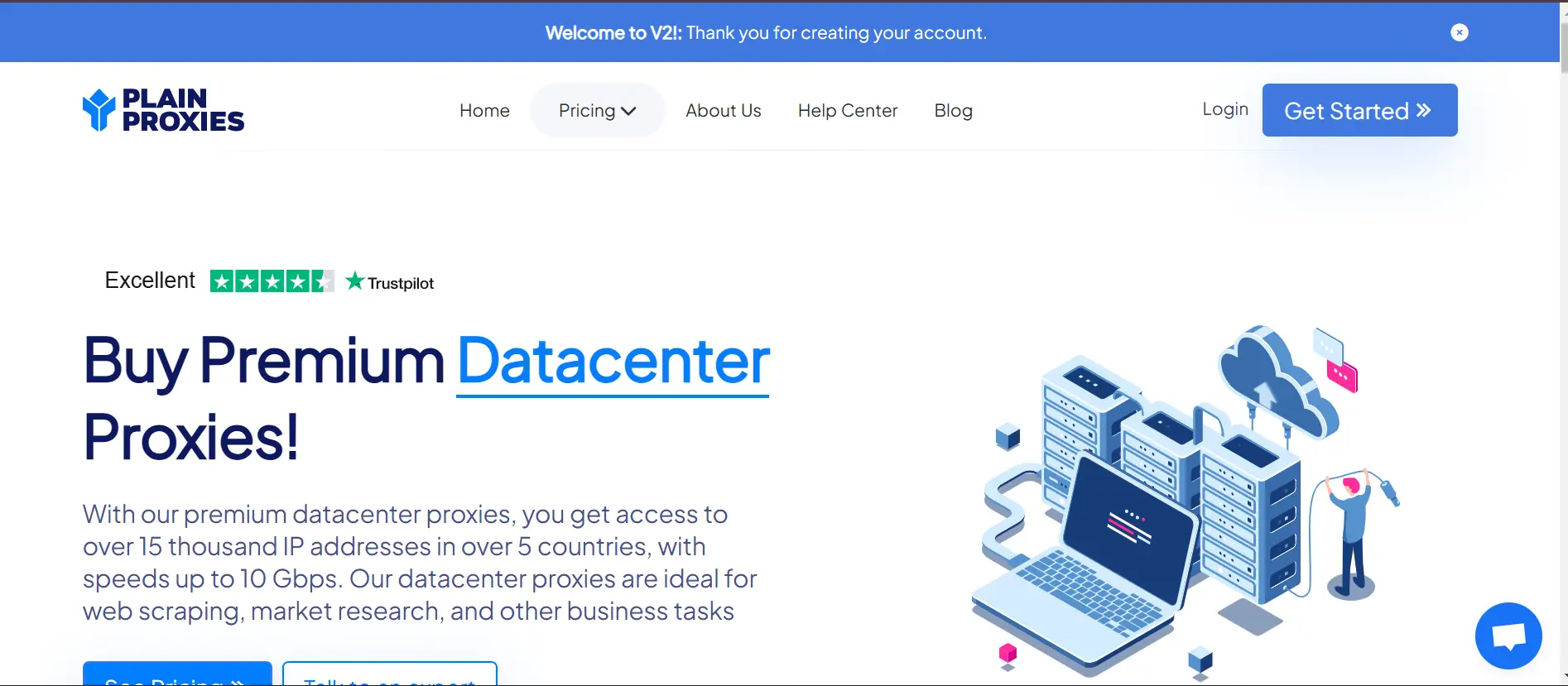
PlainProxies is a proxy service that helps users hide their real IP address when accessing websites. It is often used for web data collection, market research, SEO checks, and managing multiple online accounts. The service offers several proxy types, such as datacenter, residential, ISP, and IPv6 proxies, so users can choose what fits their task best.
In simple terms, plainproxies acts as a middle layer between you and the internet. Websites see the proxy’s IP, not yours. This reduces the risk of IP blocks and helps users work more safely and smoothly online.
How Does PlainProxies Work?
PlainProxies works by routing your internet requests through its proxy servers. Each request appears to come from a different IP address or location, depending on your settings. This makes your activity look more natural to websites.
For example, if you check prices on many e-commerce sites from one device, your IP may get blocked. With plainproxies, those requests are spread across multiple IPs, so each visit looks like a real user. PlainProxies also supports rotating IPs for large tasks and static IPs for stable, long sessions, such as account logins or regular SEO monitoring.
Overall, plainproxies helps users stay anonymous, reduce blocks, and complete online tasks more reliably.
Key Features of PlainProxies
After understanding how plainproxies works, the next step is to look at what it actually offers in daily use. These features explain why many users choose plainproxies for data tasks, monitoring, and account-related work.
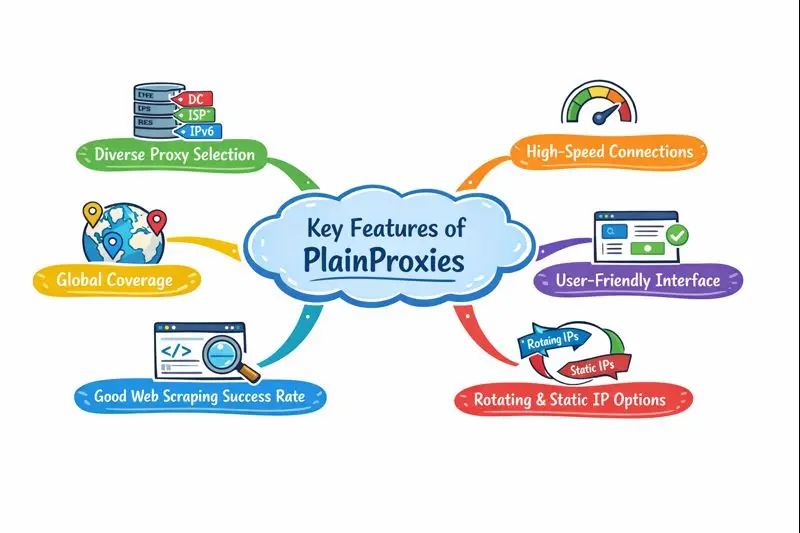
Diverse Proxy Selection
One key strength of plainproxies is its wide proxy selection. Users can choose between datacenter, residential, ISP, and IPv6 proxies. This flexibility matters. For example, datacenter proxies work well for fast bulk checks, while residential proxies are better when a website is strict and blocks non-human traffic. This lets users match the proxy type to the task instead of forcing one solution for all cases.
High-Speed Connections
Speed is important when running repeated online actions. Plainproxies focuses on stable and fast connections, which helps reduce timeouts and failed requests. For instance, when running SEO rank checks across many keywords, faster proxy response means results load smoothly without frequent retries.
Global Coverage
PlainProxies offers IPs from many countries and regions. This is useful when websites show different content by location. A marketer, for example, can test how prices or ads appear in the US, Europe, or Asia by switching proxy locations. Plainproxies makes this process simple and practical.
User-Friendly Interface
Plainproxies is designed to be easy to use, even for beginners. The dashboard is clear, and setup does not require advanced technical skills. Many users can start using proxies within minutes, which is helpful for small teams or solo users who want quick results without complex setup.
Good Web Scraping Success Rate
For web scraping tasks, success rate matters more than theory. Plainproxies performs well on common targets like e-commerce sites and search pages. By spreading requests across multiple IPs, users can collect data with fewer blocks and interruptions. This is especially useful for price tracking or product research.
Rotating & Static IP Options
PlainProxies supports both rotating and static IPs. Rotating IPs change often and work well for large data jobs. Static IPs stay the same and are better for long sessions, such as logging into accounts or running scheduled tools. This choice gives users more control based on how stable or flexible their connection needs to be.
Together, these features show how plainproxies builds on its basic proxy model and turns it into a practical tool for real-world online tasks.
PlainProxies Performance & Reliability (Advantages)
Based on real usage and task-based testing, plainproxies shows several clear strengths in performance and reliability. These advantages become more noticeable when the right proxy type is matched to the right task.
- Fast connection speeds Plainproxies performs especially well with datacenter and ISP proxies. These options provide quick response times, which is useful for tasks like SEO monitoring, bulk page checks, or price tracking. Residential proxies are slightly slower, but still stable for most daily work.
- Strong web scraping reliability For data collection tasks, plainproxies offers a high success rate. Requests are spread across many IPs, which helps reduce blocks and failed loads. This is helpful when scraping product listings, search results, or public data pages at scale.
- Lower blocking risk with residential and ISP proxies Residential and ISP proxies blend in more naturally with normal user traffic. This reduces the chance of bans or captchas on stricter websites. Users who switch to these proxy types often see fewer interruptions over time.
- Flexible performance based on proxy type Plainproxies allows users to balance speed and safety. Datacenter proxies favor speed, while residential and ISP proxies focus on stability and trust. This flexibility makes it easier to adjust performance as project needs change.
- Generally stable connections for long tasks While short disruptions can happen, most sessions remain stable enough for long-running tools and repeated checks. With basic retry settings, users can maintain smooth workflows during extended tasks.
These performance advantages show how plainproxies can support both speed-focused and reliability-focused use cases when configured properly.
To maximize privacy, many experienced users combine plainproxies with an antidetect browser like DICloak. This is considered a best practice because proxies only change your IP, while an antidetect browser also controls browser fingerprints such as cookies, device details, and session data. For example, when managing multiple accounts or running long-term tasks, using plainproxies together with DICloak helps keep each session isolated and consistent. This setup reduces detection risk and creates a stronger, more complete privacy layer.
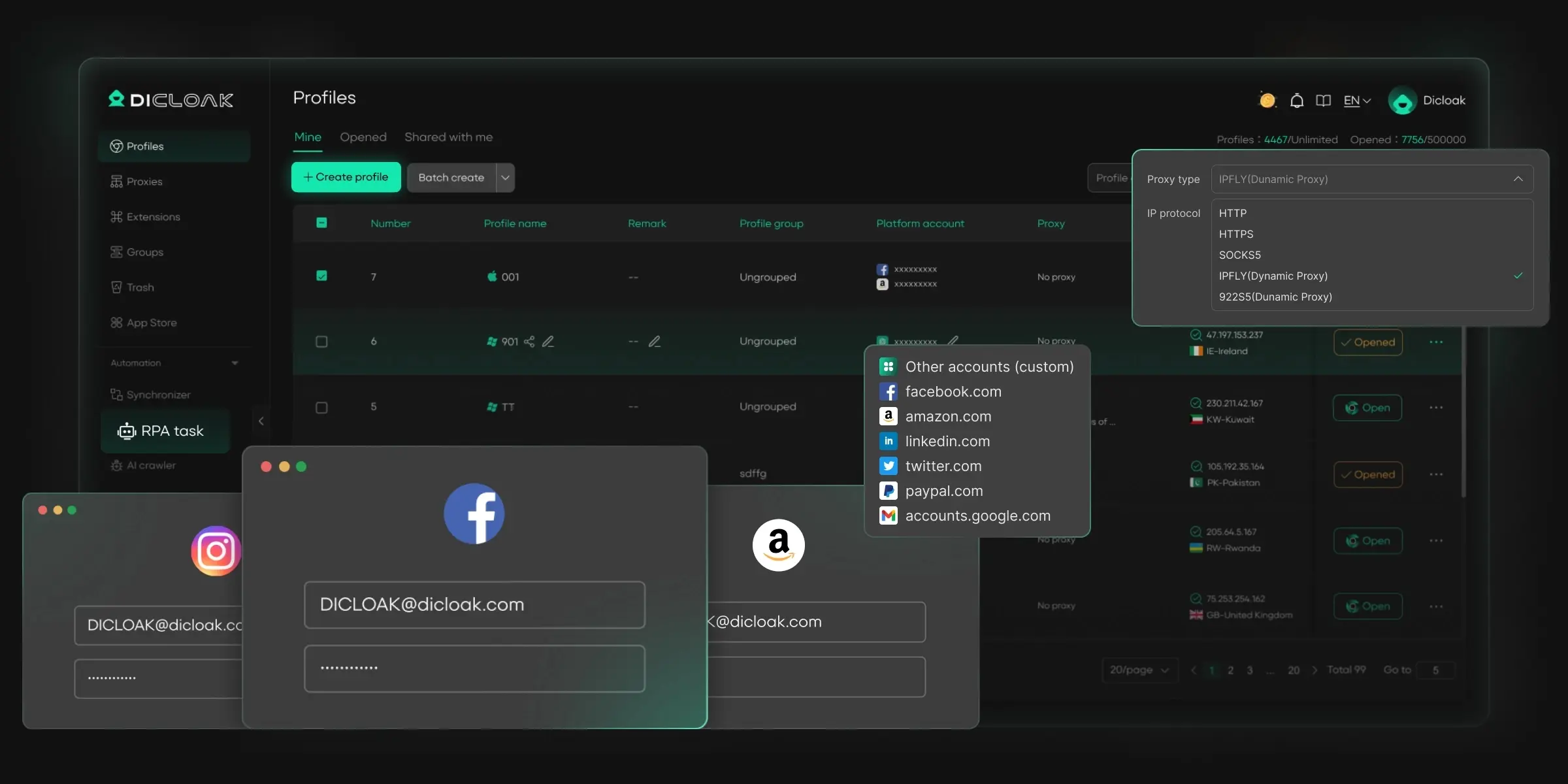
⚡The DICloak Antidetect Browser has become a global favorite for its unparalleled ability to efficiently and securely manage multiple accounts. Designed for professionals in social media management, affiliate marketing, traffic arbitrage, e-commerce, account farming, airdrops, and more, DICloak offers powerful features like RPA automation, bulk operations, and a synchronizer. Additionally, it allows you to customize fingerprints and integrate proxies for each profile, ensuring top-level security and operational efficiency. It’s the ultimate tool for seamless, secure, and scalable operations.
What Makes DICloak Stand Out?
✅ Manage 1,000+ Accounts on One Device: Stop wasting money on extra hardware! DICloak allows you to manage multiple accounts on a single device, cutting costs and boosting efficiency.
✅ Guaranteed Account Safety, No Ban Risks: Every account gets its own isolated browser profile with custom fingerprints and IPs, drastically reducing the risk of bans. Your accounts, your control!
✅ Flexible Proxy Configuration for Maximum Performance: Seamlessly integrate with all major proxy protocols (HTTP/HTTPS, SOCKS5) and manage your proxy pool with bulk operations. No more struggling with IP management—DICloak has you covered.
✅ Streamlined Team Collaboration for Better Results: Easily manage your team with advanced tools like profile sharing, permission settings, data isolation, and operation logs. Your team works smarter, not harder.
✅ Automate the Grind with RPA: DICloak's built-in RPA saves you hours of manual work. Automate repetitive tasks, streamline workflows, and focus on what really matters—growing your business.
✅ Powerful Bulk Tools to Scale Your Operations: Create, import, and launch multiple browser profiles in one click. DICloak makes scaling your business as easy as it gets.
✅ Compatible with All Major Operating Systems: Based on the Chrome core, DICloak supports simulating Windows, Mac, iOS, Android, and Linux operating systems. No matter what platform you need, DICloak has you covered.
🔗 Ready to Get Started?
Visit the DICloak website to explore more details and choose the plan that’s right for you. Start for free today and experience the power of secure, efficient, and scalable multi-account management!
Pricing and Plans for PlainProxies
After reviewing performance, pricing is the next practical concern. Plainproxies uses a clear but more commitment-focused pricing model that suits users who already know their needs.
- Pricing varies by proxy type and location Plainproxies prices depend on both the proxy type and where the IP is located. Datacenter proxies are the most budget-friendly option and fit high-volume tasks. Residential and ISP proxies cost more because they offer higher reliability and look more natural to websites.
- Pay-per-GB model for residential proxies Residential proxies are charged based on data usage. This works well for users who run controlled scraping or research tasks. However, heavy traffic users need to plan usage carefully to avoid unexpected costs.
- Premium pricing for ISP proxies ISP proxies are priced higher than other options. In return, they provide stronger trust signals and better stability. This makes them a better choice for sensitive tasks like account access or long sessions.
- No free trial available Plainproxies does not offer a free trial. Users must purchase a plan to test the service. If you are unsure about long-term use, this can feel restrictive. Some other providers allow testing before payment, which may appeal to first-time users.
Overall, plainproxies pricing favors users who already understand their proxy needs. It offers flexible options, but it is best suited for those ready to commit rather than casual testers.
Security and Privacy Considerations
After reviewing pricing, security and privacy are often the deciding factors. This is especially true for users who rely on plainproxies for repeated or sensitive online tasks.
Is PlainProxies Safe?
Plainproxies is generally safe for common proxy use cases. It helps reduce direct exposure by hiding your real IP address. This lowers the risk of tracking and basic IP-based blocks. For tasks like SEO checks or data collection, this added layer improves overall safety.
Privacy Features of PlainProxies
Plainproxies focuses on IP masking rather than collecting user data. Your browsing requests are routed through proxy servers, not directly from your device. For example, when checking websites across regions, your real location stays private, which helps limit profiling and unwanted flags.
Data Encryption and IP Masking
PlainProxies supports standard secure connection methods, such as HTTPS and SOCKS5. These help protect data while it travels through the proxy. Combined with IP masking, this setup keeps online activity separated from your real network identity and reduces basic security risks.
FAQs About Plainproxies
After reviewing security and privacy, here are the five most common questions users ask before using plainproxies. These focus on real usage and legal clarity.
What is plainproxies mainly used for?
Plainproxies is commonly used for web scraping, SEO checks, market research, and accessing websites from different locations. For example, an SEO user may use plainproxies to view search results as they appear in different countries.
Is plainproxies suitable for beginners?
Yes. Plainproxies is easy to set up and does not require advanced skills. Many users connect it to their browser or tools within minutes.
Can plainproxies be used for managing multiple accounts?
Plainproxies can provide different IPs for separate sessions. For stronger protection and better isolation, many users combine plainproxies with an antidetect browser.
Is using plainproxies legal?
In most regions, using proxies like plainproxies is legal. Proxies are widely used for privacy, security, and business research. Legality depends on how the tool is used.
How can users stay compliant when using plainproxies?
Users should follow local laws and website terms. Plainproxies should be used for legitimate purposes, such as accessing public data or testing content, not for illegal or restricted actions.
Conclusion
Plainproxies is a practical choice for users who need stable proxies for tasks like web scraping, SEO checks, and market research. It offers multiple proxy types, global coverage, and reliable IP masking, which helps reduce blocks and protect basic privacy. Datacenter proxies suit fast bulk work, while residential and ISP proxies work better for stricter websites. For example, an SEO user tracking rankings in different countries can get consistent results with the right setup. When combined with proper session and fingerprint management, plainproxies can serve as a dependable long-term solution in 2026.
 Web Proxy Tools
 Free Tools
 Cookie Plugin
 UA Generator
 MAC Address Generator
 IP Generator
 IP Address List
 2FA Code Generator
 World Clock
 Anonymous Check
 WebRTC Leak Test
 UUID Generator
 Free Web Proxy Site
 Proxy Checker
 FB Ad Checker
 AI Web Scraping
 Free SMM Tools
 Twitter Shadowban Checker
 Instagram Name Checker
 UTM Generator
 Username Generator
 AI Hashtag Generator
 LinkedIn Headline Generator
 Social Media Image Resizer