Few things are more frustrating for a digital marketer than waking up to a disabled Facebook ad account, halting your sales funnel, wasting ad spend, and jeopardizing client relationships. As Meta continues to tighten its advertising rules, this is becoming an increasingly common problem. This guide is here to help. We will walk you through the common reasons for account suspensions, provide a clear, step-by-step process to appeal the decision, and introduce a reliable method to prevent it from happening in the future.
Why Was Your Facebook Ad Account Disabled?
Facebook typically disables ad accounts when it detects violations of its Advertising Policies. While some violations are straightforward, many cases of a Facebook Ad Account Disabled status are triggered by automated systems and can happen by mistake. Knowing the most common reasons can help you identify the issue and reduce the risk of future account problems.
Policy and Content Violations
A Facebook Ad Account Disabled issue often stems from ad content that goes against platform rules, including:
- Promoting restricted or prohibited products or services.
- Using misleading claims, clickbait headlines, or false information.
- Violating copyrights or using unauthorized intellectual property.
- Publishing shocking, sensational, or disturbing content.
- Referring to or implying personal attributes of users, such as race, religion, age, health, or financial status.
- Receiving excessive negative feedback or ad reports from users.
Suspicious Account Activity
Unusual behavior can also cause a Facebook Ad Account Disabled action, such as:
- Logging in from multiple IP addresses, devices, or geographic locations, which may appear suspicious or fraudulent.
- A sudden and significant spike in advertising spend.
- Creating a brand-new Facebook profile and immediately launching ads without a normal “warm-up” period.
- Leaving an ad account inactive for extended periods (for example, 60 days or more).
Payment and Billing Issues
Billing problems are another common reason for a Facebook Ad Account Disabled notice, including:
- Late payments or insufficient funds on your linked payment method.
- Using a credit or debit card previously connected to a disabled or banned ad account.
- Sharing the same payment method across multiple ad accounts, which may raise red flags in Facebook’s system.
How long does it take for Facebook to review an ad account appeal?
When a Facebook Ad Account Disabled appeal is submitted, the review time can vary widely. Some advertisers receive a response within a few hours or 24–48 hours, while others may wait several weeks or even months. The timeline depends on factors such as the complexity of the case, Facebook’s review workload, and whether live chat support is available (which often speeds up resolution but is not always accessible). If your Facebook Ad Account Disabled appeal hasn’t received a response after 7–10 business days, consider submitting a follow-up appeal through alternative channels like the Account Quality page or the Facebook Business Help Center.
What Happens When Your Facebook Ad Account is Disabled?
The consequences of an ad account suspension are immediate and can significantly impact your business operations. Here’s what happens the moment your account is disabled:
- All of your active ad campaigns are immediately frozen, stopping all sales and lead generation.
- You are completely blocked from creating any new ads or campaigns.
- Everyone with access to your Business Manager is locked out of the specific disabled ad account.
- Key advertising assets, including your audiences, pixels, offline event sets, and custom conversions, become unusable.
How to Fix a Disabled Facebook Ad Account: A Step-by-Step Guide
The best way to approach fixing a disabled account can depend on your experience and reputation as an advertiser on the platform.
For New Advertisers
If you are new to Facebook advertising, your primary path is to request a direct review.
- Navigate to your Account Quality page.
- Find the "What you can do" section and click Request review. You typically have about three opportunities to do this.
- Complete the identity verification procedure as prompted.
- In the form provided, clearly and politely explain why you believe your account was disabled in error and should be reinstated.
- Wait for a decision, which usually takes about 48 hours. You will receive the outcome via email.
For Experienced Advertisers with a Positive Reputation
If you have a history of significant ad spend and a positive reputation, you may have access to live support, which is often a faster route to resolution.
- Go to the Meta Business Help Center and scroll down.
- Select your ad account and the specific issue you are facing.
- Click the Contact support button to initiate a chat with Meta Support Pro.
- When you connect with an agent, be clear, concise, and professional.
As one expert advises: Ilya Uglyanitsa, User Acquisition Manager at ForYou, shares: «In case you are sure you violate no rules from Advertising policies or Community standards, mention it in your first message and proceed with convincing them until you get help. Otherwise, they will direct you back to reading policies. But, of course, be polite (!), explain the situation in detail, write in plain English, and attach screenshots».
Your Next Steps for a Disabled Facebook Ad Account
In some cases, Facebook’s review process ends with a final and permanent restriction. When a Facebook Ad Account Disabled decision becomes irreversible, it’s essential to act carefully and avoid actions that could cause further damage.
One common mistake is attempting to use a friend’s ad account from the same computer or network. After a Facebook Ad Account Disabled ban, your IP address or device fingerprint may already be flagged. Logging into another account from the same environment can easily place that account at risk of being disabled as well.
The only possible way forward is to start entirely from scratch with a new personal Facebook account and a new Business Manager. However, doing this on the same device is extremely risky and often leads to another Facebook Ad Account Disabled outcome. Facebook’s detection systems can quickly connect new accounts to previously banned profiles through device, browser, and network signals.
This is why a proactive and preventative approach is critical. Creating a clean, isolated environment is essential to avoid repeating the same Facebook Ad Account Disabled issues and to protect any new accounts you set up.
The Proactive Solution: How DICloak Prevents Your Facebook Ad Account From Being Disabled
Your Facebook Ad Account Disabled status can become permanent if:
- You don’t resolve the issue within 30 days.
- You request a review and receive a final decision—even innocent users can be affected.
Once banned, avoid logging into friends’ ad accounts from the same device. Your IP or device may be flagged, putting other accounts at risk.
Creating a new ad account in the same Business Manager often leads to another Facebook Ad Account Disabled result. It’s safer to remove the old Business Manager, move assets to a new one, and remove yourself from the old BM. Reusing the same credit card can also trigger a ban.
Each user can create only two Business Managers. If you’ve reached the limit, you’ll need a new personal account—but running multiple Facebook accounts on one device is risky.
For safety, start completely fresh using a secure, isolated browser profile such as DICloak. DICloak is designed to protect your online identity by creating unique and completely separate browsing environments for each of your accounts.
Think of it this way: without a tool like DICloak, all of your accounts can be linked to a single "digital fingerprint." If Facebook flags one of those accounts for suspicious activity, all other accounts linked to that same fingerprint are at immediate risk of being disabled. DICloak solves this problem.
Why choose DICloak Antidetect Browsers for your business?
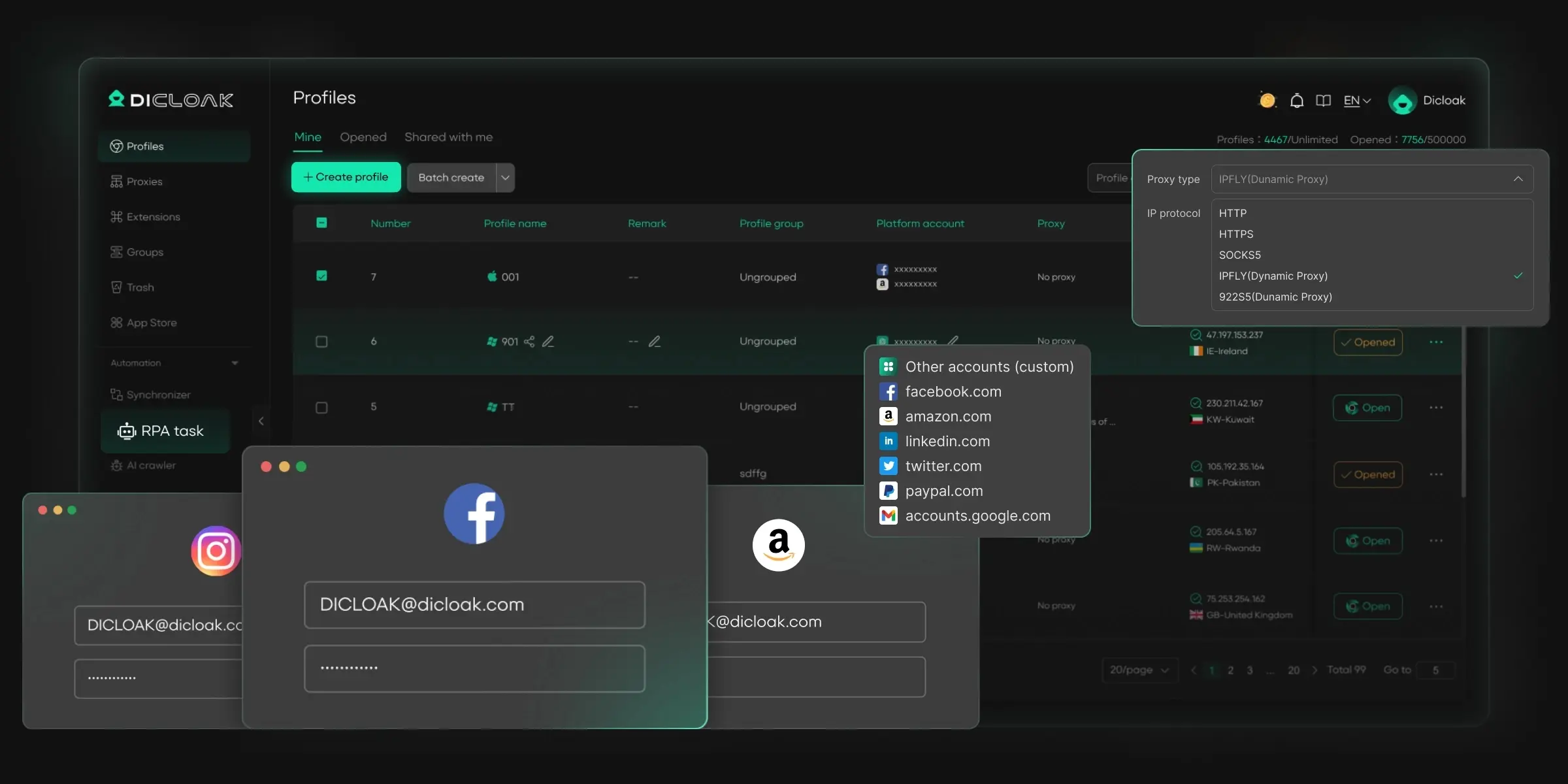
⚡The DICloak Antidetect Browser has become a global favorite for its unparalleled ability to efficiently and securely manage multiple accounts. Designed for professionals in social media management, and more, DICloak offers powerful features like RPA automation, bulk operations, and a synchronizer. Additionally, it allows you to customize fingerprints and integrate proxies for each profile, ensuring top-level security and operational efficiency. It’s the ultimate tool for seamless, secure, and scalable operations.
What Makes DICloak Stand Out?
✅ Manage 1,000+ Accounts on One Device: Stop wasting money on extra hardware! DICloak allows you to manage multiple accounts on a single device, cutting costs and boosting efficiency.
✅ Guaranteed Account Safety, No Ban Risks: Every account gets its own isolated browser profile with custom fingerprints and IPs, drastically reducing the risk of bans. Your accounts, your control!
✅ Flexible Proxy Configuration for Maximum Performance: Seamlessly integrate with all major proxy protocols (HTTP/HTTPS, SOCKS5) and manage your proxy pool with bulk operations. No more struggling with IP management—DICloak has you covered.
✅ Streamlined Team Collaboration for Better Results: Easily manage your team with advanced tools like profile sharing, permission settings, data isolation, and operation logs. Your team works smarter, not harder.
✅ Automate the Grind with RPA: DICloak's built-in RPA saves you hours of manual work. Automate repetitive tasks, streamline workflows, and focus on what really matters—growing your business.
✅ Powerful Bulk Tools to Scale Your Operations: Create, import, and launch multiple browser profiles in one click. DICloak makes scaling your business as easy as it gets.
✅ Compatible with All Major Operating Systems: Based on the Chrome core, DICloak supports simulating Windows, Mac, iOS, Android, and Linux operating systems. No matter what platform you need, DICloak has you covered.
🔗 Ready to Get Started?
Visit the DICloak website to explore more details and choose the plan that’s right for you. Start for free today and experience the power of secure, efficient, and scalable multi-account management!
Conclusion: Stay Ahead of Facebook Bans
Ultimately, reacting to bans is a losing game. The professional standard in 2026 is proactive defense. By adopting a tool like DICloak, you shift from a position of risk to one of control, ensuring your advertising infrastructure is resilient, scalable, and secure. Understanding why bans happen and how to appeal is important, but true stability comes from preventing them in the first place.
Frequently Asked Questions (FAQs)
1.Why was my Facebook ad account disabled if I followed the rules?
- Facebook's automated systems can sometimes make mistakes and flag legitimate businesses or ads as suspicious without a human review, leading to an incorrect ban.
2.Can I use a friend's ad account after mine was permanently disabled?
- This is very risky. Facebook tracks your IP address, which might be blacklisted after a ban. Using a friend's account from your device could put their account at risk.
3.Is it legal to use a tool like DICloak to manage multiple Facebook accounts?
- Yes. According to US/EU laws, using a multi-accounting tool like DICloak for legitimate and ethical business purposes, such as ensuring business safety and avoiding downtime, is a viable and legal option.
4.How does DICloak prevent my new Facebook ad account from being linked to my old banned one?
DICloak creates a completely separate browser profile with a unique digital fingerprint for your new account. This includes a different IP address, device data, and browser details, so Facebook sees it as a brand new, unrelated user.
5.How long does it take for Facebook to review an appeal for a disabled ad account?
- Response times can vary significantly. Some users hear back in 24-48 hours, while others may wait for several weeks or even months. There is no guaranteed timeframe.
 Web Proxy Tools
 Free Tools
 Cookie Plugin
 UA Generator
 MAC Address Generator
 IP Generator
 IP Address List
 2FA Code Generator
 World Clock
 Anonymous Check
 WebRTC Leak Test
 UUID Generator
 Free Web Proxy Site
 Proxy Checker
 FB Ad Checker
 AI Web Scraping
 Free SMM Tools
 Twitter Shadowban Checker
 Instagram Name Checker
 UTM Generator
 Username Generator
 AI Hashtag Generator
 LinkedIn Headline Generator
 Social Media Image Resizer