AI models now help people write, code, and analyze data every day. But not all models work the same way. In deepseek vs chatgpt, the key difference is focus. DeepSeek is known for its strong reasoning models and open research approach, which attracts developers and technical users. ChatGPT, built by OpenAI, is designed for smooth conversation, writing, and general tasks that many people use at work or school.
For example, a developer may choose DeepSeek to test reasoning or run models with more control. A content creator may prefer ChatGPT to write emails, blog outlines, or social posts faster and with less setup.
This deepseek vs chatgpt comparison helps you choose the right tool for your needs. It is not about which AI is “better.” It is about fit. In chatgpt vs deepseek, the best option depends on your task, your skill level, and how much accuracy you need. In the next sections, we use simple examples to show when each model works best, so you can make a clear and practical choice.
Model Architecture and Technology Behind DeepSeek vs ChatGPT
After understanding that deepseek vs chatgpt is about choosing the right fit, the next step is to look under the hood. How these models are built explains why they behave differently in real use.
DeepSeek: Key Features and Architecture
DeepSeek is built with a strong focus on reasoning and efficiency. Many DeepSeek models use a Mixture of Experts (MoE) design. This means the system does not use all parts of the model for every task. It only activates the experts it needs. This helps save computing power while keeping reasoning strong.
A simple example is coding or math problems. When a developer asks DeepSeek to solve a logic-heavy task, the model can focus on reasoning experts instead of wasting resources. This is one reason DeepSeek attracts technical users who test models, run benchmarks, or deploy AI in controlled environments.
ChatGPT: Understanding the GPT Framework
ChatGPT is based on the GPT (Generative Pre-trained Transformer) framework. It uses a dense model structure, where the whole model works together on each prompt. This design helps ChatGPT stay smooth, consistent, and easy to use.
For example, when you ask ChatGPT to write an email, explain a topic, and rewrite a sentence in one chat, it handles the flow naturally. This is why many writers, students, and teams choose ChatGPT for daily tasks that need clear language and fast results.
Comparison of Technological Approaches
In deepseek vs chatgpt, the technology choice shapes the experience. DeepSeek focuses on efficient reasoning and flexible use for developers. ChatGPT focuses on stability, conversation quality, and ease of use.
Think of it like tools. DeepSeek is like a precision instrument for users who want control and deep thinking. ChatGPT is like a reliable assistant that works well out of the box. In chatgpt vs deepseek, neither approach is wrong. They simply solve different problems, which becomes clearer when we look at real-world use cases in the next section.

Performance and Accuracy Comparison: DeepSeek vs ChatGPT
In the last section, we talked about how tech design is different. Now we get to the question most people care about in deepseek vs chatgpt: Which one performs better for real work, and when should you trust it?
Benchmark Testing: How They Stack Up
Benchmarks are like “standard tests” for AI. They can measure math, coding, and general knowledge. But they do not tell the full story. A model can score high and still make mistakes in real life.
DeepSeek’s technical reports describe strong results across common tests and a focus on efficient performance (for example, DeepSeek-V3 uses an MoE design with a small part of the model active per token). OpenAI also publishes benchmark results for some models. For example, OpenAI reported GPT-4o mini scoring 82% on MMLU and 87.2% on HumanEval (coding).
But accuracy also depends on what you ask. In a NewsGuard audit focused on news and misinformation prompts, DeepSeek’s chatbot was reported to fail often, with an 83% failure rate in that specific test set. This is a good reminder: for high-stakes factual topics, you must verify outputs no matter which tool you use.
Use Cases for DeepSeek
DeepSeek often fits best when you want reasoning-first work and you can run extra checks. Here are simple, real examples:
- Math or logic steps: “Solve this word problem and show your reasoning.”
- Coding drafts and refactors: “Rewrite this function to be faster, then explain the changes.”
- Technical research notes: “Summarize this paper and list assumptions and limits.”
If you are a developer who likes testing models, comparing outputs, or working in a controlled setup, DeepSeek can be a strong option—especially when you add your own validation.
Use Cases for ChatGPT
ChatGPT often fits best when you want smooth writing and steady general help with less setup. For example:
- Writing and rewriting: emails, blog intros, product copy, and social posts.
- Learning support: “Explain this concept like I’m new to it,” then ask follow-ups.
- Work helpers: meeting summaries, checklists, and step-by-step plans.
If your day is full of mixed tasks, ChatGPT can feel like a “one tool for many jobs.”
Performance Analysis: Strengths and Weaknesses
In deepseek vs chatgpt, the trade-offs are usually clear once you test your own tasks:
| Model |
Strengths |
Weaknesses |
| DeepSeek |
Strong reasoning style. Popular with developers. Efficient model design explained in its technical reports. |
Factual accuracy can be weak for news-style or real-time questions. Outputs often need extra verification. |
| ChatGPT |
Smooth and consistent writing. Strong results in public benchmarks like MMLU and HumanEval for some models. Easy to use for daily tasks. |
Can still hallucinate, especially with latest news, legal topics, or exact numbers. Cross-checking is required. |
A practical tip for chatgpt vs deepseek: pick one “test task” from your real life (an email + a code fix + a factual question). Run the same prompt in both. The winner is the one that gives you fewer edits, fewer risky claims, and a clearer next step.
Pricing and Accessibility of DeepSeek vs ChatGPT
After looking at performance and accuracy, the next real question in deepseek vs chatgpt is cost and access. Even a strong model is not useful if it is too expensive or hard to use.
Cost Comparison: DeepSeek vs ChatGPT
Pricing is one of the biggest differences in deepseek vs chatgpt. DeepSeek positions itself as a low-cost option. According to DeepSeek’s official API pricing, input tokens can cost as little as about $0.07–$0.14 per 1 million tokens, and output tokens range from about $1.10 to $2.19 per 1 million tokens, depending on the model and cache status. This makes DeepSeek attractive if you run many requests, such as testing code, solving logic problems, or running internal tools at scale.
ChatGPT follows a tiered pricing model. There is a free plan with clear limits. Paid plans unlock stronger models and higher usage. For example, ChatGPT Plus costs about $20 per month, while ChatGPT Go costs around $8 per month in some regions. Business and Pro plans cost more and offer faster responses and extra features. The price is higher than DeepSeek’s API in many cases, but setup is simple and costs are easy to predict.
API Access and Integration Options
Access also feels very different in deepseek vs chatgpt. DeepSeek focuses heavily on API use. Developers can connect it to apps, scripts, or internal tools with fewer limits. This is useful for teams that build custom workflows or test models at scale.
ChatGPT also offers API access, but many users first meet it through a web interface. This lowers the learning curve. For example, a marketer can log in and start writing content in minutes, without touching code. In chatgpt vs deepseek, this ease of access is often a key reason people choose ChatGPT.
Value for Different User Types
Value depends on who you are and how you work. In deepseek vs chatgpt, there is no one best choice.
- Developers and researchers often see more value in DeepSeek. Lower cost and flexible API access help with testing, coding, and experiments.
- Writers, students, and small teams often prefer ChatGPT. The higher price comes with ease of use, stable output, and fewer setup steps.
- Businesses may even use both. DeepSeek for internal tools and reasoning tasks. ChatGPT for content, communication, and daily support.
A simple rule for chatgpt vs deepseek: if cost and control matter most, start with DeepSeek. If speed, simplicity, and writing quality matter more, ChatGPT is often worth the price.
Security Considerations in DeepSeek vs ChatGPT
After cost and access, security is another key factor in deepseek vs chatgpt. Users want to know how data is handled and what risks may appear in real use.
DeepSeek collects user input, device details, IP address, and usage logs to run and improve its service. Some security researchers have raised concerns about where this data is processed and stored. Because privacy rules can differ by region, many teams avoid sending sensitive code or confidential documents and add extra checks when using DeepSeek.
ChatGPT also collects chat and usage data, but it offers clearer user controls. You can turn off chat history and limit how data is used for model training. OpenAI states that it does not sell personal data and uses standard security methods like encryption. This makes ChatGPT easier to adopt in professional settings, though experts still advise not sharing highly sensitive information.
In chatgpt vs deepseek, content rules also differ. DeepSeek may limit answers on certain sensitive topics, which can restrict responses. ChatGPT follows published safety policies that aim to reduce harmful content while allowing many everyday and creative tasks.
Overall, ethics and security matter as much as price or performance. In deepseek vs chatgpt, the safer choice depends on your data sensitivity, control needs, and daily use cases.
Pros and Cons of Each Model: DeepSeek vs ChatGPT
| Aspect |
DeepSeek |
ChatGPT |
| Primary Purpose |
Data retrieval, in-depth research, and data analysis |
Natural language interaction, content creation, and general assistance |
| Advantages |
Strong reasoning and logicHigh accuracy with large datasetsLow API cost for heavy usageGood for research and analytics |
Easy to use and intuitiveSmooth and natural writingStrong for creative tasks and communicationMultiple pricing tiers, including free |
| Disadvantages |
Requires technical knowledgeLess friendly for casual usersNot ideal for creative writing or conversation |
Less reliable for deep data analysisMay hallucinate factsHigher cost for large-scale API use |
| User Experience |
Niche and technicalBest for professionals |
User-friendly and conversationalMinimal technical skill needed |
| Application Scope |
Market research, competitive analysis, predictive analytics |
Content creation, customer support, brainstorming, coding help |
| Accuracy & Data Quality |
High accuracy for structured and large datasets |
Good conversational accuracy, weaker for complex research |
| Cost |
Usage-based API pricingVery cost-efficient at scale |
Free plan + paid subscriptionsAPI usage can become expensive |
| Best For |
Developers, analysts, researchers |
Writers, students, marketers, support teams |
| Industries |
Finance, healthcare research, e-commerce analytics |
Media, marketing, customer service, general business use |
How to Read This Table
This table is not meant to pick a single winner. It helps you match each tool to the right task in deepseek vs chatgpt.
- If your work focuses on data, analysis, or research depth, DeepSeek is often the better choice. It fits tasks like market research, data exploration, logic problems, and internal testing, where accuracy and structure matter more than writing style.
- If your work focuses on writing, communication, and ease of use, ChatGPT is usually a better fit. It works well for emails, content drafts, brainstorming, learning, and customer communication, where clear language and speed are key.
In real chatgpt vs deepseek workflows, many teams use both tools. One handles research and analysis. The other handles writing and communication. This split approach helps teams work faster while reducing risk.
✅ Quick Decision Checklist: DeepSeek vs ChatGPT
The next step in deepseek vs chatgpt is choosing based on your real needs. The best model is the one that fits your work, your budget, and your risk level. Use this checklist to decide in under 20 seconds.
Step 1: What type of work do you do most?
- Mostly data analysis, logic, research, or coding tests → DeepSeek
- Mostly writing, communication, learning, or brainstorming → ChatGPT
Step 2: How do you want to pay?
- I want pay-per-use and low cost at scale → DeepSeek
- I want simple monthly pricing with no token math → ChatGPT
Step 3: How technical are you?
- I am comfortable with APIs and technical setup → DeepSeek
- I want a tool that works instantly in a browser → ChatGPT
Step 4: How sensitive is your data?
- I will review outputs carefully and avoid sensitive inputs → DeepSeek
- I want clearer privacy controls in the product settings → ChatGPT
Step 5: What does success look like?
- Fewer API costs, strong reasoning, internal tools → DeepSeek
- Faster drafts, better writing flow, daily productivity → ChatGPT
🔎 Final Tip for chatgpt vs deepseek
If you still feel unsure, do this test:
- Pick one real task you do every week.
- Run the same prompt in both tools.
- Choose the one that needs fewer edits and less fact checking.
However, many users don’t choose one forever. They use DeepSeek for analysis and ChatGPT for communication—and get the best of both.
After comparing deepseek vs chatgpt, many users move from individual testing to real team use. At that stage, the problem is no longer only which AI model to choose, but how multiple people can use ChatGPT together without account risks. This is where users can rely on DICloak to solve common sharing issues.
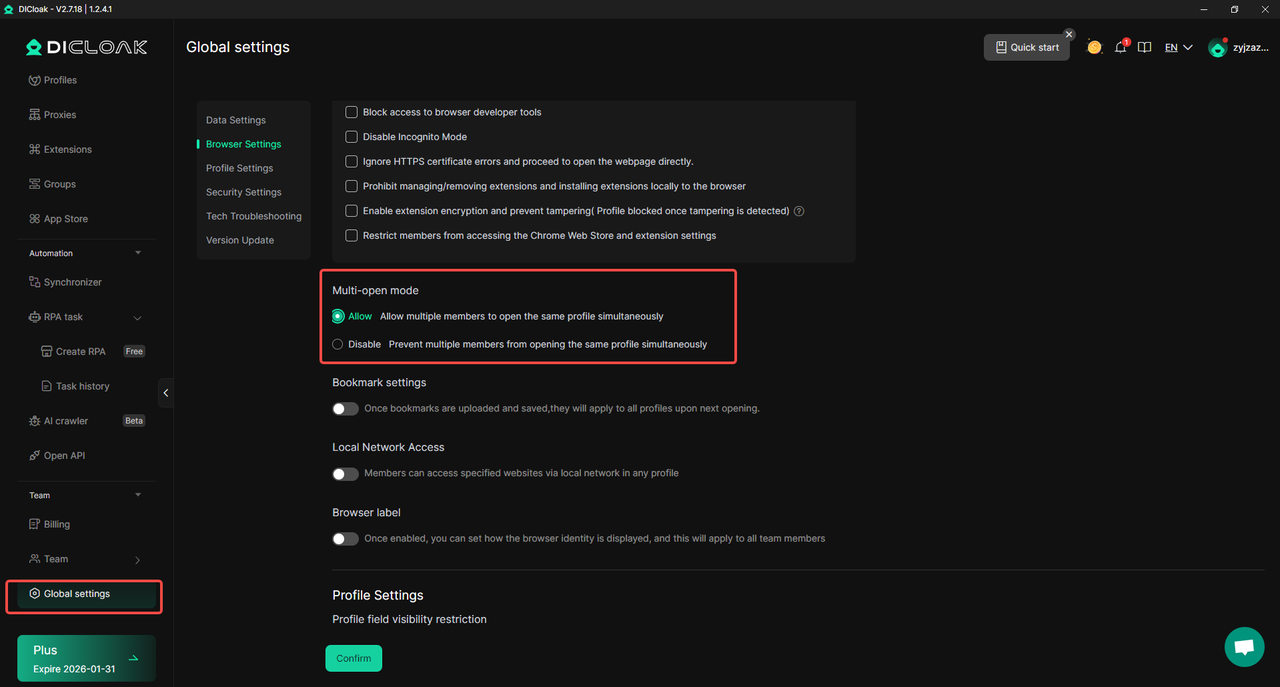
- Allow multiple people to use one ChatGPT account at the same time: Users can enable Multi-open mode so several team members access the same ChatGPT account simultaneously. No one gets logged out, which is useful for teams writing content, answering customers, or collaborating in real time.
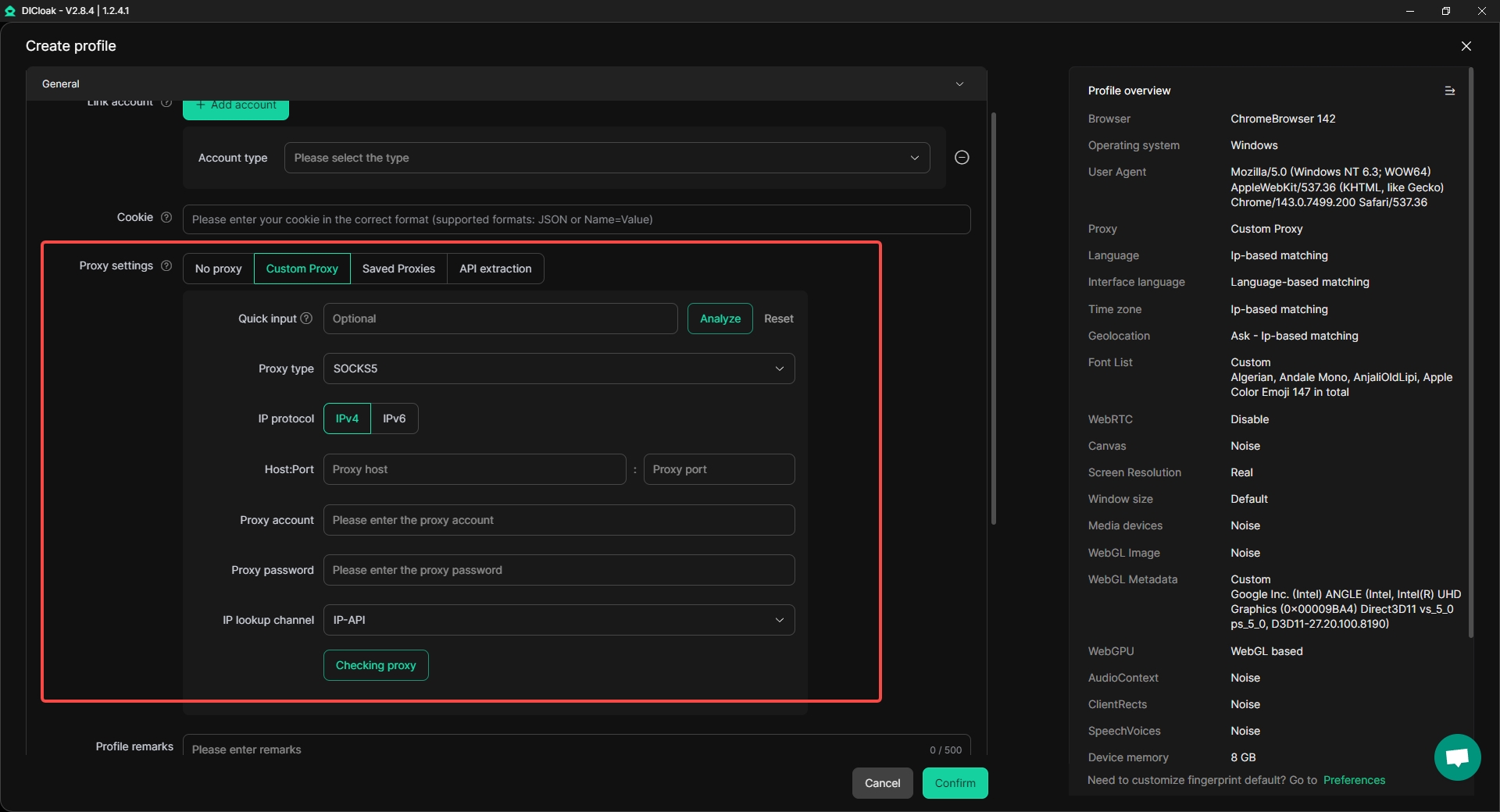
- Keep all logins coming from one stable location: Users can configure a static residential proxy for the browser profile. This makes every login appear to come from the same IP address. As a result, ChatGPT sees consistent access behavior instead of sudden location changes, which helps avoid security warnings or forced logouts.
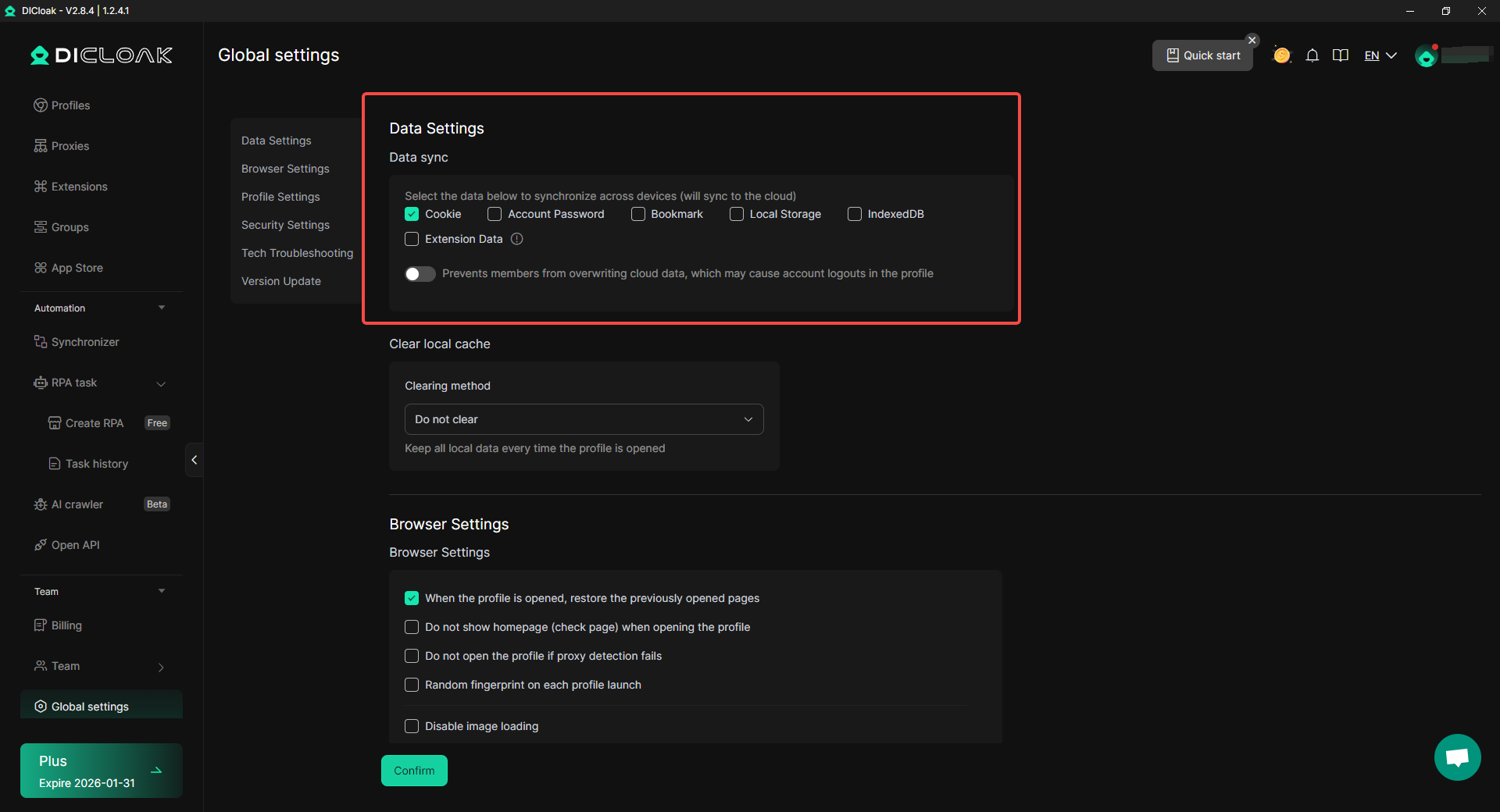
- Avoid repeated logins and password sharing: With data sync enabled, once one user logs in, others can open the same browser profile and stay logged in automatically. This reduces the need to share passwords or re-authenticate across devices.
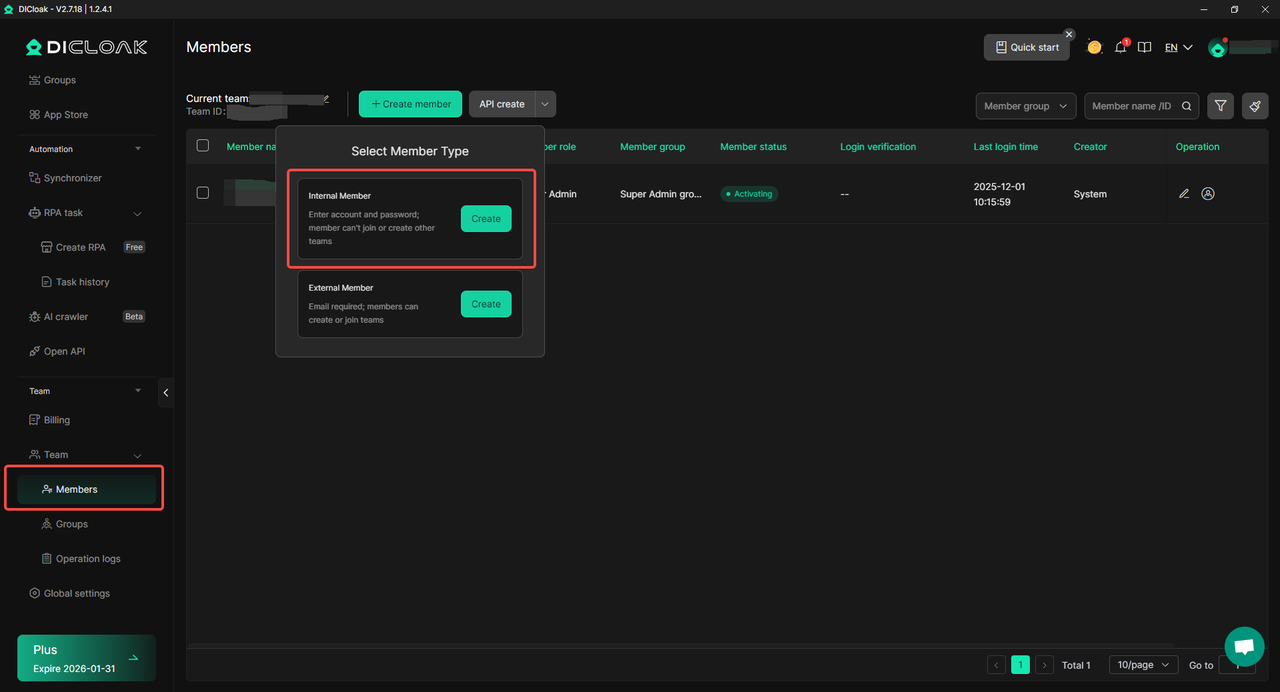
- Manage team access without exposing other accounts: Users can create separate team members and give them access only to the shared ChatGPT browser profile. Other personal or business accounts stay isolated and private, which is important for agencies or small teams.
- Support real workflows that mix DeepSeek and ChatGPT: In many chatgpt vs deepseek setups, users rely on DeepSeek for analysis or testing, then use ChatGPT for writing and communication. With isolated browser profiles and controlled sharing, teams can move smoothly between these tools without account conflicts.
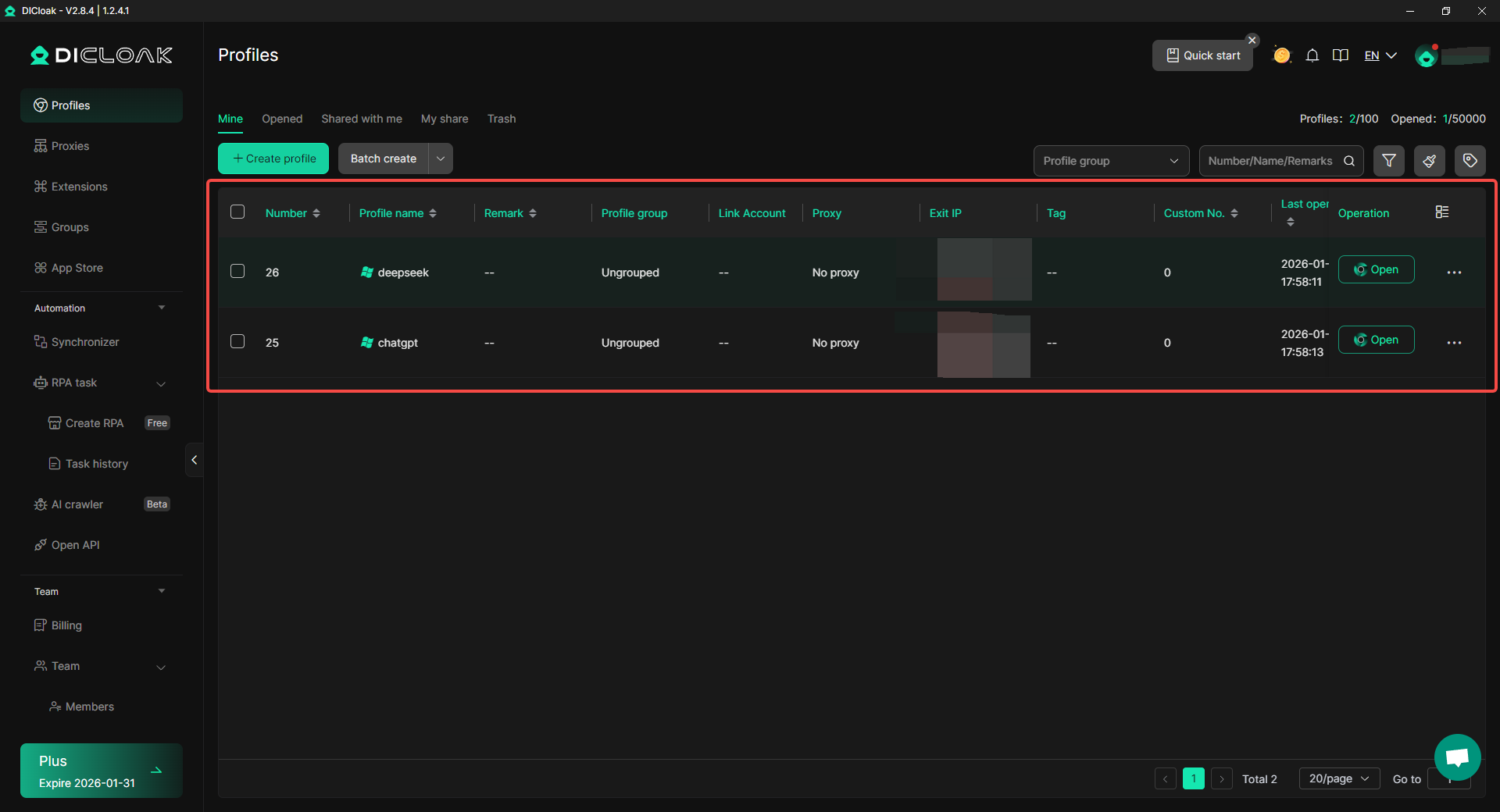
In practice, once users understand the differences in deepseek vs chatgpt, using DICloak helps turn that decision into a stable, team-friendly workflow—especially when shared access to ChatGPT is part of daily work.
Conclusion
In deepseek vs chatgpt, there is no single best AI model for everyone. The right choice depends on your tasks and goals. DeepSeek works best for data analysis, reasoning, and large-scale technical work. ChatGPT is better for writing, communication, and everyday productivity.
Many users combine both tools. DeepSeek handles analysis and structured tasks, while ChatGPT supports content and conversation. In chatgpt vs deepseek, testing both with your real work is the fastest way to decide which model fits you best.
FAQs About DeepSeek vs ChatGPT
Is DeepSeek better than ChatGPT?
There is no single winner in deepseek vs chatgpt. DeepSeek is better for data analysis, reasoning tasks, and large-scale API usage. ChatGPT is better for writing, conversation, and everyday assistance. The better choice depends on what you need to do.
Which is more accurate, DeepSeek or ChatGPT?
Accuracy in chatgpt vs deepseek depends on the task. DeepSeek often performs well in logic, math, and structured analysis. ChatGPT is strong in natural language and explanations, but both tools can make mistakes. Important results should always be checked.
Is DeepSeek cheaper than ChatGPT?
In most cases, yes. DeepSeek uses usage-based API pricing, which can be much cheaper for heavy or automated workloads. ChatGPT offers free and paid monthly plans, which are easier for casual users but may cost more at scale in deepseek vs chatgpt comparisons.
Can I use both DeepSeek and ChatGPT together?
Yes. Many users combine both tools in deepseek vs chatgpt workflows. For example, DeepSeek can handle analysis or research, while ChatGPT is used for writing, summaries, and communication. Using both often gives better results than choosing only one.
Which AI model is better for beginners, DeepSeek or ChatGPT?
For beginners, ChatGPT is usually easier to start with. It has a simple interface and works well without technical setup. DeepSeek is more suitable for users who are comfortable with APIs or data-driven tasks. In chatgpt vs deepseek, ease of use is a key difference.
 Web Proxy Tools
 Free Tools
 Cookie Plugin
 UA Generator
 MAC Address Generator
 IP Generator
 IP Address List
 2FA Code Generator
 World Clock
 Anonymous Check
 WebRTC Leak Test
 UUID Generator
 Free Web Proxy Site
 Proxy Checker
 FB Ad Checker
 AI Web Scraping
 Free SMM Tools
 Twitter Shadowban Checker
 Instagram Name Checker
 UTM Generator
 Username Generator
 AI Hashtag Generator
 LinkedIn Headline Generator
 Social Media Image Resizer