Want to know how professional scraping tools, affiliate marketers, and social media operators manage dozens of accounts without constant bans?
Their secret weapon is mobile proxies.
With more than 6.8 billion smartphone users worldwide, most online platforms treat mobile traffic as normal and trustworthy. Because of this, IP addresses coming from real 3G, 4G, and 5G carrier networks are widely used for large-scale automation, data collection, and multi-account management.
Mobile proxies allow users to route traffic through real telecom networks, which can make requests appear similar to those coming from genuine mobile users.
Whether you need to scrape platforms like Instagram, TikTok, and Facebook, or operate multiple accounts for marketing and automation workflows, this guide explains:
- how mobile proxies work
- the best mobile proxies providers in 2026
- how to choose a reliable provider
- how mobile proxies can be combined with antidetect browsers for safer account management
How the Best Mobile Proxies Work
Mobile proxies route internet traffic through real mobile devices connected to carrier networks (3G, 4G, or 5G).
Instead of sending requests directly from a datacenter server, the traffic is forwarded through mobile infrastructure operated by telecom providers.
As a result, the IP addresses belong to mobile carriers rather than hosting companies, which often makes them appear more natural to websites.
Technical infrastructure behind mobile proxies
Mobile proxy networks typically rely on several components:
Each connection originates from real mobile devices or modems equipped with carrier SIM cards.
- Carrier-grade NAT routing
Mobile networks commonly place thousands of users behind shared IP pools.
- Dynamic IP rotation IP addresses may change naturally when devices reconnect to different cell towers.
- Geographic authenticity IP addresses are registered to telecom operators in specific countries or cities.
Because of these characteristics, mobile proxies are frequently used when websites apply stricter detection systems.
Best Mobile Proxies Compared by Network Type
Not all mobile proxies perform the same. Different network generations offer different speeds and costs.
| Proxy Type |
Typical Speed |
Stability |
Cost Level |
Best Use Cases |
| 3G Mobile Proxies |
0.5–2 Mbps |
Lower |
Low |
Legacy setups, light automation |
| 4G LTE Mobile Proxies |
5–25 Mbps |
Stable |
Medium |
Social media automation, account management |
| 5G Mobile Proxies |
100+ Mbps |
High but region-limited |
High |
High-bandwidth scraping and large operations |
Today, 4G LTE proxies remain the most widely used option because they balance speed, availability, and price.
Why the Best Mobile Proxies Are Trusted by Social Platforms
Mobile proxies offer several advantages compared with traditional proxy types.
Higher trust signals
Many platforms receive the majority of their traffic from mobile devices. Because of this, requests coming from mobile networks may appear more consistent with normal user behavior.
Shared IP infrastructure
Mobile carriers typically assign the same IP pool to many users through carrier-grade NAT, which can make individual traffic harder to isolate.
Geographic flexibility
Many providers allow targeting specific countries, cities, or carriers, which is useful for regional testing or marketing campaigns.
Mobile devices often change IP addresses when reconnecting to towers, creating rotation patterns similar to real user activity.
Typical use cases for the best mobile proxies
Mobile proxies are widely used in several professional scenarios.
Social media operations
- Instagram account networks
- TikTok growth services
- Facebook advertising management
- Amazon multi-store management
- Shopify store monitoring
- Limited product launches such as sneaker drops
Data collection
- competitor monitoring
- price tracking
- market intelligence research
Account verification workflows
- location-restricted sign-ups
- multi-wallet crypto airdrop participation
Top Mobile Proxy Providers in 2026
Below are several well-known companies offering mobile proxy infrastructure.
| Provider |
Key Features |
Coverage |
Pricing Model |
Typical Users |
| NodeMaven |
Real device 4G/5G proxies |
50+ countries |
From ~$80 per proxy/month |
Social media automation |
| SOAX |
Ethically sourced mobile IP network |
Global |
From $99 / 8GB |
Ad verification and testing |
| Proxidize |
Build-your-own proxy hardware infrastructure |
Regional setups |
Hardware + data plan |
Enterprise teams |
| Proxy-Cheap |
Affordable rotating 4G proxies |
Multiple regions |
From ~$50 per proxy |
Beginners |
| Bright Data |
Large proxy infrastructure |
195 countries |
Enterprise pricing |
Data collection companies |
| Rayobyte |
Mobile and residential proxy mix |
Global |
Usage-based |
Scraping teams |
| NetNut |
ISP and mobile proxy solutions |
Global |
Enterprise plans |
Data analytics firms |
| IPRoyal |
Rotating proxy pools |
Global |
Pay-as-you-go |
Small businesses |
| Oxylabs |
Large enterprise proxy infrastructure |
Global |
Enterprise plans |
Large-scale data collection |
| PacketStream |
Peer-based proxy network |
Global |
Traffic-based pricing |
Market research |
(Pricing may vary depending on provider policies.)
Key factors when choosing the best mobile proxies
Before selecting a provider, evaluate these factors carefully.
Real SIM verification
Ensure proxies originate from genuine mobile hardware rather than virtual routing systems.
IP rotation options
Good providers allow static sessions, timed rotation, or manual switching.
Geographic precision
City-level targeting and carrier selection can be important for marketing or testing.
IP reputation
Lower blacklist detection rates usually indicate cleaner proxy pools.
Latency
Reliable providers typically maintain cross-border latency below 150 ms.
Technical support
Large-scale operations often require responsive support teams.
Mobile Proxies vs Other Proxy Types
Understanding how mobile proxies compare with other proxy types can help determine the right solution.
| Proxy Type |
IP Source |
Detection Risk |
Speed |
Cost |
| Datacenter proxies |
Hosting providers |
Higher |
Very fast |
Low |
| Residential proxies |
Household devices |
Medium |
Moderate |
Medium |
| Mobile proxies |
Carrier networks |
Lower in many scenarios |
Moderate–high |
Higher |
Each proxy type serves different use cases. In practice, mobile proxies are often chosen when IP reputation and “human-like” traffic patterns matter the most.
Combining the Best Mobile Proxies with Antidetect Browsers
Combining the best mobile proxies with antidetect browsers That said, an IP address is only one piece of your identity. Many platforms also evaluate whether your sessions look like they come from the same device—even if the IP changes.
Modern detection systems may analyze browser fingerprint signals such as:
- Canvas rendering
- WebGL signatures
- Device metadata
- Timezone and language patterns
This is why many teams pair the best mobile proxies with an antidetect browser like DICloak, where each account runs inside its own isolated profile and can be assigned a dedicated proxy connection. This helps reduce cross-account linking risks when managing multiple accounts at scale.
What this setup can provide
- isolated browser profiles, each with independent fingerprint parameters
- individual proxy assignment per profile
- compatibility with third-party proxy providers
- clearer separation between multiple accounts
Example Setups Using the Best Mobile Proxies with Browser Profiles
Social media marketing Many teams assign one proxy to a small number of browser profiles (often 1–3 profiles per proxy) depending on platform risk levels.
E-commerce operations Proxies are often allocated based on store regions so that each browser profile matches the geographic location of the store.
Data collection Profiles can be configured with rotating proxies so different sessions use different IP addresses during large-scale data collection tasks.
Why Proxies Alone May Not Prevent Account Linking
While proxies change IP addresses, many platforms evaluate additional signals.
Examples include:
- browser fingerprint attributes
- device hardware signals
- session behavior patterns
- login history and location changes
Because of this, professional teams often combine network-level tools (proxies) with browser-level isolation tools.
DICloak + Mobile Proxies: A Practical Multi-Account Workflow
DICloak is an antidetect browser designed to help separate browser identities through isolated profiles.
When used together with mobile proxies, it can support more structured multi-account setups.
DICloak features commonly used in this workflow
- Browser profile isolation for separate account sessions
- Customizable fingerprint parameters to differentiate profiles
- Flexible proxy configuration per profile (bring your own proxy)
- Team collaboration features for shared access and operational workflows
- Data sync features that help keep session data consistent across workflows
Note: DICloak does not sell proxy services. You’ll need to purchase mobile proxies separately and configure them inside each profile.
DICloak plans start at approximately $8 per month, depending on the selected configuration.
When configured correctly, combining mobile proxies with DICloak profiles can help teams manage multiple accounts more efficiently while keeping operations organized.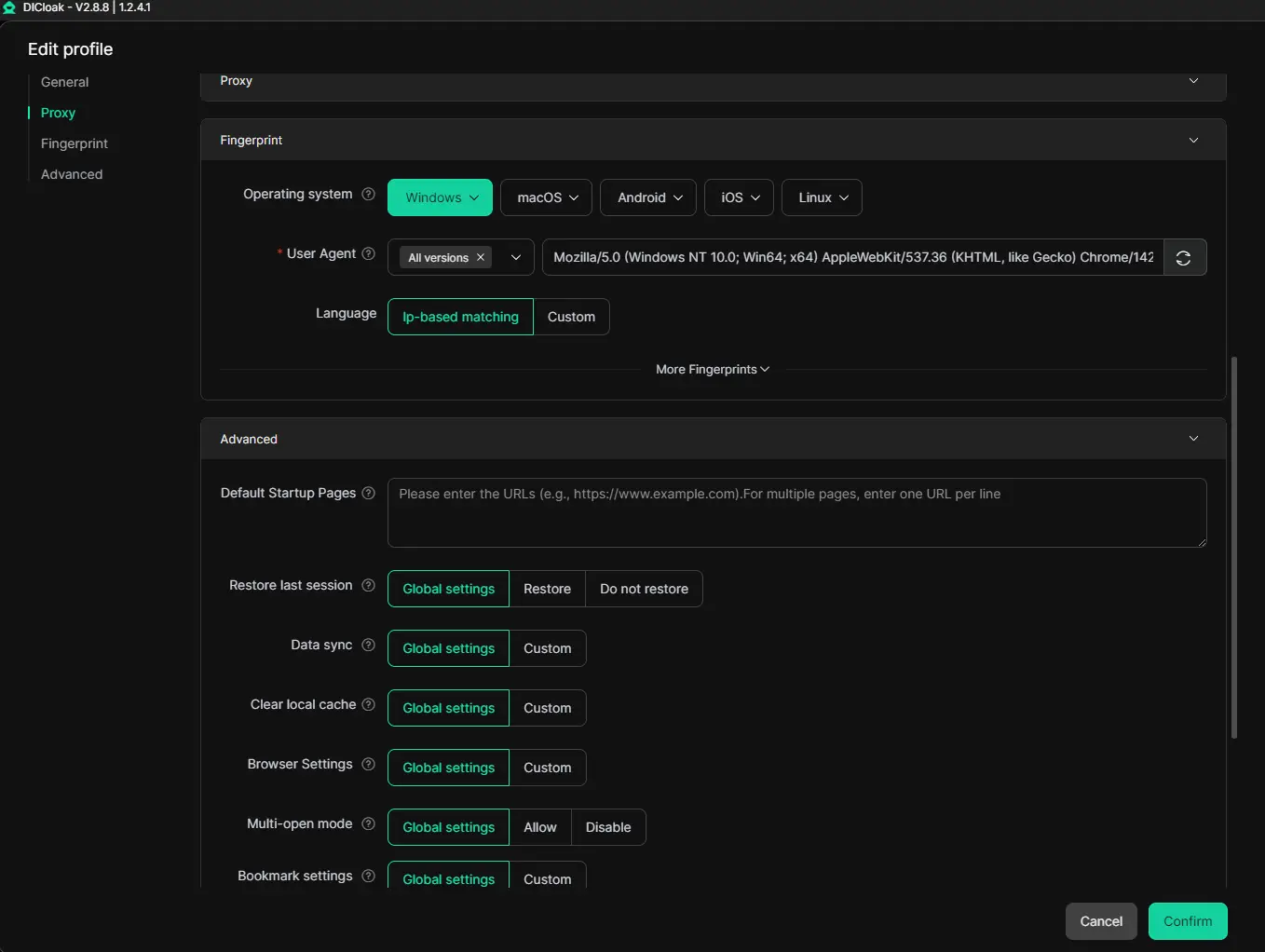
Final Thoughts: Why the Best Mobile Proxies Matter in 2026
As platforms continue improving their detection systems, infrastructure plays an increasingly important role in large-scale online operations.
Mobile proxies remain one of the most widely used network solutions because they rely on real telecom carrier IP addresses and natural rotation patterns.
However, because modern platforms also evaluate browser fingerprints and device signals, many teams choose to combine mobile proxies with antidetect browsers.
A carefully configured setup using mobile proxies together with isolated browser profiles can provide a more reliable foundation for managing multiple accounts and scaling digital workflows in 2026.
Frequently Asked Questions About the Best Mobile Proxies
What are the best mobile proxies?
The best mobile proxies are proxy services that route traffic through real 3G, 4G, or 5G carrier networks. These IP addresses originate from mobile devices connected to telecom operators, which often makes the traffic appear similar to normal smartphone users. Many professionals prefer mobile proxies for sensitive platforms because of their natural rotation patterns and carrier-based IP pools.
Are mobile proxies better than residential proxies?
Mobile proxies and residential proxies serve different purposes. Residential proxies use IP addresses from household devices, while mobile proxies use carrier network IPs from mobile operators. In some scenarios, mobile proxies can appear more natural because many real users share the same IP pool through mobile carrier infrastructure.
Why do professionals use the best mobile proxies for multi-account management?
Professionals often use mobile proxies when operating multiple accounts because mobile networks provide:
- shared carrier IP pools
- natural IP rotation
- geographic targeting options
These characteristics can help reduce the chance of accounts being linked through IP signals when accounts are configured correctly.
Do mobile proxies prevent account bans?
Mobile proxies can help reduce certain detection risks related to IP reputation. However, platforms may also analyze browser fingerprints, login behavior, and device signals. Because of this, many users combine mobile proxies with antidetect browsers that isolate browser profiles.
Can mobile proxies be used with antidetect browsers?
Yes. Many mobile proxy providers support integration with antidetect browsers. Tools such as DICloak allow users to assign a separate proxy to each browser profile, helping isolate sessions when managing multiple accounts.
Conclusion: Choosing the Best Mobile Proxies in 2026
Mobile proxies have become an essential tool for professionals who manage multiple accounts, collect platform data, or run automated workflows.
Because they operate through real telecom carrier networks, mobile proxies often provide more natural traffic patterns compared with other proxy types. This makes them particularly useful for platforms where IP reputation and user behavior signals are closely monitored.
However, network identity is only one part of the equation. Modern platforms increasingly analyze browser fingerprints, device characteristics, and session behavior. Relying on proxies alone may not fully separate multiple accounts in large-scale operations.
For this reason, many teams combine the best mobile proxies with antidetect browsers such as DICloak, where each account runs inside its own isolated browser profile and can be assigned a separate proxy connection.
When configured properly, this combination can help create a more structured and scalable setup for:
- social media account management
- e-commerce operations
- data collection workflows
- automated marketing systems
As detection systems continue to evolve in 2026, building a reliable infrastructure that includes both mobile proxies and profile isolation tools is becoming an increasingly common approach for professional online operations.
 Web Proxy Tools
 Free Tools
 Cookie Plugin
 UA Generator
 MAC Address Generator
 IP Generator
 IP Address List
 2FA Code Generator
 World Clock
 Anonymous Check
 WebRTC Leak Test
 UUID Generator
 Free Web Proxy Site
 Proxy Checker
 FB Ad Checker
 AI Web Scraping
 Free SMM Tools
 Twitter Shadowban Checker
 Instagram Name Checker
 UTM Generator
 Username Generator
 AI Hashtag Generator
 LinkedIn Headline Generator
 Social Media Image Resizer