We've all faced the frustrating moment: you click on an intriguing video, only to be blocked with the dreaded message, "This video isn’t available in your region." Or, perhaps worse, you're hit with a restriction at school or work just when you need a quick break. For anyone trying to unblock YouTube at school, the immediate impulse is often to search for a quick fix. And, naturally, the internet is filled with countless so-called "hacks" promising to bypass YouTube blocks.
But here’s the truth for 2026: most of these methods are outdated, unreliable, and ineffective against modern network restrictions. Attempting these “solutions” is like trying to infiltrate a high-security system with nothing but a paperclip—you won’t succeed and may even trigger alarms for unauthorized activity.
In this definitive guide, we'll explore nine popular methods that claim to unblock YouTube at school, explain why they no longer work, and reveal the expert-approved solution that guarantees secure access to YouTube every single time.
What Causes YouTube Blocks Initially?
Understanding the reasons behind YouTube blocks is key to recognizing why basic fixes often fail. Access to YouTube is typically restricted for three main reasons:
Geographic Limitations (Geo-blocking): Video creators and rights holders often limit their content to specific regions due to licensing agreements. YouTube enforces these restrictions by checking your IP address, which reveals your location.
Network Barriers (Educational or Corporate Settings): In schools and workplaces, IT administrators often restrict YouTube access to conserve network resources and, ostensibly, to improve focus. These blocks are not simply about blocking website addresses—they use advanced traffic analysis tools that are much harder to bypass.
Governmental Oversight: Some countries impose complete YouTube bans for political or social reasons, utilizing sophisticated, nationwide filtering systems to block access.
Simple workarounds may have worked in 2015, but they are ineffective against today's smart, deep traffic inspection systems. For those trying to unblock YouTube at school, these outdated tricks just won’t cut it anymore.
The False Promise of Quick Fixes: 9 Methods That Won’t Unblock YouTube at School
Let’s take a closer look at some commonly suggested methods and why they fail to unblock YouTube at school in 2025.
1. Switching from HTTP to HTTPS The Idea: Changing the URL from http:// to https:// might bypass basic firewalls. Why It Fails: Modern firewalls and browsers default to HTTPS, and YouTube requires encrypted connections. Firewalls block the domain, not just the protocol. This method hasn’t worked for years.
2. Using Link Shorteners (e.g., Bitly, TinyURL) The Idea: A shortened URL might bypass network filters blocking youtube.com. Why It Fails: Current firewalls scan not just the URL but also the DNS queries and traffic flow. Shortened links immediately redirect to YouTube and get blocked. This is like disguising a building’s name—security still knows its identity.
3. Google Translate as a Proxy The Idea: Using Google Translate to open YouTube links routes the traffic through Google’s servers, hiding the final destination. Why It Fails: While creative, this method is slow, often corrupts video playback, and many network administrators have blocked translation services as proxies.
4. Changing DNS Settings The Idea: Switching to public DNS servers like Google’s (8.8.8.8) to bypass DNS-level blocks. Why It Fails: Most firewalls use IP filtering and deep packet inspection. Even if the DNS works, the network will detect YouTube’s IP and block it. This tactic is too basic for modern networks.
5. Browser Extensions (e.g., Hola, Ultrasurf) The Idea: These extensions work as proxies within your browser. Why It Fails: They are insecure and slow, often exposing your data to others. They’re easily detected and shut down by network administrators, making them unreliable for bypassing YouTube blocks at school.
6. Downloading Content via Online Converters The Idea: Download videos using tools like y2mate to bypass streaming restrictions. Why It Fails: This doesn’t unblock YouTube at school—it only allows downloading. Plus, these sites are often filled with malware and pose serious security risks.
7. Using YouTube’s IP Address The Idea: Directly accessing YouTube by its numerical IP address instead of youtube.com. Why It Fails: YouTube uses multiple servers with dynamic IPs. Firewalls block entire IP ranges, so this method won’t work.
8. Smart DNS Services The Idea: A Smart DNS service reroutes DNS requests to bypass geo-restrictions. Why It Fails: Smart DNS doesn’t encrypt traffic or mask your IP, so it’s not effective for bypassing sophisticated school or corporate network barriers. Administrators can still identify and block traffic.
9. Using Tor Browser The Idea: Tor provides anonymity by routing traffic through multiple relays. Why It Fails: While secure, Tor is too slow for streaming video and often triggers CAPTCHAs or blocks from major websites like YouTube.
As shown, each of these methods has critical flaws—they either don’t work, are insecure, or are easily detected. When trying to unblock YouTube at school, these quick fixes won’t do the trick.
The Expert Approach: How to Effectively Unblock YouTube at School in 2026
To reliably unblock YouTube at school in 2026, you need more than outdated tricks—you must solve two core problems at the same time:
1. Your IP Address Your IP reveals your real location, and it’s the first thing school or workplace firewalls check. If the system detects a blocked region or a restricted network, your attempt to access YouTube is instantly denied.
2. Your Browser Profile Even if you mask your IP, your device still broadcasts unique fingerprints—your OS, browser version, screen size, fonts, and more. Modern networks and platforms can identify you through browser profiling, meaning they can still block you even if your IP looks clean.
This is why experts don’t rely on weak or outdated methods. Instead, they use an antidetect browser—the only reliable way to unblock YouTube at school without triggering security systems.
DICloak is a professional-grade antidetect browser designed to generate multiple, fully separated digital identities. Unlike simple IP tools, DICloak doesn’t just “hide” your location. It gives you a completely new, authentic online persona that looks identical to a real user from the region you select.
The result? A stable, clean, undetectable browsing environment that allows you to unblock YouTube at school consistently, without interruptions and without raising red flags.
Why Choose DICloak Antidetect Browsers for your business?
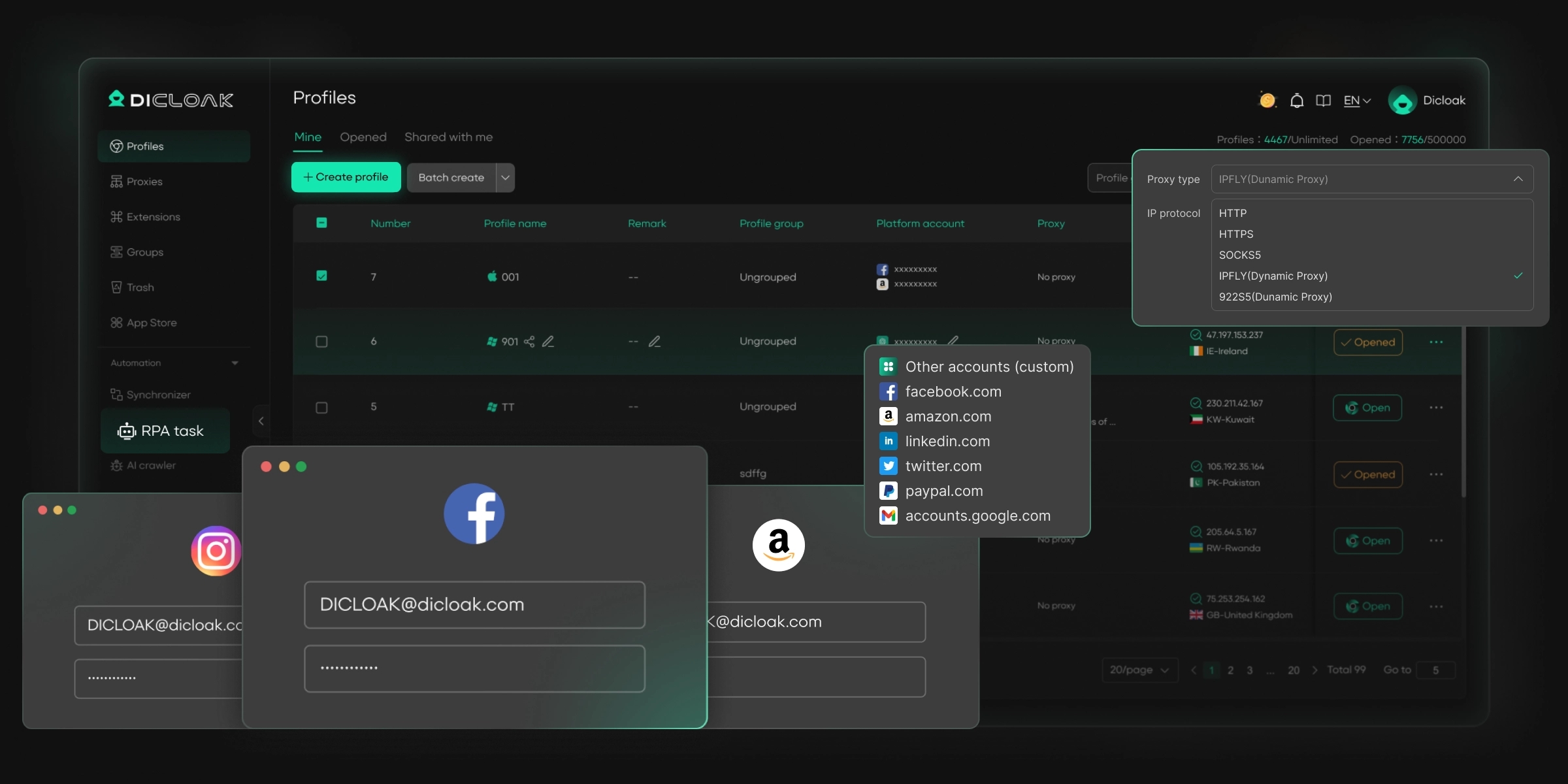
⚡The DICloak Antidetect Browser has become a global favorite for its unparalleled ability to efficiently and securely manage multiple accounts. Designed for professionals in social media management, affiliate marketing, traffic arbitrage, e-commerce, account farming, airdrops, and more, DICloak offers powerful features like RPA automation, bulk operations, and a window synchronizer. Additionally, it allows you to customize fingerprints and integrate proxies for each profile, ensuring top-level security and operational efficiency. It’s the ultimate tool for seamless, secure, and scalable operations.
What Makes DICloak Stand Out?
✅ Manage 1,000+ Accounts on One Device: Stop wasting money on extra hardware! DICloak allows you to manage multiple accounts on a single device, cutting costs and boosting efficiency.
✅ Guaranteed Account Safety, No Ban Risks: Every account gets its own isolated browser profile with custom fingerprints and IPs, drastically reducing the risk of bans. Your accounts, your control!
✅ Flexible Proxy Configuration for Maximum Performance: Seamlessly integrate with all major proxy protocols (HTTP/HTTPS, SOCKS5) and manage your proxy pool with bulk operations. No more struggling with IP management—DICloak has you covered.
✅ Streamlined Team Collaboration for Better Results: Easily manage your team with advanced tools like profile sharing, permission settings, data isolation, and operation logs. Your team works smarter, not harder.
✅ Automate the Grind with RPA: DICloak's built-in RPA saves you hours of manual work. Automate repetitive tasks, streamline workflows, and focus on what really matters—growing your business.
✅ Powerful Bulk Tools to Scale Your Operations: Create, import, and launch multiple browser profiles in one click. DICloak makes scaling your business as easy as it gets.
✅ Compatible with All Major Operating Systems: Based on the Chrome core, DICloak supports simulating Windows, Mac, iOS, Android, and Linux operating systems. No matter what platform you need, DICloak has you covered.
🔗 Ready to Get Started?
Visit the DICloak website to explore more details and choose the plan that’s right for you. Start for free today and experience the power of secure, efficient, and scalable multi-account management!
Frequently Asked Questions About Unblocking YouTube at School
Is using a proxy to watch YouTube secure? Using a proxy can be safe, but free proxies often pose privacy risks. To unblock YouTube at school securely, always rely on reputable providers. Tools like DICloak’s residential and dedicated YouTube proxies offer safer, more stable access without exposing your data.
How can I get around YouTube blocks at school? Many people try link shorteners, Google Translate, or switching to public DNS servers. However, these outdated tricks rarely unblock YouTube at school today because modern firewalls are far more advanced.
Can changing my DNS help me access YouTube? Switching to public DNS services—like Google DNS (8.8.8.8) or Cloudflare DNS (1.1.1.1)—may help in very limited situations. But with current deep traffic inspection systems, DNS alone usually isn’t enough to truly unblock YouTube at school.
Is it against the rules to access YouTube at work? It depends on your employer’s policies. While it's not illegal to bypass restrictions, doing so may violate workplace rules and could result in consequences if you are caught.
Abandon Outdated Tricks — Use Professional Tools Instead
The age of simple hacks and loopholes is over. Today’s school and corporate networks use sophisticated defense systems that easily detect and block old methods like DNS tweaks, link shorteners, or Google Translate “proxies.” These tactics don’t reliably unblock YouTube at school and may even expose you to risk.
For casual viewers, a blocked video is a minor annoyance. But for students, creators, and professionals who depend on YouTube for learning or work, reliable access is essential. You can’t rely on unstable quick fixes.
Now is the time to stop trying to “outsmart” increasingly intelligent systems and start using professional-grade tools built to navigate them safely.
 Web Proxy Tools
 Free Tools
 Cookie Plugin
 UA Generator
 MAC Address Generator
 IP Generator
 IP Address List
 2FA Code Generator
 World Clock
 Anonymous Check
 WebRTC Leak Test
 UUID Generator
 Free Web Proxy Site
 Proxy Checker
 FB Ad Checker
 AI Web Scraping
 Free SMM Tools
 Twitter Shadowban Checker
 Instagram Name Checker
 UTM Generator
 Username Generator
 AI Hashtag Generator
 LinkedIn Headline Generator
 Social Media Image Resizer