The Evolution of Cloudflare Anti-Bot Defenses
Modern web security has transitioned from simple firewall rules to sophisticated, multi-layered Bot Management systems. In industry practice, Cloudflare’s defense logic is no longer binary; it is a probabilistic assessment of a visitor's "humanity." It is commonly observed that Cloudflare utilizes five core mechanisms for detection:
- Behavioral Analysis: Monitoring page interaction telemetry, including mouse trajectories, velocity, and page load sequencing.
- IP Address Reputation: Evaluating the request origin against known blacklists and reputation databases to identify IPs associated with prior bot activity.
- Browser Fingerprint Analysis: Identifying patterns in the browser’s User Agent, Client Hints, TLS fingerprints, and WebGL metadata to detect inconsistencies.
- CAPTCHA Challenges: Deploying low-friction tests like Turnstile to validate human presence when a risk threshold is breached.
- Request Rate Monitoring: Tracking request frequency and structural patterns to identify high-frequency automated scraping attempts.
Operational Scenario: An analyst attempting to manage 50 distinct accounts from a single workstation often triggers a security checkpoint. Even if login credentials differ, the identical hardware footprints—specifically GPU rendering profiles and memory allocation signatures—signal to Cloudflare that these accounts are linked to a single automated agent.
Why Standard Playwright Fails to Solve Cloudflare Security Walls
Default Playwright configurations are frequently flagged because they are designed for testing, not for evading enterprise-grade anti-bot systems. The primary failure point is the presence of "WebDriver leaks." Standard automation frameworks often leave distinct artifacts in the browser profile that reveal the presence of the Chrome DevTools Protocol (CDP).
The technical gap between a raw automation framework and a stealth-optimized environment is significant. Without specialized modifications, a default Playwright instance provides a recognizable profile that anti-bot services can categorize as automated traffic almost instantly. Establishing a resilient automation workflow requires moving beyond basic scripts to a more robust, isolated infrastructure.
Identifying Playwright Patterns and CDP Leaks
Cloudflare’s detection engine specifically probes for signatures exposed by the Chrome DevTools Protocol (CDP). This is a deep technical vulnerability; for instance, Cloudflare can detect the navigator.webdriver property being set to true, or find the presence of specific cdc_ string constants in the window object that are characteristic of automated browser control.
Another critical detection point is the Runtime.enable flag, which Cloudflare can monitor to identify if the environment is being manipulated externally. Headless browsers are particularly vulnerable; a browser running without a visible UI often fails to correctly report graphical and environmental properties, leading to an immediate block. Even in a headed state, standard Playwright instances fail to mask the "automation bridge" that links the script to the browser engine.
The Role of TLS and WebGL Fingerprinting in Detection
Advanced anti-bot measures analyze the "handshake" and the graphics rendering profile to build a unique identifier for every visitor:
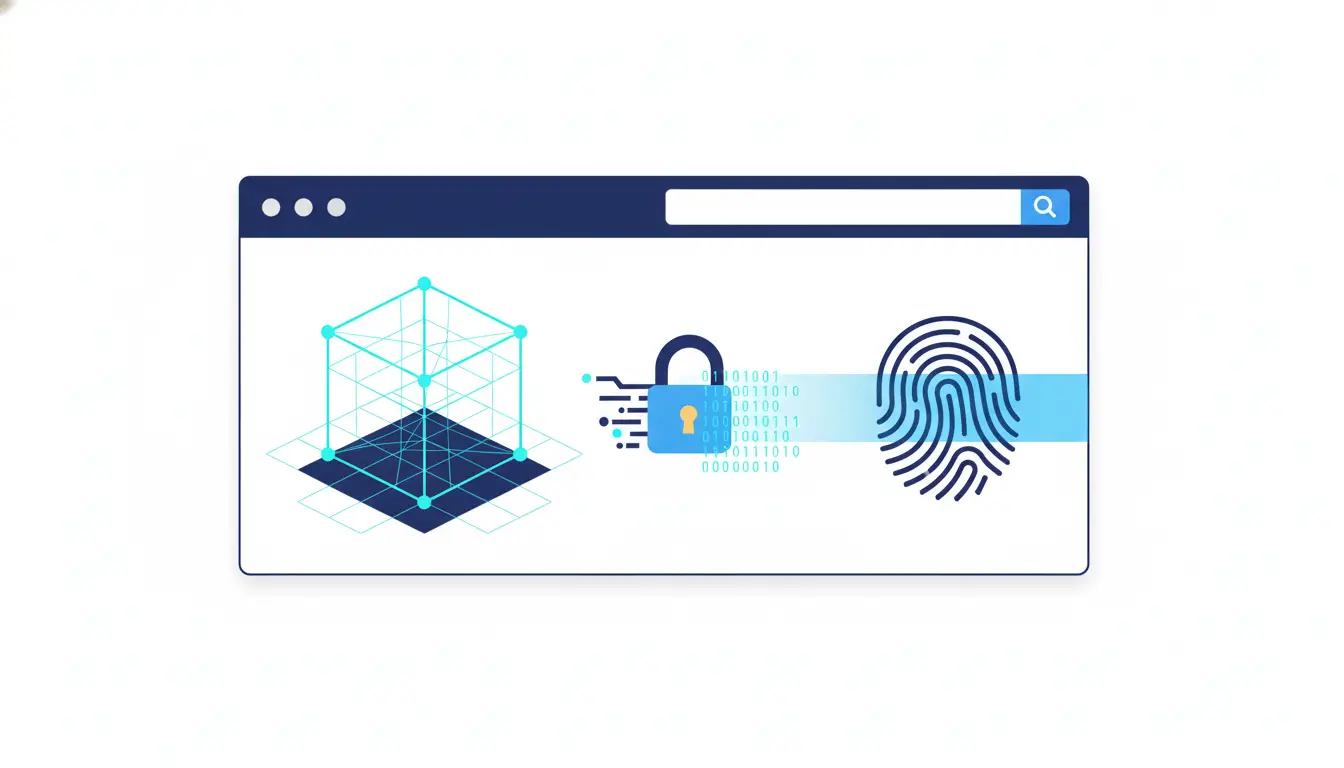
- TLS Fingerprinting (JA3): During the initial connection, the browser and server negotiate encryption parameters. Standard Playwright instances often use TLS libraries that produce a JA3 fingerprint distinct from those generated by standard consumer browsers. This mismatch is a high-confidence signal for automated scrapers.
- WebGL and Canvas Metadata: Cloudflare analyzes how a browser renders 3D graphics and 2D canvas elements. By issuing specific rendering calls, the system can extract a hardware profile. If multiple profiles share the exact same WebGL metadata, they are flagged as a single device running multiple automated accounts.
Essential Manual Tactics to Playwright Solve Cloudflare Challenges
To mitigate detection risks, analysts must implement manual strategies that reduce the script's automated signature:
- Human Behavior Simulation: Implement randomized delays and scrolling patterns to break the robotic precision of automation.
- Proxy Rotation: Distribute requests across a diverse pool of IPs to prevent bans based on request volume from a single origin.
- Header Customization: Manually adjust
User-Agent and Accept-Language headers to ensure they align with a consistent user profile.
Pro-Tip: For higher success rates, prioritize residential proxies over datacenter proxies. Datacenter IPs are often pre-flagged in reputation databases, whereas residential proxies carry the higher trust scores of genuine home users.
Simulating Human Behavioral Patterns through Randomization
Automated scripts often perform actions at fixed intervals, which is easily detected by behavioral analysis. To bypass these checks, scripts must implement non-linear interactions.
In Playwright, this involves replacing static pauses with randomized waitForTimeout intervals (e.g., using Math.random()) and employing the scrollBy function to mimic a user scanning a page. By ensuring that mouse movements and timing occur within a variable range, the script avoids the rhythmic, predictable patterns that trigger Cloudflare’s behavioral sensors.
Advanced Proxy Management for Robust IP Reputation
Robust network isolation is essential for bypassing IP-based reputation checks. This involves the integration of HTTP, HTTPS, and SOCKS5 protocols to ensure the traffic remains indistinguishable from organic user activity.
High-quality residential or mobile proxies are preferred for bypassing Cloudflare’s IP reputation checks because they provide the network metadata of a standard consumer. Professional proxy management ensures that each browser profile is assigned a unique, isolated IP address, preventing the "linked account" bans that occur when multiple accounts share a single network signature.
Comparison of Detection Risks: Standard Methods vs. Professional Anti-Detect Infrastructure
| Feature |
Standard Playwright Scripts |
DICloak Integrated Workflows |
| IP Management |
Manual rotation; prone to leaks |
Isolated IPs per profile; native proxy management |
| Fingerprint Customization |
High complexity; requires manual hooks |
Native/Automated (Canvas, WebGL, TLS) |
| Scaling Capability |
Limited by hardware footprint and leaks |
High; 1,000+ accounts on one device |
| Detection Risk |
High (CDP, JA3, and WebDriver leaks) |
Minimal; profile-level isolation |
Integrating DICloak to Playwright Solve Cloudflare Detection Risks
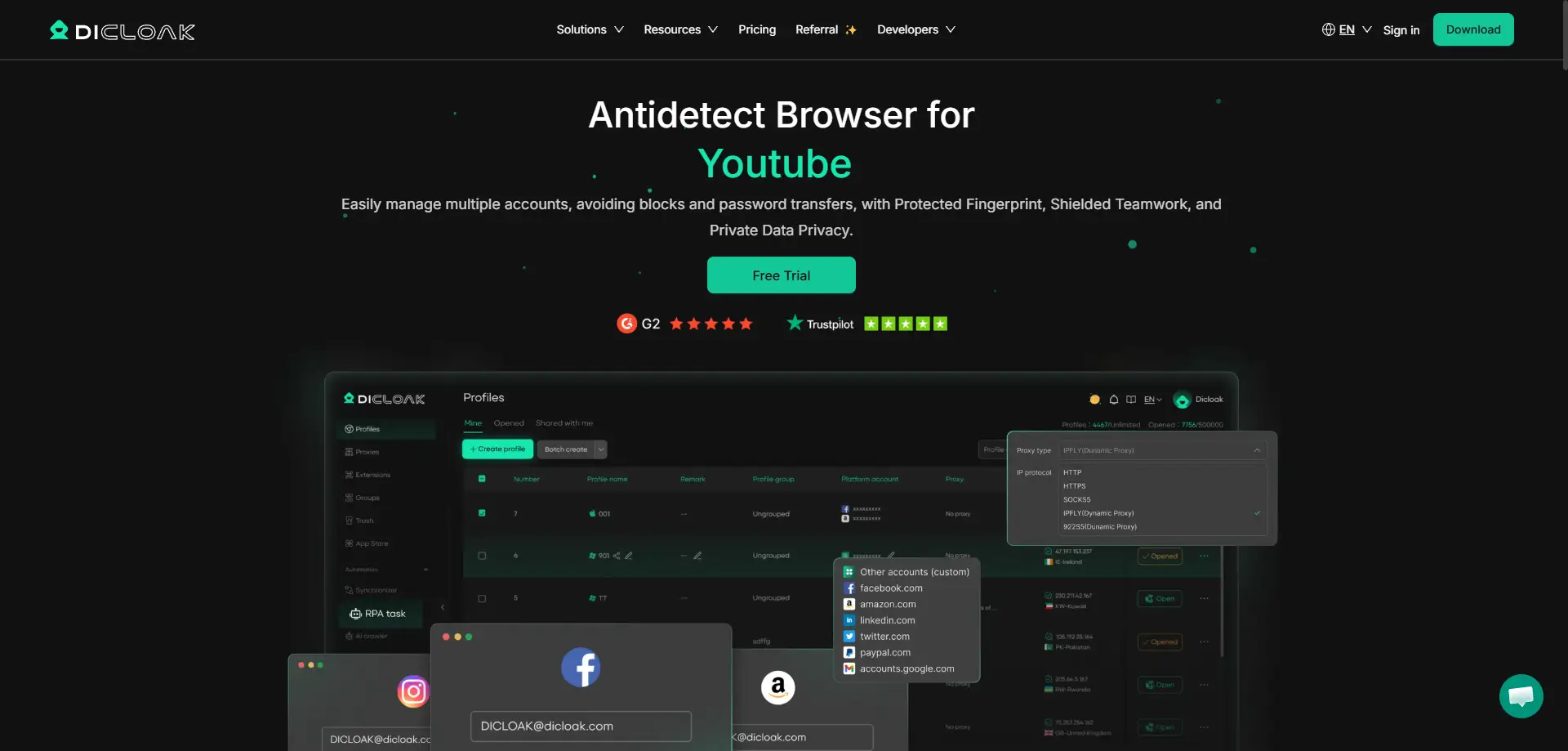
DICloak provides the professional infrastructure necessary to implement the isolation strategies previously discussed. By serving as an anti-detect layer, it allows for the management of 1,000+ accounts on a single device by providing each with a completely isolated browser profile.
To prevent association, you must isolate the Canvas hash. Tools like DICloak automate this process by providing unique fingerprints for every profile, including the simulation of diverse operating systems such as Windows, Mac, iOS, Android, and Linux. This ensures that even when Cloudflare analyzes the hardware signature, each account appears as a distinct physical machine.
Isolating Browser Environments via Custom Device Fingerprints
DICloak manages complex identifiers—including WebGL, TLS, and Canvas fingerprinting—at the browser-engine level. This profile-level isolation is significantly more effective than the manual header injection typically used in Playwright.
In operational scenarios involving high-value e-commerce or social media accounts, this deep-level masking prevents "linked account" bans. By modifying how the browser engine reports its hardware capabilities to the site's scripts, DICloak ensures that the automated activity is indistinguishable from standard human traffic, even under deep inspection of hardware metadata.
Leveraging RPA for High-Efficiency Digital Workflows
Organizations scaling their digital operations can leverage DICloak’s built-in Robotic Process Automation (RPA) and bulk tools. This infrastructure allows for the technical implementation of repetitive tasks across hundreds of profiles with minimal manual overhead.
The "Synchronizer" feature is particularly valuable for team-based environments, facilitating data isolation while allowing team members to share profiles and logs securely. This approach enables high-efficiency operations while maintaining the necessary stealth layers to stay beneath Cloudflare's detection threshold.
Operational Advantages of Anti-Detect Infrastructure
Implementing a professional anti-detect infrastructure provides a balanced solution for enterprise automation needs.
Pros of Anti-Detect Infrastructure:
- Scalability: Efficiently manage thousands of accounts from a single interface.
- Reduced Ban Risk: Profile-level isolation and automated fingerprint masking significantly lower detection rates.
- Team Collaboration: Granular control over profile sharing, permissions, and operation logs.
- Multi-OS Simulation: Ability to mimic Windows, Mac, iOS, Android, and Linux environments.
Pros of Anti-Detect Infrastructure:
- Learning Curve: Complex RPA logic and bulk workflow configurations require technical adjustment.
- Proxy Integration: Requires a commitment to high-quality residential or mobile proxy providers to maintain IP reputation.
Building a Resilient Workflow for Multi-Account Management
A resilient strategy for 2026 involves combining Playwright’s interaction capabilities with DICloak’s fingerprint masking. By using Playwright to drive the logic and DICloak to provide the secure, isolated environment, analysts can bypass Cloudflare's Bot Management with high consistency.
Pro Tip: Always match your browser profile's simulated Operating System with your proxy's geolocation metadata to minimize "mismatch" flags. For example, if your proxy is located in London and identifies as a mobile network, ensure your DICloak profile is set to simulate an iOS or Android device with corresponding regional settings.
Frequently Asked Questions About Playwright Solve Cloudflare Methods
Can I bypass Cloudflare with Playwright alone?
While manual adjustments to Playwright can mitigate some risks, there is a high probability of detection due to deep-level signatures like CDP leaks and JA3 TLS fingerprinting. For reliable results, an anti-detect layer is necessary to mask these identifiers effectively.
Does DICloak support mobile operating systems?
Yes. DICloak is compatible with all major operating systems and can simulate iOS and Android environments. This is essential for bypassing anti-bot checks that specifically target mobile browser behavior.
How many accounts can I manage?
Professional anti-detect infrastructure allows you to manage 1,000+ accounts on a single device by utilizing isolated browser profiles and custom fingerprints for each account, eliminating the need for extensive hardware arrays.
 Web Proxy Tools
 Free Tools
 Cookie Plugin
 UA Generator
 MAC Address Generator
 IP Generator
 IP Address List
 2FA Code Generator
 World Clock
 Anonymous Check
 WebRTC Leak Test
 UUID Generator
 Free Web Proxy Site
 Proxy Checker
 FB Ad Checker
 AI Web Scraping
 Free SMM Tools
 Twitter Shadowban Checker
 Instagram Name Checker
 UTM Generator
 Username Generator
 AI Hashtag Generator
 LinkedIn Headline Generator
 Social Media Image Resizer