The Evolution of E-commerce Data Acquisition
Shopee has solidified its position as a primary target for market intelligence. As a mobile-first platform operating through localized domains—including Shopee Singapore (.sg), Malaysia (.com.my), and Brazil (.com.br)—it presents one of the most formidable technical challenges for automated data collection.
For senior analysts, the value of Shopee data is immense, offering critical insights into competitive pricing strategies, market trend analysis, and inventory optimization. However, achieving successful extraction requires navigating a "locked" ecosystem. Success in this environment is no longer a matter of simple scripting; it requires a sophisticated infrastructure designed to bypass advanced anti-bot shields and manage the "recurring maintenance burden" caused by frequent platform updates.
Why Traditional Methods for How to Scrape Shopee Fail
Basic scraping methodologies fail because they treat Shopee like a static HTML site. Modern defenses are specifically tuned to identify and neutralize unauthenticated or "headless" requests.
- Mechanism Explanation: Standard HTTP libraries (like Python’s BeautifulSoup) and unauthenticated mobile API calls are immediately flagged. Attempting to hit endpoints like
/api/v4/recommend without a valid session token results in an immediate block.
- The "is_login" Barrier: Practitioners frequently encounter the
"is_login": false response. More critically, Shopee often returns a specific technical error code: "error": 90309999, signaling that the request lacks the required authentication signature.
- Comparison Table: Infrastructure Evolution
| Feature |
Standard Methods (Requests/BS4) |
Professional Infrastructure (DICloak + Automation) |
| Result |
Fails on 2026 Shopee Security |
Reliable High-Scale Extraction |
| JavaScript Rendering |
None (Retrieves empty HTML/Placeholders) |
Full execution of dynamic elements |
| Authentication |
Blocked by login walls / Error 90309999 |
Persists via saved browser profiles |
| Fingerprint Spoofing |
None (Hardware IDs and leaks exposed) |
Deep spoofing (Canvas, WebGL, Audio) |
| Proxy Integration |
Manual/Easily flagged datacenter IPs |
User can configure proxies with regional alignment |
Decoding Shopee’s Modern Anti-Scraping Defenses
To build a resilient pipeline, one must account for the multi-layered security protocols Shopee employs to identify automated traffic.
Fingerprint-Based Detection Mechanisms
Shopee uses advanced browser fingerprinting to detect automation. Beyond basic headers, the platform analyzes Canvas, WebGL, and AudioContext signatures. Standard automation frameworks often suffer from "engine mismatches," where the browser behavior doesn't align with its declared Navigator properties, timezones, or language settings. DICloak mitigates this by ensuring perfect browser kernel alignment, preventing the hardware "leaks" that reveal automation.
JavaScript-Rendered Content and Dynamic Elements
Shopee’s frontend is a maze of asynchronous loading and infinite scrolls. Product listings, prices, and reviews are not present in the initial HTML source. Without a real-time rendering engine, a scraper will fail to capture the .shopee-search-item-result__item elements that contain the core data.
Mandatory App-Based Login and CAPTCHA Walls
Shopee increasingly forces sessions through authenticated portals. Unauthenticated bots are met with aggressive CAPTCHA challenges or mandatory 2FA. These defenses act as a hard stop for any scraper that cannot maintain a persistent, logged-in state.
Strategic Infrastructure for How to Scrape Shopee at Scale
Scaling your e-commerce intelligence requires hardware-level isolation and high-tier network protocols.
Proxy Management: The "One IP per Account" Rule
Residential proxies are non-negotiable. Datacenter IPs are almost universally blacklisted by Shopee’s regional firewalls.
Pro Tip: Maintain strict IP-to-Account affinity. Switching a proxy’s geographic location mid-session (e.g., from Singapore to Malaysia) is a high-risk signal that triggers immediate account bans.
Regional Phone Verification and OTP Automation
Since Shopee mandates local phone numbers for registration, practitioners must integrate virtual-number services.
- Tools: Services like OnlineSim or Grizzly SMS are used to programmatically handle SMS verification.
- Strategy: Once an account is verified, session persistence is key. It is far more cost-effective to maintain a single logged-in profile than to constantly burn through new virtual numbers.
Solving the Authentication and Session Persistence Puzzle
The most reliable "how to scrape Shopee" methodology involves managing persistent browser contexts rather than stateless requests.
- The Workflow: A practitioner performs a "headful" login once via a secured browser profile, solves the initial CAPTCHA and OTP manually or via an API (like 2Captcha or Anti-Captcha), and then saves the profile.
- The Mechanism: By saving the full browser context—cookies, local storage, and history—subsequent automated runs skip the login wall entirely. While some developers use a JSON file to export/import cookies, saving the entire browser profile within an antidetect environment like DICloak is the most stable method to ensure "session resumption" without re-triggering security checks.
Implementing Stealth Workflows with DICloak Antidetect Browser
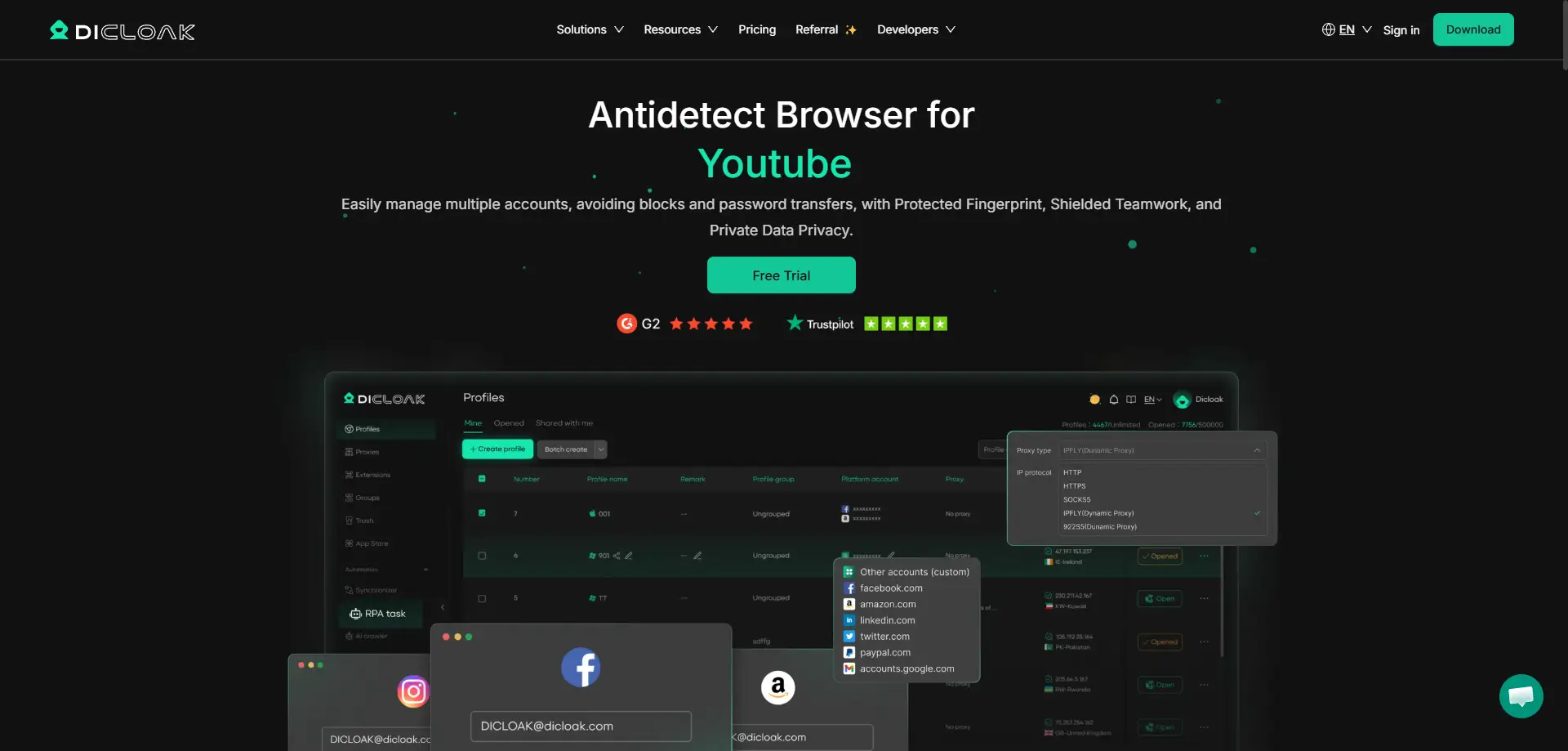
DICloak serves as the foundational infrastructure for managing hundreds or thousands of Shopee accounts without detection.
- Fingerprint Customization: DICloak allows for granular control over every profile's digital signature. This ensures that accounts remain isolated; a ban on one account cannot "cascade" to others due to shared fingerprint patterns.
- Multikernel Support: To blend in with organic traffic, DICloak can simulate various operating systems (Windows, Mac, iOS, Android, Linux). This prevents engine mismatches that are common when using generic headless browsers.
- Automated Data Extraction via DICloak RPA: The built-in Robotic Process Automation (RPA) allows for the automation of hierarchical category tree navigation and interaction with dynamic elements like flash sales and product variants without manual oversight.
Technical Step-by-Step for Building a Shopee Scraper Pipeline
For engineering teams, the implementation of a Shopee scraper should follow this high-authority technical workflow:
- Environment Setup: Connect an automation framework like Playwright to the DICloak browser instance using the Chrome DevTools Protocol (CDP) via
connect_over_cdp.
- Session Injection: Load a pre-authenticated profile to bypass the login screen. Ensure you are using specific selectors for extraction, such as
.shopee-search-item-result__item for listings and [data-sqe='title'] for product names.
- Request Throttling: Adhere to a strict rate limit. [Pro Tip: Keep requests at or below 100 per minute per account/proxy to avoid triggering undisclosed rate-limiting thresholds.]
- Data Synthesis: Beyond basic prices, extract deep intelligence:
- SKUs and Stock Levels: Track availability per product variant.
- Image Assets: Use the Shopee pattern:
https://down-${country}.img.susercontent.com/file/${imageKey}.
- Market Signals: Collect category breadcrumbs, seller ratings (official vs. third-party status), and flash sale metrics.
- Export: Pipeline the results into a JSON or CSV format for downstream analysis.
Objective Analysis of Professional Scraper Infrastructure
Pros:
- Bypasses Advanced Bot Detection: High success rate against Canvas and WebGL tracking.
- Economic Efficiency: drastically reduces OTP/SMS costs through long-term session persistence.
- Scalability: Allows a single device to manage 1,000+ isolated accounts.
Cons:
- Initial Setup Complexity: Requires more configuration than a basic API-based scraper.
- Maintenance: Demands consistent DOM/API signature monitoring to adapt to Shopee’s frequent frontend changes.
Frequently Asked Questions about How to Scrape Shopee
Is scraping Shopee legal?
Scraping publicly accessible data (prices, descriptions, reviews) is generally permissible provided you exclude PII (Personally Identifiable Information), respect robots.txt, and comply with regional data protection laws.
Can I use a Proxy Management service for free?
In high-scale operations, free or datacenter proxies are virtually useless against Shopee. Success requires high-quality, rotating residential proxies that match the Shopee domain’s region.
How do I handle Shopee's dynamic price updates?
Static parsers fail here. You must use a CDP-connected browser that renders JavaScript to capture prices that load after the initial page paint.
Why did my account get Shopee banned while scraping?
The most common causes are IP/Account mismatches (switching regions) or exceeding the 100 requests-per-minute threshold.
Conclusion and Future-Proofing
While Shopee remains a difficult target due to its mobile-first security and fingerprint-based detection, success is achievable through the strategic application of session management and fingerprint isolation. To maintain a competitive edge, practitioners must move beyond simple scripts and adopt a professional infrastructure. Utilizing DICloak’s isolation capabilities and RPA tools provides the necessary foundation to turn Shopee’s massive data pool into actionable market intelligence. Those interested in scaling their operations can explore DICloak’s free trial to test multi-account management in a live environment.
 Web Proxy Tools
 Free Tools
 Cookie Plugin
 UA Generator
 MAC Address Generator
 IP Generator
 IP Address List
 2FA Code Generator
 World Clock
 Anonymous Check
 WebRTC Leak Test
 UUID Generator
 Free Web Proxy Site
 Proxy Checker
 FB Ad Checker
 AI Web Scraping
 Free SMM Tools
 Twitter Shadowban Checker
 Instagram Name Checker
 UTM Generator
 Username Generator
 AI Hashtag Generator
 LinkedIn Headline Generator
 Social Media Image Resizer