The Evolution of Account Trust in Modern Media Buying
The digital advertising landscape has undergone a fundamental shift from a high-volume, high-churn model toward high-trust infrastructure. Historically, media buyers operated "farmed" accounts—profiles created in bulk to absorb the high failure rates of aggressive campaigns. However, platforms like Meta, Google, and TikTok have evolved. They now utilize sophisticated "platform trust scores," internal metrics that evaluate the aggregate legitimacy of an entity based on account history, billing consistency, and hardware signatures.
By 2026, the technical delta between a farmed account and an agency-level account has become the determining factor in campaign longevity. While farmed accounts often start with a "neutral" score that is easily degraded, agency-level accounts leverage the established reputation of official platform partners. For the digital strategist, moving to an agency model is a risk-mitigation necessity designed to ensure operational stability at scale.
Defining Agency-Level Ad Accounts vs. Farmed Infrastructure
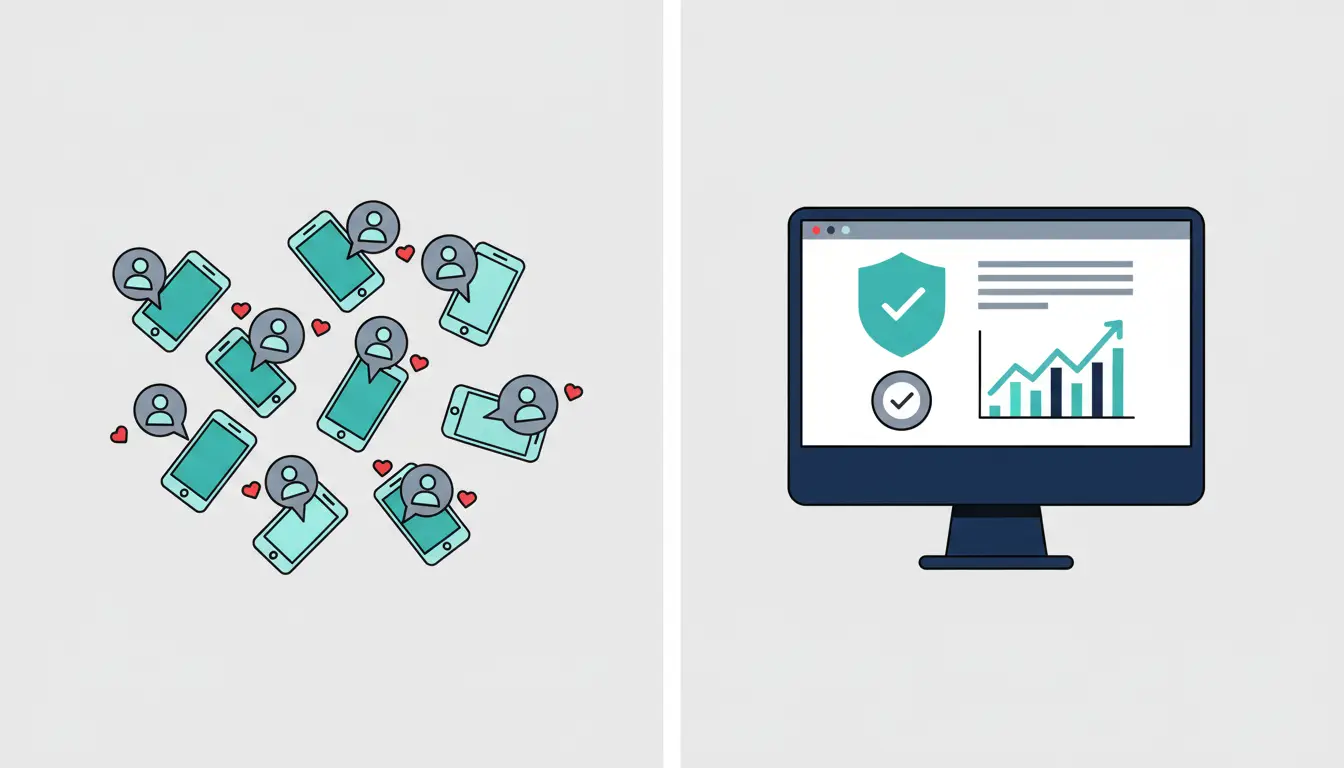
A critical distinction exists between farmed assets and agency-level infrastructure. Farmed accounts are manually or semi-automatically generated profiles designed to mimic human behavior through "warming"—a process of simulating likes, scrolls, and group joins. While flexible and low-cost, these accounts carry a high baseline risk because they lack institutional backing and are often flagged during sudden spend spikes.
In contrast, agency accounts are professional-grade assets issued by official Facebook Marketing Partners or Google Partners. These entities sign formal partnership agreements, maintain consistent high-level ad spend, and undergo legal compliance checks. Unlike farmed accounts, agency accounts utilize "Agency Billing," where the platform recognizes the agency as the financially responsible party. This status is explicitly visible within the Business Manager or Google Ads interface, reinforcing the entity's legitimacy in the eyes of the platform’s automated systems.
Operational Scenario: The ScroogeFrog Nutrition Case Study
To understand the stability of agency accounts, consider the ScroogeFrog deployment for a gray-hat nutrition campaign. The team utilized 20 agency ad accounts to manage a total spend of $20,000. The campaign utilized three specific creative styles: "news broadcast" formats, "telemarket" presentations, and direct product descriptions.
Under a farmed account model, such aggressive scaling often results in high "zero-spend" bans. However, using the agency model:
- Total accounts with zero spend: None.
- Accounts spending under $100: Only 6.
- Top performing accounts: Reached spends of $5,400, $3,000, and $2,800 respectively.
This stability allowed for a "Duplication Strategy"—replicating successful campaigns across the infrastructure to scale volume without triggering the fraud-detection algorithms that typically plague unverified farmed profiles.
The Strategic Advantages of Agency-Level Ad Accounts
The primary value proposition of the agency model is the drastic reduction in "soft bans" associated with billing or rapid budget increases. Key advantages include:
- Elevated Trust Scores: Platforms grant these accounts higher leeway because the agency partner takes on partial moderation and financial responsibility.
- Removal of Daily Spend Caps: Farmed accounts are often restricted to $50 or $250 daily limits. Agency accounts allow for immediate, high-volume scaling, essential for competitive niches.
- Infrastructure Transparency: Agency billing centralizes payments through a verified entity, removing the common "suspicious payment" flags associated with individual buyer cards.
- Direct Platform Support: These accounts often include access to dedicated account managers or expedited technical support for resolving restrictions.
Pro Tip: High trust scores do not grant immunity. Agency accounts are not "ban-proof"; they remain subject to content and landing page policies. Even a high-value asset will be restricted if the underlying ad policy regarding prohibited claims or landing page compliance is disregarded.
Technical Hygiene for Managing Agency-Level Ad Accounts
Protecting a high-value agency account requires rigorous environment isolation. The greatest threat to these assets is an "association ban," where a platform links a restricted account to a healthy one via digital fingerprinting.
DICloak serves as the essential technical layer for this isolation. Built on a Chrome-core engine, it allows architects to customize deep-level fingerprints, including Canvas and WebGL. By ensuring that each agency profile presents a unique, consistent hardware signature, media buyers can prevent the "data leakage" that allows platforms to cluster accounts. In this architecture, DICloak is not merely a management tool but an insurance policy for the agency account's trust score.
Simulating Global Environments with Multi-OS Support
Strategic account management requires matching the technical environment to the target market’s geographic location. Discrepancies between a proxy's location and the operating system (OS) profile are frequent triggers for "suspicious activity" flags.
DICloak provides the ability to simulate a wide array of operating systems, including Windows, Mac, iOS, Android, and Linux, within a single interface.
Implementation Strategy: If managing a US-based agency account, the browser profile should simulate a Windows or Mac environment typical for that region. If managing mobile-focused traffic in emerging markets, simulating Android or iOS profiles may be more appropriate. Forcing a match between the OS and the proxy’s GEO-location is a fundamental step in maintaining the "Entity Legitimacy" required to avoid automated security checkpoints.
Advanced Proxy Management and Network Isolation
Network isolation is the final pillar of professional infrastructure. Using a standard internet connection or low-quality proxies will inevitably degrade an account's trust score.
For media buying, two primary protocols are supported by DICloak:
- HTTPS: The standard for compatibility and encryption. Source A suggests HTTPS is the "solid option" for most platforms due to its ease of integration with browser tools.
- SOCKS5: Offers superior versatility for specific automation needs and handling varied traffic types.
Pro Tip: Architects should distinguish between proxy types based on the account lifecycle. Residential proxies are generally preferred for initial login and account warming to simulate authentic user behavior. High-quality datacenter proxies are more suitable for high-volume execution and maintenance, provided they are locked to specific, dedicated profiles.
Scaling via RPA and Workflow Automation
Scaling an agency-level operation requires the ability to replicate success with surgical precision. Manually managing dozens of accounts introduces human error and technical drift.
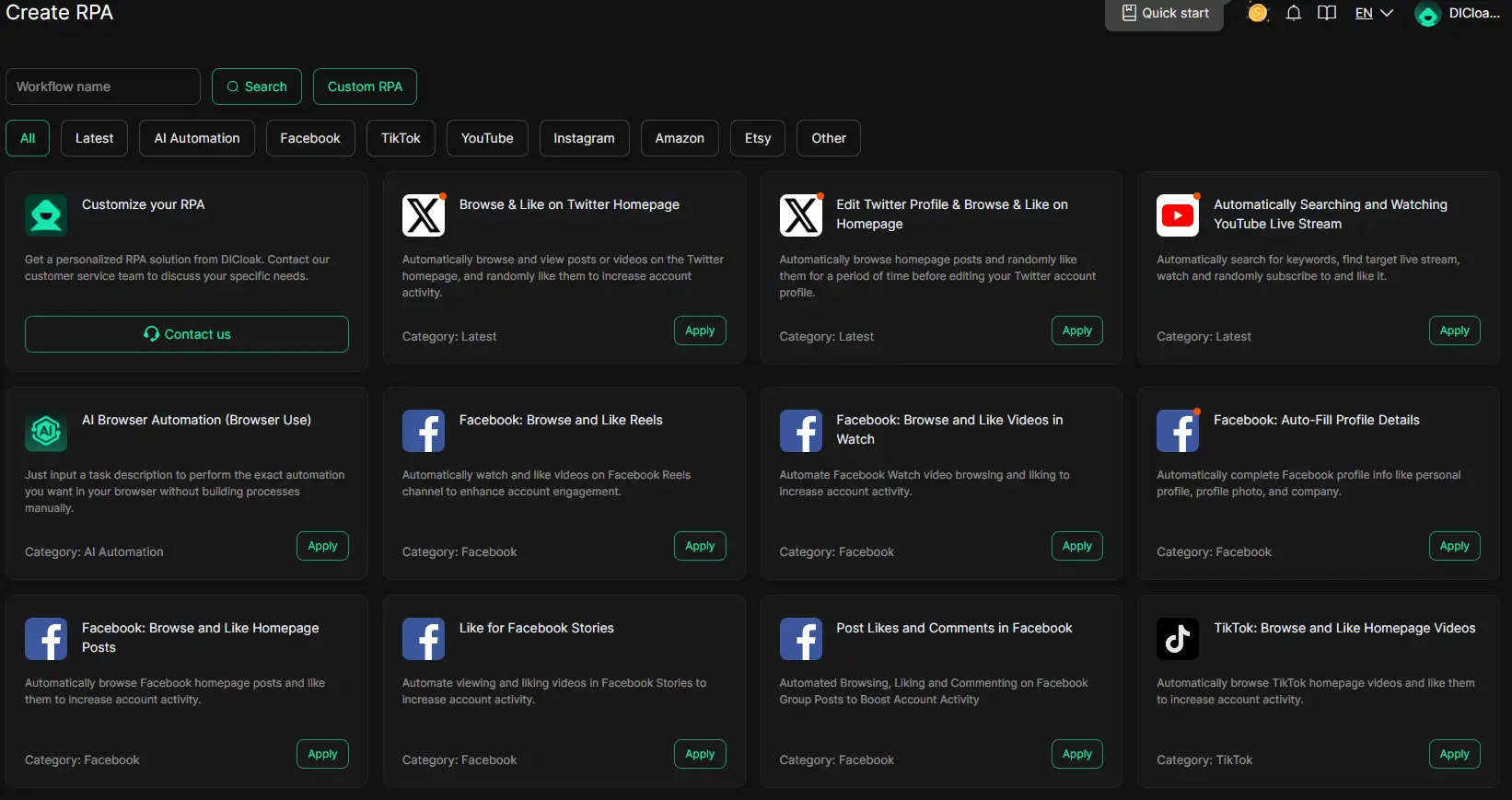
DICloak’s Robotic Process Automation (RPA) and Synchronizer tools are designed to facilitate the "Duplication Strategy" mentioned in Source A.
- RPA: Automates repetitive health checks and campaign setups, freeing the strategist to focus on creative optimization.
- Synchronizer: This tool allows a "lead" profile's actions—such as mouse clicks and text input—to be mirrored across multiple "follower" profiles in real-time. This ensures that a successful campaign setup can be deployed across a cluster of agency accounts simultaneously, maintaining identical configurations across the entire infrastructure.
Team Collaboration and Infrastructure Governance
As an agency scales, internal security becomes as critical as external platform defense. Managing large teams requires preventing credential leakage and ensuring data isolation.
DICloak’s governance features provide the necessary "paper trail" for agency owners:
- Advanced Permissions: Restricts media buyers to only the profiles assigned to them, preventing unauthorized access.
- Operation Logs: Provides a detailed audit trail of all actions taken within a profile, allowing owners to identify the specific cause of a policy violation.
- Profile Sharing: Enables the secure transfer of account access between team members without the need to share raw login credentials, which often triggers security alerts.
Comparative Analysis: Traditional Methods vs. DICloak Infrastructure
| Feature |
Standard Browser/Methods |
DICloak Enhanced Infrastructure |
| Fingerprint Isolation |
Static environment; vulnerable to clustering |
Dynamic fingerprinting; isolated Canvas and WebGL |
| Scaling Capability |
Manual; limited by human hours |
High; Bulk Ops and one-click profile deployment |
| Automation (RPA) |
None; requires custom external scripts |
Built-in; automates repetitive campaign workflows |
| Team Oversight |
Credential leakage; lack of audit trail |
Role-based permissions and operation logs |
| OS Simulation |
Limited to host machine |
Simulates Windows, Mac, iOS, Android, Linux |
Objective Assessment of Professional Management Tools
Investing in professional-grade infrastructure like DICloak involves a calculated trade-off between cost and operational security.
Pros:
- Scaling Efficiency: The ability to manage 1,000+ accounts on a single device without additional hardware overhead.
- Risk Reduction: Total isolation of digital fingerprints and IP addresses minimizes the risk of association bans.
- Operational Speed: Synchronizer and RPA tools drastically reduce the time required for bulk campaign launches.
Cons:
- Learning Curve: Mastering RPA logic and complex proxy configurations requires a high level of technical proficiency.
- Infrastructure Costs: High-trust accounts require a commitment to premium third-party proxies and monthly software subscriptions.
- Rigid Compliance: Agency accounts require strict adherence to platform rules, limiting their use in high-risk "black-hat" testing.
Final Checklist for Deploying Agency-Level Ad Accounts
Before transitioning to an agency-level model, verify your infrastructure against the following strategic requirements:
- Strategy Validation: Only deploy proven offers and pre-approved landing pages; agency accounts are too valuable for testing unvetted creatives.
- Niche Alignment: Prioritize stable niches such as e-commerce, finance, lead generation, or education.
- Spend Thresholds: Ensure your daily spend is consistently above $300 to justify the associated commissions and setup fees.
- Technical Environment: Secure an anti-detect browser (such as DICloak) and high-quality, GEO-matched proxies before initializing the agency account access.
Frequently Asked Questions About Professional Ad Infrastructure
Why did my agency account get restricted?
Restrictions on agency accounts are rarely billing-related. They typically stem from content violations, prohibited landing page elements, or a failure to "warm" the account with white-hat ads before moving to more aggressive creative styles like those used in the ScroogeFrog nutrition study.
Can I use SOCKS5 for Google Ads?
Yes. While HTTPS is often used for its encryption and compatibility, DICloak supports SOCKS5, which is highly effective for specific automation needs and offers more versatility for varied network traffic.
How does the Synchronizer handle different screen resolutions?
The Synchronizer mirrors actions across profiles based on coordinate inputs. To prevent "click-drift"—where an automated click misses its intended target due to window size differences—architects must ensure all profiles in a synchronization group are configured with identical screen resolutions.
 Web Proxy Tools
 Free Tools
 Cookie Plugin
 UA Generator
 MAC Address Generator
 IP Generator
 IP Address List
 2FA Code Generator
 World Clock
 Anonymous Check
 WebRTC Leak Test
 UUID Generator
 Free Web Proxy Site
 Proxy Checker
 FB Ad Checker
 AI Web Scraping
 Free SMM Tools
 Twitter Shadowban Checker
 Instagram Name Checker
 UTM Generator
 Username Generator
 AI Hashtag Generator
 LinkedIn Headline Generator
 Social Media Image Resizer